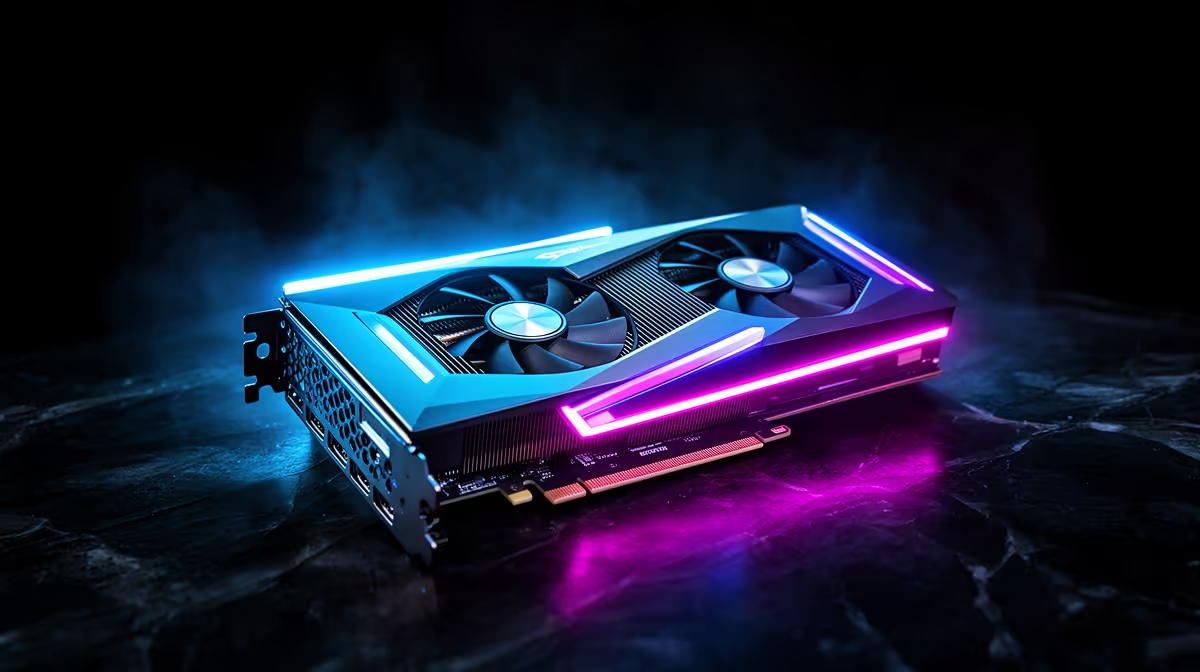
The RTX 5090 is the fastest consumer GPU available, so the real question for Quake Remastered is not whether it runs, but how far past your monitor's refresh rate it goes at 1440p.
Quick Answer
The RTX 5090 runs Quake Remastered at 1440p maxed at the engine's frame-rate ceiling, completely unstressed. The 1996 remaster cannot tax this card; 1440p is as effortless as 1080p for it.
Why 1440p Is Effortless
Quake Remastered is a lightly updated 1996 shooter, so at 1440p the RTX 5090 hits the engine's frame-rate ceiling with the GPU nearly idle. There is no meaningful difference between 1080p and 1440p for this card here; both run at whatever cap the engine imposes, often around 250 fps.
Settings And Display
Max every setting at 1440p; the 5090 will not be challenged. No DLSS or upscaling is needed. A high-refresh 1440p panel displays the high frame rates nicely, letting you enjoy the classic campaign and the included add-on episodes with modern smoothness.
RTX 5090 In SA
The RTX 5090 is currently stocked at Evetech in the R55,000-R65,000 band depending on model. For Quake Remastered at 1440p it is enormous overkill; the card only justifies itself in demanding modern 4K titles. Pair a Ryzen 7 9800X3D to push the CPU-bound frame rate as high as the engine allows.
FAQ
What FPS does the RTX 5090 get in Quake Remastered at 1440p?
The engine's frame-rate ceiling, often around 250 fps, with the GPU nearly idle. 1440p is as effortless as 1080p for this card.
Is there a difference between 1080p and 1440p here?
Almost none for the RTX 5090. The 1996 remaster is so light that both resolutions hit the engine's frame-rate cap.
Is the RTX 5090 worth it for Quake Remastered?
No, on its own. Any modern GPU runs the remaster at the engine ceiling; the card is only worth it for demanding current 4K games.
the RTX 5090 runs Quake Remastered at the engine cap with the GPU idle; save the card's power for demanding current 4K titles.