Quick Answer
Pay for boom arm support first if your desk vibrates or your mic can't sit close to your mouth; pay for switchable pickup patterns only if you record or game in more than one position. A solid desk-clamp boom arm runs roughly R450 to R900 locally, while a single-cardioid USB mic that just needs to sit on a stand starts around R900.
Boom arm support is the cheaper win for most SA gamers
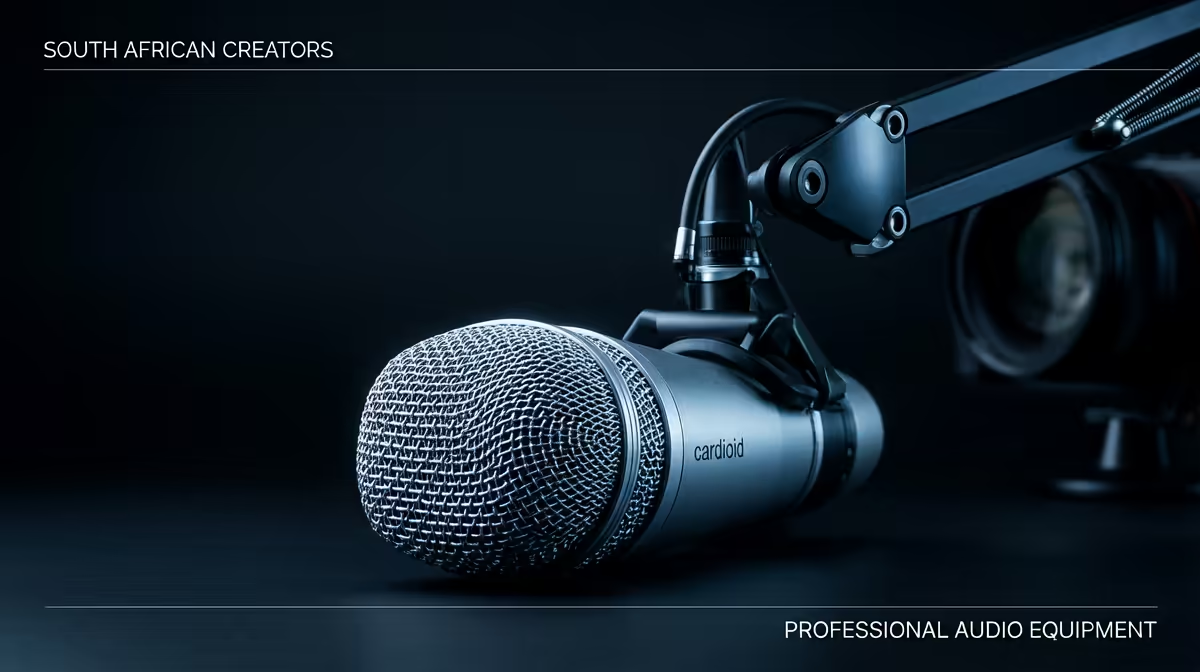
A boom arm fixes the two problems that actually ruin home recordings: keyboard thump travelling up a desk stand, and a mic sitting too far from your mouth. Spending R450 to R900 on a clamp arm rated to 1.5kg lets a lighter cardioid mic float 10cm from your lips, which raises your voice well above fan and mechanical-keyboard noise. If your mic weighs over 1kg, check the arm's load rating before you buy, or the springs will sag within a week.
Pickup pattern only earns its premium in specific setups
Multi-pattern mics (cardioid, omni, bidirectional, stereo) cost noticeably more, and most solo streamers never leave cardioid. Pay the extra R600 to R1,200 only if you co-host in the same room (bidirectional), capture room ambience for music, or share one mic across a couch setup. For a single voice in a small res room or flat, a fixed-cardioid pattern plus a good boom arm beats an expensive multi-pattern mic left on a noisy desk.
FAQ
Does a boom arm reduce keyboard noise on its own?
Largely, yes, because it decouples the mic from the desk surface so thumps don't travel through the stand. Pair it with the mic positioned just off-axis to your mouth and you cut both surface vibration and plosive pops without any software.
Is a multi-pattern mic worth it for a single streamer?
Usually not. A solo voice in a small room only ever uses cardioid, so the extra R600 to R1,200 for switchable patterns is better spent on a boom arm and a pop filter. Buy multi-pattern only if a second person shares the mic.
What boom arm weight rating do I need?
Match it to your mic. Most USB cardioid mics weigh 300g to 800g, so a 1.5kg-rated arm holds them comfortably. Heavier XLR mics around 1kg need a sturdier arm to stop the joints drooping mid-stream.
boom arm to the back-left or back-right of your desk, then angle the mic down toward your mouth from above so your keyboard sits below the pickup zone.