


550W PSU Planning for RTX 5080 Super Builds in SA
550W for RTX 5080 Super needs a full-build check, not a simple yes. Review GPU guidance, CPU draw, transient load, connectors, PSU quality, and upgrade plans before deciding.
Read moreSelling an NSFAS-funded laptop breaches the terms of the allowance, since the device is tied to your funding record and can trigger a review or repayment demand. Students searching for a quiet way out often do not realise how directly the two are linked.

Selling a funded device can carry consequences defined by the agreement attached to it. Before selling an NSFAS laptop, read your current award terms and get written guidance from NSFAS or the institution rather than relying on informal advice.
Do not sell a laptop supplied through NSFAS until you have read the current ownership and use terms and received written guidance from NSFAS or your institution. The device may be tied to funding conditions, an institution record or an agreement you accepted. Selling, pawning, hiding or falsely reporting it can create disciplinary, funding, recovery or legal consequences according to the actual rules and facts.
To understand what a replacement would involve, compare named devices in the laptop best-seller collection. The gaming laptop range shows higher-performance options for demanding coursework. These pages do not establish permission to dispose of a funded device.
Locate the approval, collection form, invoice, institution email and any device-use policy. Check who owns the laptop, whether ownership transfers, which period applies and what must happen when you leave or complete the programme.
Send the device serial and funding record to the institution's authorised support channel, then request a written ownership and disposal decision. Another student's story or a social post cannot authorise your sale.
If you need money for food, travel or accommodation, tell the institution support office before giving up the tool used for study. Ask about current emergency, food, residence or hardship support. This article does not promise that help is available, but an official referral is safer than a secret sale.
If the laptop no longer meets your course needs, ask whether upgrades, repair, exchange or another approved route exists. Do not sell first and try to correct the record later.
A private buyer also faces risk when ownership is unclear. Never remove serial labels or misrepresent where the laptop came from.
Report a genuine theft promptly through the required institution, NSFAS, police and insurance routes. Preserve the case number, serial, last known location and account-security actions.
Falsely reporting a sold laptop as stolen creates a more serious problem. Tracking tools, account history and device records can become evidence. Give a truthful timeline and seek qualified advice when a mistake has already occurred.
If NSFAS or the institution raises a concern, ask for the allegation, rule, evidence, response deadline and review route in writing. Use current student-advice services or individual legal advice. Do not ignore a portal notice or invent documents.
The consequences are case-specific. This article cannot state that funding will always end or that repayment will always follow. The authority must apply its current rules to the evidence.
Check the current agreement and ownership status for your device. Do not sell until the responsible authority confirms you may.
No. Contact the institution's support and financial-aid offices and explain the hardship before disposing of the device.
No. Give a truthful account. A false loss or theft report can create further disciplinary or legal risk.
Find the device agreement, ask the responsible office for a serial-specific written answer, and use hardship support before considering any sale.
Check the current agreement and ownership status for your device. Do not sell until the responsible authority confirms you may.
No. Contact the institution's support and financial-aid offices and explain the hardship before disposing of the device.
No. Give a truthful account. A false loss or theft report can create further disciplinary or legal risk.
550W for RTX 5080 Super needs a full-build check, not a simple yes. Review GPU guidance, CPU draw, transient load, connectors, PSU quality, and upgrade plans before deciding.
Read more
8000Hz polling is overrated for most SA gamers because gains can be tiny next to battery drain and monitor limits. Mbombela players should weigh mouse feel, game support, and system stability before chasing the number.
Read more
Magnetic switches are taking over SA gaming keyboards because actuation can be tuned. For Sandton gamers, rapid trigger, reset control, and profile depth can help, but layout, key feel, and software quality still matter.
Read more
Polokwane oled monitor value questions need cautious SA context because pricing can move with availability, exchange rates, specs, and warranty support. Treat the trend as a planning signal, not a fixed price promise.
Read more
Arc B580 budget builds for Midrand gamers can shift with exchange rates, supply, specs, and model tier. Treat the title as a buying prompt, then compare SA warranty, timing, and build priorities.
Read more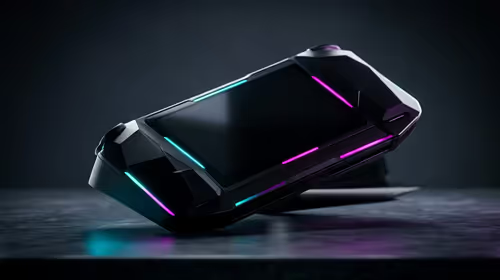
ROG Ally X may beat the LCD Steam Deck for SA gamers who value stronger handheld performance, more memory, and Windows flexibility. Compare battery life, controls, game libraries, and Polokwane support needs before deciding.
Read more
Minisforum's M2 Pro pairs Core Ultra X7, Arc B390 graphics and 32GB onboard memory in 1.8 litres. SA buyers should weigh its fixed memory and $1,439 launch offer against local mini PCs.

Lenovo says Legion Go failures linked to BIOS N3CN42WW are not user error. Affected SA owners should stop retrying the update, preserve proof and open a support case.

Smart monitors can add apps and convenience, but they also add privacy settings and unwanted-software risk. SA buyers should audit the operating system before paying for extras.

A fake 113GB GTA VI ISO reportedly used empty padding around a small malware payload. SA gamers should delete unofficial builds, keep Windows security active and wait for official channels.
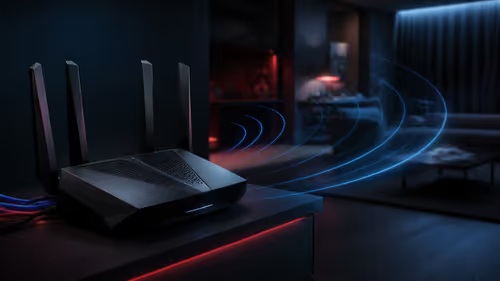
ASUS calls the ROG GT-BN98 the first Wi-Fi 8 gaming router. SA buyers should fix coverage and client limits before paying for a future wireless standard.
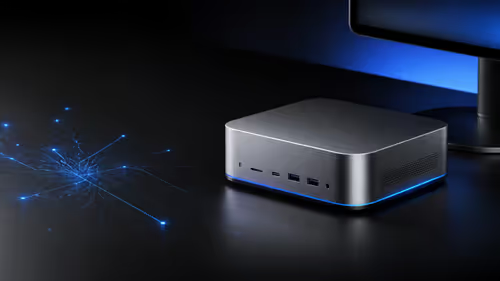
Apple's M6 Mac mini adds faster AI, graphics and networking in the same compact format. SA buyers should wait for a rand listing before comparing value.
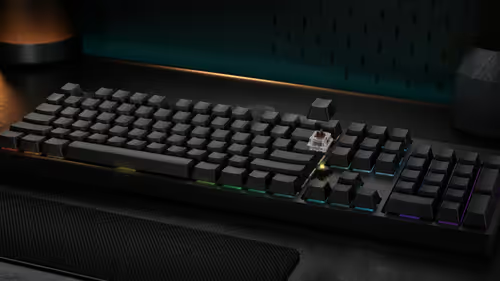
The Vulcan II XP adds hot-swappable switches, sound damping and gaming controls to a full-size wired board. SA buyers should compare feel before features.

Microsoft says Windows on Arm now has over 7,000 verified apps and games. SA buyers should still check each driver, game and work tool before switching.

Xbox Insiders can test disc-to-digital from 31 August 2026. Supported Xbox One and Series X discs gain a digital entitlement, but older discs, regions and title coverage still need exact checks.

ViewSonic's XG2738 pairs QHD QD-OLED with 240Hz and automatic panel care. SA buyers should compare warranty, brightness, ports and burn-in protection against today's R9,999-plus OLED shelf.

NVIDIA's final Windows 10 Game Ready driver is due in October 2026. SA gamers can keep using their GPU, but new game optimisations move on while critical security fixes continue quarterly.

JBL's new Quantum 520, 520X and 120 headsets cover wireless, Xbox-certified and wired use. SA buyers should compare connection, comfort and microphone needs before paying for a new badge.