Quick Answer
Server-grade tubing on AIO coolers refers to thick-walled rubber or reinforced silicone tubing with low permeability, designed to resist coolant evaporation, kinking, and cracking over multi-year operational periods. It extends AIO service life and reduces the risk of minor leaks that can occur with thinner consumer-grade tubing as it ages.
What Server-Grade Tubing Actually Means in AIO Context 🔬
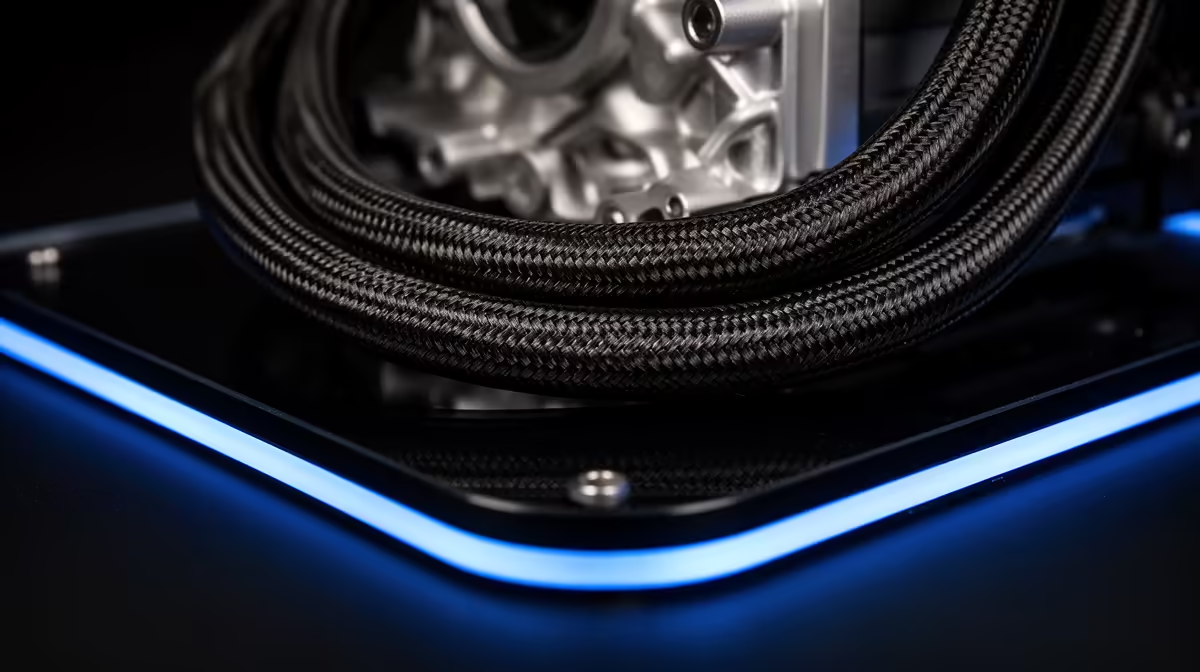
The term server-grade is a marketing descriptor that indicates the tubing exceeds standard consumer AIO hose specifications in wall thickness, inner diameter, and material durability. Standard AIO tubing is typically a single-layer rubber compound 2mm to 3mm thick. Server-grade variants use multi-layer construction with an inner EPDM rubber core, a braided reinforcement layer, and an outer sleeve that resists abrasion and UV degradation. NZXT uses this type of tubing in its Kraken Elite series, marketing it explicitly as server-grade to highlight longevity credentials. The practical benefit is resistance to micro-permeation, the process by which coolant molecules slowly escape through the tubing walls and reduce coolant volume over time. Better tubing slows this process, maintaining optimal flow rate for longer without requiring coolant top-ups.
Flexibility, Kink Resistance and Routing Benefits 🖥️
Long-term builds often involve case panel removal, motherboard reseating, or component upgrades that require bending the AIO tubing. Thinner tubing can kink at sharp angles, which restricts coolant flow and can cause the pump to cavitate. Server-grade tubing maintains its internal diameter even when bent to 90-degree angles, which is particularly useful when routing tubes away from tall RAM modules or chunky VRM heatsinks in tight ATX builds. The outer sleeve also prevents the tubing surface from cracking in ambient conditions with low humidity, relevant for South African builders in dry inland regions like Johannesburg and Pretoria where seasonal ambient humidity can drop below 20%.
How to Evaluate Tubing Quality When Buying an AIO 🛒
Few brands publish tubing specifications in consumer-facing datasheets. Check reviews that do multi-year follow-up testing, or look for brands explicitly calling out tubing construction. Avoid AIOs that do not specify tubing material or list wall thickness below 2mm, as these are more likely to harden and crack after three to four years. In South Africa, replacing an AIO due to tubing failure typically costs R1,500 to R2,500, so choosing a unit with documented tubing quality from the outset pays off.
Avoid Sharp Bends at the Pump Head During Installation ⚡
When routing AIO tubes, leave at least a 50mm radius at every bend point rather than folding the tubing tightly against the pump head or case edge. Tight bends accelerate fatigue at the connection points and are the most common site for long-term micro-cracking in AIO tubing assemblies.
FAQ
Does better AIO tubing affect cooling performance?
Indirectly, yes. Better tubing maintains internal diameter over time, preserving flow rate. Degraded thin tubing can reduce coolant flow after several years, which causes gradual temperature increases that are easy to misattribute to pump wear.
Can I replace AIO tubing if it cracks?
Most consumer sealed AIOs are not designed for user tubing replacement. If tubing cracks, the unit typically needs full replacement. This is why choosing durable tubing from the start is preferable to attempting a field repair.
How long should a good AIO cooler last in a South African home build?
A quality AIO with server-grade tubing and a reputable pump should last five to seven years in a home gaming build used six to eight hours daily. Pump failure is more likely than tubing failure, but tubing quality determines whether the unit survives to that pump lifespan.
Building a long-term gaming rig? Evetech stocks AIO coolers from brands with documented tubing and pump longevity ratings, all with local warranty coverage to protect your investment.