Quick Answer
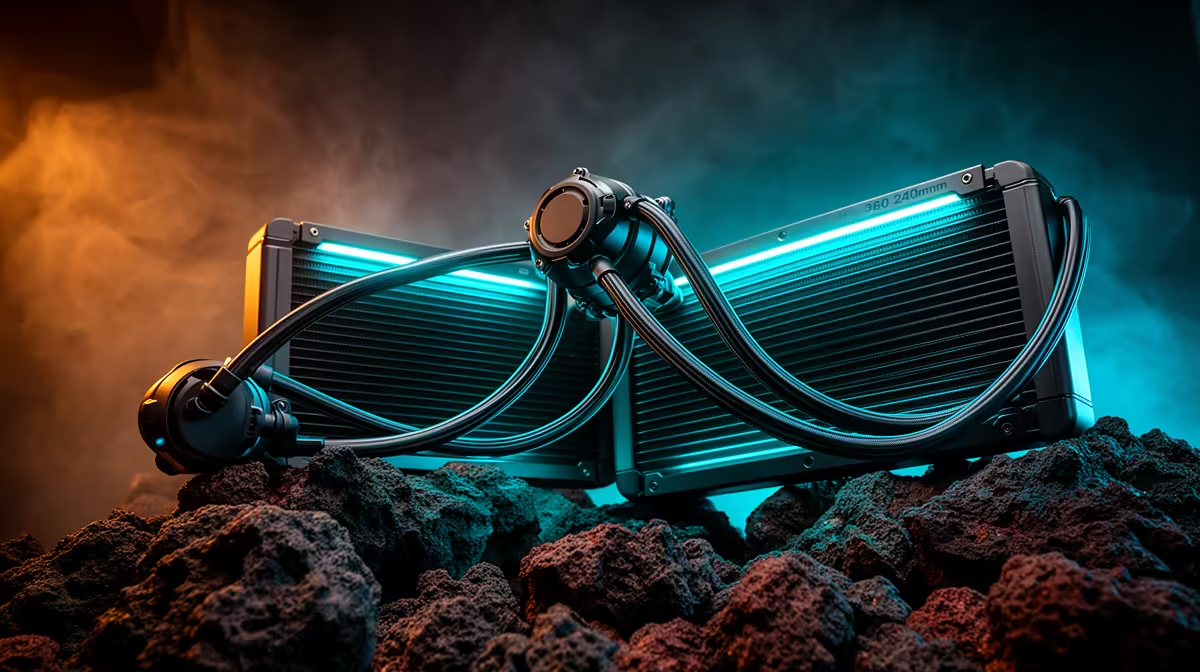
On R20,000, a 240mm AIO is enough for most CPUs, but if your build uses a high-wattage Ryzen 9 or Core i9 the 360mm is the safer pick. A 240mm runs about R1,800-R2,800 and a 360mm about R2,800-R4,000, and at this budget the cost gap is small enough to size up if your chip demands it.
Sizing the radiator to the CPU
The radiator only matters in proportion to the heat it must shed. A Ryzen 5 or Core i5 near 105W is fully handled by a 240mm, which holds it in the mid-60s Celsius while gaming. Step up to a 16-core flagship pulling 200W-250W in renders and the 360mm's extra fan and surface area drop temperatures by 4-7 degrees Celsius, keeping clocks high and fan noise low. At R20,000 you likely have room for either, so let the chip decide.
Don't forget case clearance and airflow
A 360mm needs roughly 400mm of mounting space and a top or front bracket for three 120mm fans, which most R2,500-plus ATX cases provide. Whichever radiator you choose, set the case to a slight positive pressure with one or two intake fans so the AIO pulls cool air. Good case airflow does as much for sustained temperatures as the radiator size itself, so budget a fan or two if your chassis ships bare.
FAQ
Do I need a 360mm AIO at R20,000?
Only if your CPU is a high-wattage 12 or 16-core chip; mainstream six and eight-core CPUs are well served by a 240mm. The R20,000 budget gives you room for either, so match the cooler to the chip.
How much temperature difference does a 360mm make?
On a 200W-plus CPU under all-core load, a 360mm runs roughly 4-7 degrees Celsius cooler than a 240mm. On a low-power chip the gap is only a degree or two.
What case clearance does a 360mm AIO need?
Plan for about 400mm of mounting length and a top or front bracket sized for three 120mm fans. Most ATX mid-towers above R2,500 accommodate this.
Buyer Tip
the radiator by CPU wattage: 240mm for mainstream chips, 360mm for 200W-plus flagships, and confirm your case clears three 120mm fans before you buy.