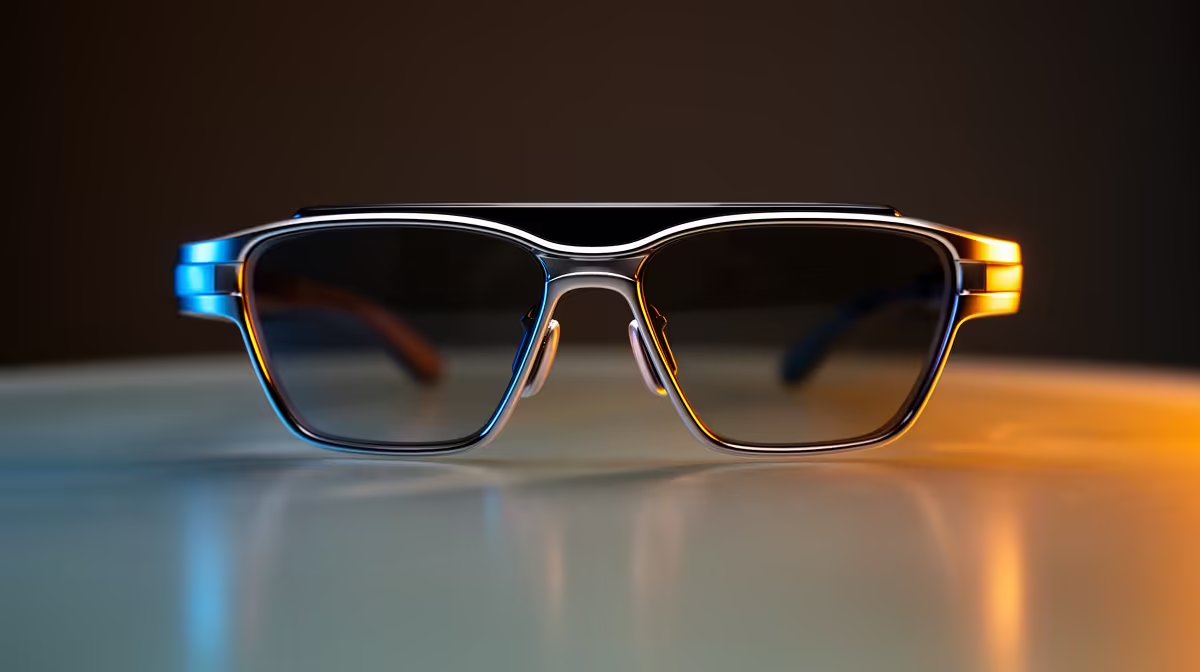
Walk past a phone shop window and the frames on display look almost identical, yet the gap between smart glasses and AR glasses is the gap between a camera on your face and a screen in your eye. One captures and listens, the other draws digital content onto the world you are looking at. Buy the wrong category and you will either pay for a display you never use or miss the one feature you wanted.
Quick Answer
Smart glasses add a camera, speakers, and a voice assistant with no visible screen, so they look like ordinary frames. AR glasses project a real image into your field of view for notifications, navigation, or a virtual monitor. Display glasses such as the Meta Ray-Ban Display sit between the two, with a small in-lens screen rather than full augmented reality.
The core difference, in plain terms
Audio-first smart glasses, like the Ray-Ban Meta Gen 2, have no display at all. The sensors are a camera and microphones, the output is sound through tiny speakers near your ears, and a voice assistant ties it together. They suit anyone who already wears glasses and wants hands-free calls, quick photos, and a voice AI without looking like they are wearing tech. The whole appeal is that nobody can tell.
AR glasses are effectively an external screen for your eyes. Their job is to overlay digital content, a 150-inch virtual display, turn-by-turn arrows laid over the street, live translation captions, onto what you actually see. That richness costs comfort. They are heavier, run shorter on battery, and tend to be short-session devices rather than all-day eyewear.
To see where the category stands right now, browse the AR glasses range at Evetech to compare current frames and their display capabilities side by side.
Where display glasses fit
The Meta Ray-Ban Display, launched in late 2025 at roughly 799 US dollars, muddies the line on purpose. It is not a full AR headset, it puts a single 600 by 600 monocular display in the right lens for quick glances, weather, messages, a navigation cue, paired with a wrist-worn Neural Band for gesture control. It weighs around 69 grams and runs roughly three to six hours, which tells you it is a glance-and-go device, not something you wear from morning to night.
That is the useful mental model. Smart glasses give you ears and a camera, AR glasses give you a rich world overlay, and display glasses give you a basic heads-up readout for short bursts. Each trades comfort and battery against how much it shows you.
Which one is right for you
Choose audio smart glasses if you want frames you can wear to dinner, all-day battery, and hands-free capture and calls without a screen. Choose display glasses if you want quick notifications and navigation cues in your eyeline but can live with shorter sessions and more weight. Choose full AR glasses if the point is a large virtual screen for a laptop, phone, or handheld, and you are comfortable treating them as a sit-down accessory rather than everyday eyewear. The lighter, screen-free option almost always wins on comfort, while anything with a display wins on capability and loses on battery.
Frequently Asked Questions
Do smart glasses have a screen?
Audio-first smart glasses do not. They rely on a camera, microphones, speakers, and a voice assistant, with no visual display, which is exactly what keeps them looking like normal frames.
Can AR glasses replace a monitor?
For many uses, yes. AR glasses can project a large virtual display, often 150 inches or more, so you can mirror a laptop or phone screen anywhere. The trade-off is weight and battery life, so they suit focused sessions rather than all-day wear.
What makes the Ray-Ban Meta Display different from regular Ray-Ban Meta?
Unlike the standard Gen 2, the Display version incorporates a monocular in-lens panel and a Neural Band wristband for gesture input, while the Gen 2 carries no screen and runs considerably longer on a charge. One is built for quick heads-up readouts, the other for audio, camera, and AI use.
Are AR glasses worth it over smart glasses?
It depends on whether you need to see digital content or just hear and capture it. If you want a private screen, navigation overlays, or translation captions, AR is worth the extra weight. If you mainly want hands-free calls and photos, audio smart glasses are lighter and last longer.