


550W PSU Planning for RTX 5080 Super Builds in SA
550W for RTX 5080 Super needs a full-build check, not a simple yes. Review GPU guidance, CPU draw, transient load, connectors, PSU quality, and upgrade plans before deciding.
Read moreSolve poor screen positioning by adjusting orientation and arm angle as separate variables. The UStand gives a full 360-degree rotation for orientation and a 135-degree folding arm for position, with anti-slip rubber helping the display stay in contact between changes.
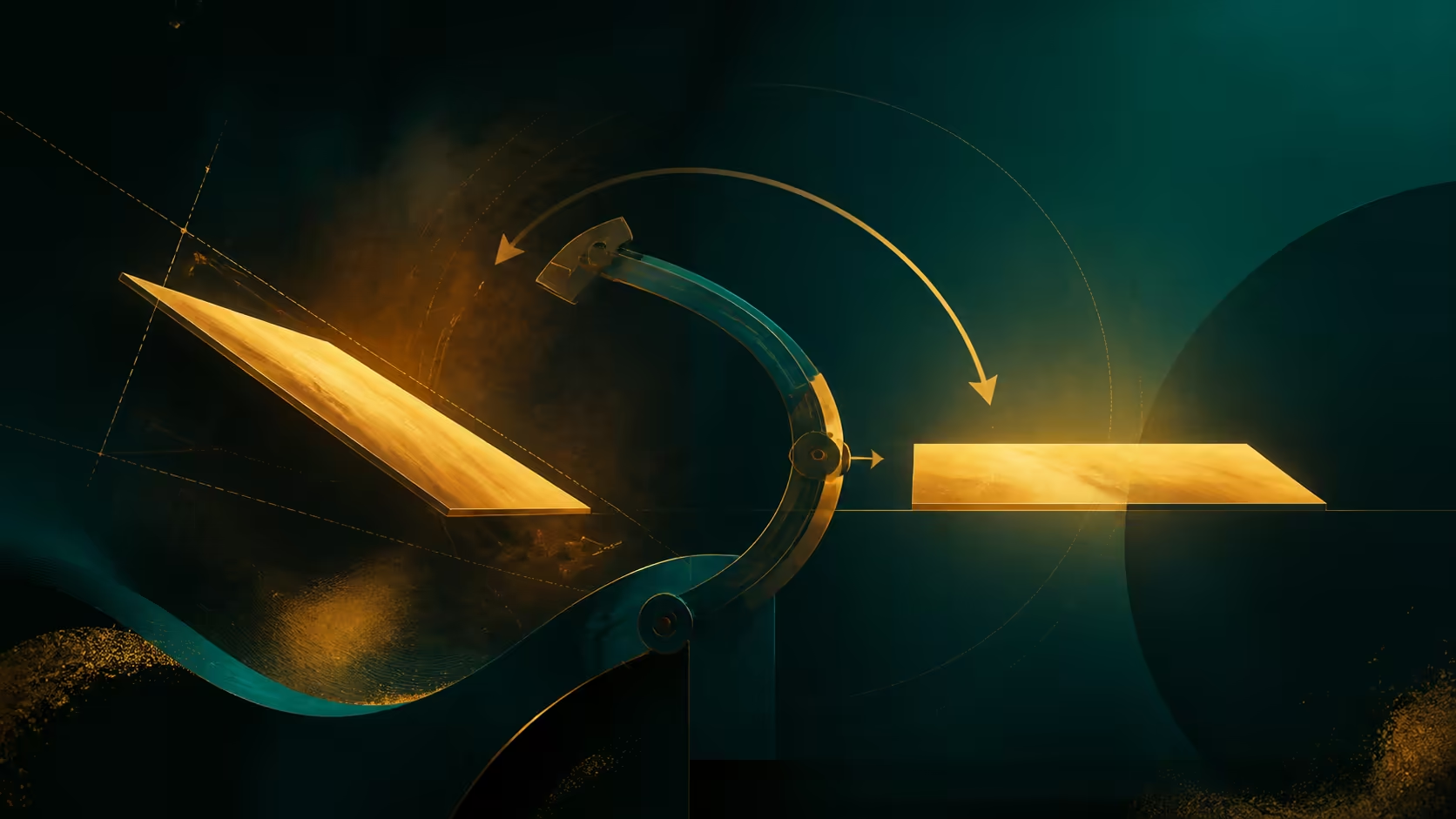
Solving poor screen positioning with a rotating folding arm becomes manageable when orientation and support angle are treated as separate variables. The UPERFECT UStand supplies both movements, letting the user adjust the one linked to the actual problem instead of changing everything at once.
The UStand solves positioning with full-circle head rotation and an arm that folds through 135 degrees, supporting portrait, landscape and low-angle viewing without remounting.
At R399, the UStand rotates through 360 degrees and folds across 135 degrees for 7-15.6-inch displays. Set the supporting arm first, seat the device on the anti-slip rubber, then change orientation while watching cable clearance and contact.
Describe what is wrong in concrete terms. A screen may need a higher relationship to the base, a different tilt, another orientation or simply more clearance from the main display. Each issue points to a different action.
Clear the working area and open the empty aluminium stand to a neutral position. Confirm that the display lies within the supported diagonal range before mounting it. Screen size does not prove exact body fit, load capacity or laptop suitability.
Seat the device against the intended rubber contact areas and view it from the normal chair. Make a note of which edge needs to move before touching the mechanism.
The 135-degree arm changes the supported position. Move it in small increments, supporting the display and pausing to inspect seating. Avoid jumping between extremes because that makes the useful middle difficult to locate.
If the relationship to the desk improves, stop changing the arm. The product's adjustment figure describes available travel rather than a promised viewing result for every person and workspace.
Compare screens in Evetech's portable monitor collection when display dimensions and port locations still need to be matched.
The rotating section changes orientation through 360 degrees. Turn only after the arm produces a sound supporting position. Keep the display clear of walls, notebooks and neighbouring screens throughout the movement.
All-around anti-slip rubber adds contact, but every new orientation deserves inspection. The screen should remain centred without a connector or control pressing against the support.
If orientation solves the task, record the successful sequence: arm position first, rotation second. Repeating a known route is faster than rediscovering it at every setup.
A compatible device may charge without being removed. Connect power after the position is chosen and give the lead enough slack to follow planned movement. Keep it outside the hinge and grip zones.
Browse monitor accessories at Evetech for other components, verifying connectors and supported devices separately.
If the screen still cannot reach the required position, define the missing geometry rather than forcing the stand. Available movement may simply not match that particular desk arrangement.
Save a successful configuration by recording which screen edge faces the connector, the approximate arm position and where the base sits relative to the main display. This practical reference makes the next setup faster without implying that the same position suits every surface.
Start with the aluminium base square to the user, adjust arm height, then rotate orientation while holding the device. The stand fits 7-to-15.6-inch screens and accepts widths from 5.9 to 9.56 inches. Anti-wobble and anti-tip design preserve the chosen position. Route the cable after the angle is settled so connection tension does not undo the alignment.
Save a comfortable landscape and portrait angle so later changes have two trusted references. Repeated guesswork can turn flexibility into needless daily adjustment.
Good positioning should reduce neck movement without placing the screen beyond comfortable reading distance.
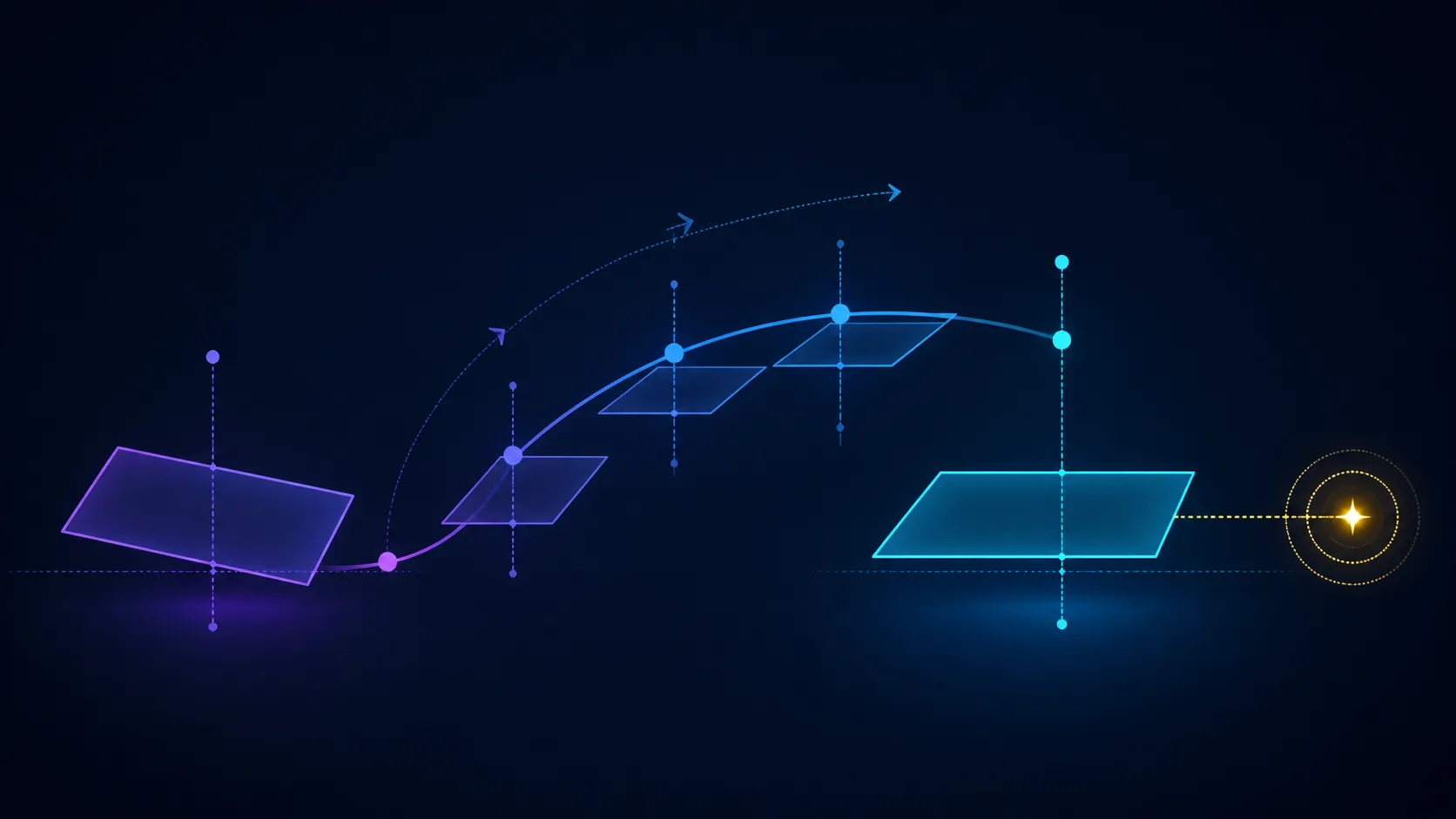
Start with the folding arm when the supported position is wrong; use rotation afterwards if screen orientation also needs changing.
The mechanism covers 360 degrees, subject to the physical clearance provided by the desk and surrounding objects.
It changes the display's supported relationship to the base through a range of 135 degrees.
Rubber surrounds the intended support areas, and the user should confirm centred seating after every individual movement.
Mounted charging is supported, but movement should stop if the cable tightens or interferes with a joint or contact point.
The universal span covers 7-15.6-inch displays, followed by an exact body and connector-clearance assessment.
Yes. Once unloaded and disconnected, the aluminium structure folds flat for travel or storage.
Need to solve a specific secondary-screen position? Explore adjustable monitor stands at Evetech with the arm, orientation and cable changes separated in your plan.
Start with the folding arm when the supported position is wrong; use rotation afterwards if screen orientation also needs changing.
The mechanism covers 360 degrees, subject to the physical clearance provided by the desk and surrounding objects.
It changes the display's supported relationship to the base through a range of 135 degrees.
Rubber surrounds the intended support areas, and the user should confirm centred seating after every individual movement.
Mounted charging is supported, but movement should stop if the cable tightens or interferes with a joint or contact point.
The universal span covers 7-15.6-inch displays, followed by an exact body and connector-clearance assessment.
Yes. Once unloaded and disconnected, the aluminium structure folds flat for travel or storage.
550W for RTX 5080 Super needs a full-build check, not a simple yes. Review GPU guidance, CPU draw, transient load, connectors, PSU quality, and upgrade plans before deciding.
Read more
8000Hz polling is overrated for most SA gamers because gains can be tiny next to battery drain and monitor limits. Mbombela players should weigh mouse feel, game support, and system stability before chasing the number.
Read more
Magnetic switches are taking over SA gaming keyboards because actuation can be tuned. For Sandton gamers, rapid trigger, reset control, and profile depth can help, but layout, key feel, and software quality still matter.
Read more
Polokwane oled monitor value questions need cautious SA context because pricing can move with availability, exchange rates, specs, and warranty support. Treat the trend as a planning signal, not a fixed price promise.
Read more
Arc B580 budget builds for Midrand gamers can shift with exchange rates, supply, specs, and model tier. Treat the title as a buying prompt, then compare SA warranty, timing, and build priorities.
Read more
ROG Ally X may beat the LCD Steam Deck for SA gamers who value stronger handheld performance, more memory, and Windows flexibility. Compare battery life, controls, game libraries, and Polokwane support needs before deciding.
Read more
Minisforum's M2 Pro pairs Core Ultra X7, Arc B390 graphics and 32GB onboard memory in 1.8 litres. SA buyers should weigh its fixed memory and $1,439 launch offer against local mini PCs.
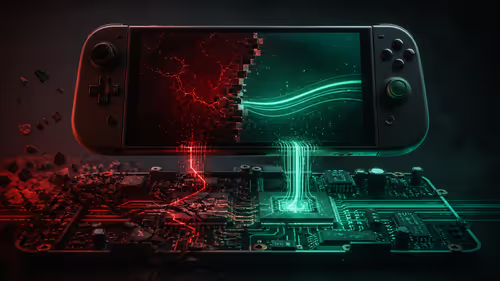
Lenovo says Legion Go failures linked to BIOS N3CN42WW are not user error. Affected SA owners should stop retrying the update, preserve proof and open a support case.

Smart monitors can add apps and convenience, but they also add privacy settings and unwanted-software risk. SA buyers should audit the operating system before paying for extras.

A fake 113GB GTA VI ISO reportedly used empty padding around a small malware payload. SA gamers should delete unofficial builds, keep Windows security active and wait for official channels.
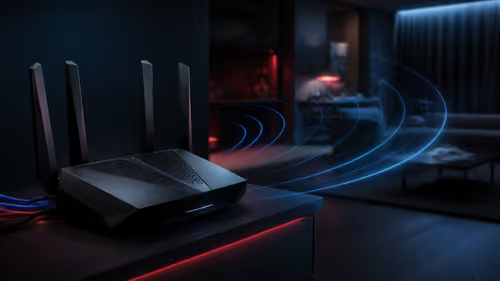
ASUS calls the ROG GT-BN98 the first Wi-Fi 8 gaming router. SA buyers should fix coverage and client limits before paying for a future wireless standard.
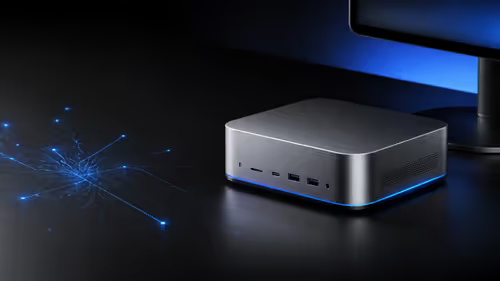
Apple's M6 Mac mini adds faster AI, graphics and networking in the same compact format. SA buyers should wait for a rand listing before comparing value.
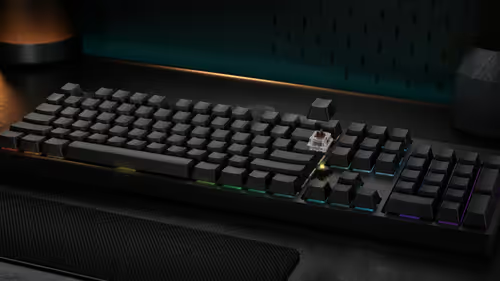
The Vulcan II XP adds hot-swappable switches, sound damping and gaming controls to a full-size wired board. SA buyers should compare feel before features.

Microsoft says Windows on Arm now has over 7,000 verified apps and games. SA buyers should still check each driver, game and work tool before switching.

Xbox Insiders can test disc-to-digital from 31 August 2026. Supported Xbox One and Series X discs gain a digital entitlement, but older discs, regions and title coverage still need exact checks.
ViewSonic's XG2738 pairs QHD QD-OLED with 240Hz and automatic panel care. SA buyers should compare warranty, brightness, ports and burn-in protection against today's R9,999-plus OLED shelf.
NVIDIA's final Windows 10 Game Ready driver is due in October 2026. SA gamers can keep using their GPU, but new game optimisations move on while critical security fixes continue quarterly.

JBL's new Quantum 520, 520X and 120 headsets cover wireless, Xbox-certified and wired use. SA buyers should compare connection, comfort and microphone needs before paying for a new badge.