If you have ever bought a webcam, a small LED panel, and a desktop microphone and then discovered none of their mounts share a common connector, you have met the problem this thread solves. The standard 1/4 inch universal thread mount, officially the 1/4 inch 20 UNC, is the one connector that ties most desk studio gear together into a single, swappable system.
Quick Answer
The 1/4 inch 20 UNC thread, 6.35mm across, is the standard connector on webcams, cameras, LED panels, ball heads, mini tripods, and most shock mounts. Gear that shares this thread can swap between the same stand without adapters. It is the closest thing the studio accessory market has to a universal socket.
🔌 The Connector Behind the Standard
The 1/4 inch 20 UNC thread migrated from mechanical engineering to photographic gear decades ago and stuck because it is compact enough to embed in small bodies, strong enough to carry a few kilograms, and cheap to produce at volume. Camera manufacturers adopted it as a base standard, and accessory makers followed so their products would be compatible with whatever customers already owned.
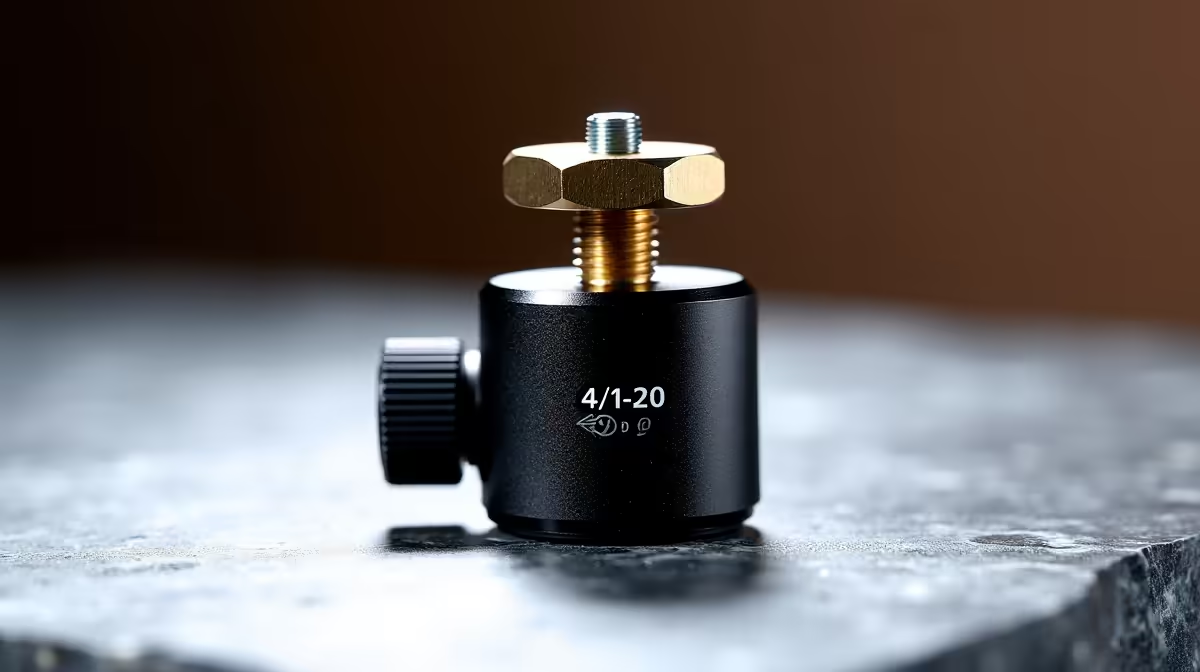
The measurement describes the outer shaft diameter: 6.35mm. The "20" means 20 threads per inch. Those two figures lock every compliant device into the same grip, whether the socket sits in a webcam base, an LED panel underside, or the top of a compact tripod head. One stand can hold your webcam in the morning and your key light in the afternoon because both share that connector.
📺 Which Studio Accessories Use This Thread
Webcams are the starting point. Every mainstream streaming and conferencing webcam carries a 1/4 inch socket on its base, which is why they sit directly on tripods and ball heads without a separate bracket.
DSLR and mirrorless camera bodies have a 1/4 inch tripod socket machined into the base plate. If you plan to use a mirrorless camera as a webcam, the same stand that holds your USB webcam carries it without modification.
Desk LED panels and ring lights are a third category. Most compact video lights include a 1/4 inch socket for mounting to a stand, clamp arm, or tripod. Ball heads, mini tripods, phone clamps, and Arca-style quick-release plates complete the ecosystem, each assuming the 1/4 inch thread as the universal interface.
🔧 Where Adapters Come In
The 1/4 inch standard has a larger sibling: the 3/8 inch 16 UNC thread. Heavier professional rigs, some studio light stands, and larger ball heads use this wider thread to carry the additional torque loads that come with heavier cameras or long boom arms.
Step adapters bridging the two are inexpensive and widely available. They allow a 3/8 inch light stand to accept a 1/4 inch accessory via a brass or aluminium bushing, and some shock mounts ship with a 1/4 inch insert already fitted from the factory. For desk and home studio accessories, 1/4 inch is almost certainly what you will encounter.
Frequently Asked Questions
What is the physical size of the 1/4 inch studio thread?
The outer shaft diameter is 6.35mm with a pitch of 20 threads per inch. Those two dimensions define the 1/4 inch 20 UNC standard. The thread sits flush in a webcam base and carries well over a kilogram without stripping under normal use.
Do microphones share the same thread standard as webcams?
Some do, particularly condenser mics where the shock mount includes a 1/4 inch socket. Many mics use a 5/8 inch thread instead, common on mic stands and boom arms. Step-down adapters from 5/8 to 1/4 inch are cheap and usually included with the shock mount.
Can an LED video light mount to a 1/4 inch camera stand?
Yes. Most compact desk LED panels have a 1/4 inch socket on the base or rear mounting point. The same stand arm that holds your webcam can pivot to hold your key light, useful on desks where stand footprint is a real constraint.
Will a full DSLR camera fit on a 1/4 inch desktop mount?
Yes. Every DSLR and mirrorless body has a 1/4 inch socket. The practical limit is the stand's load rating: a full-frame body with a lens can exceed two kilograms, so confirm the stand is rated above that figure before using it on a desk.
What is the difference between the 1/4 inch and 3/8 inch studio threads?
The 3/8 inch thread is wider at roughly 9.5mm and handles higher torque loads, appearing on heavy-duty light stands and larger ball heads. A step adapter converts between the two for very little cost. For desk studio work the 1/4 inch thread covers almost everything; the 3/8 inch standard only becomes relevant when adding full-size studio lighting stands.
Ready to build a desk studio where your gear actually works together? Browse the mounts, stands, and studio accessories at Evetech and put together a setup where every piece shares the same connection point.