


550W PSU Planning for RTX 5080 Super Builds in SA
550W for RTX 5080 Super needs a full-build check, not a simple yes. Review GPU guidance, CPU draw, transient load, connectors, PSU quality, and upgrade plans before deciding.
Read moreLubing mechanical keyboard switches smooths stem travel and quiets spring ping, most noticeable on linear switches and least on heavy tactile ones. It is worth doing on budget switches with rough tolerances, but Evetech's pre-lubed options skip the step for most buyers.
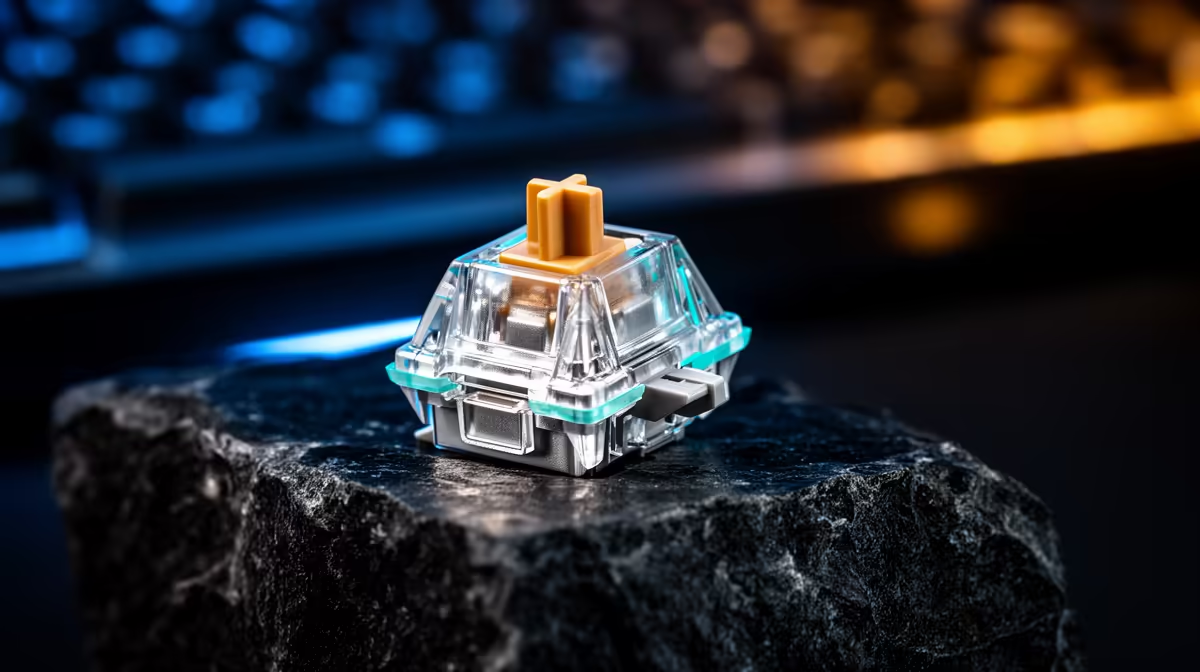
Lubing a mechanical switch can smooth scratchy travel, soften bottom-out and reduce spring noise. The gain depends on the switch and factory treatment. A dry budget linear often changes a lot; a well-lubed tactile can lose the bump you bought it for if grease reaches the wrong surfaces.
Test the keyboard stock for a week, then lube two spare switches before touching the board. Use a thin switch lubricant in a tiny amount on stem rails and spring. Keep lubricant away from click jackets and tactile legs unless the switch maker or a trusted method says otherwise.
Compare factory options in Evetech's gaming-keyboard deals and popular keyboard range. Check whether the model is hot-swappable and whether opening switches affects its warranty route.
Lubricant reduces friction between the stem, housing and spring. Linear switches can feel smoother and sound less high-pitched. Springs with a metallic ping can quieten after their contact points receive a light coat.
Tactile switches need restraint. Grease on the tactile legs can round off the bump. Clicky mechanisms can stop clicking or become inconsistent when contaminated.
Sound also comes from keycaps, plate, case foam and stabilisers. Switch lube cannot fix a rattling spacebar or hollow case by itself.
Remove a hot-swap switch with the proper puller, supporting the socket. Open it with a compatible tool and keep stem, spring and housing for that switch together.
Brush on a film you can barely see. More lubricant creates a sluggish return and uneven sound. Bag-lubing springs is faster, while hand-brushing gives control for a small set.
Reassemble the test switches, confirm every pin is straight and compare them in normal keys. Type for several days before deciding whether the whole board deserves the time.
Soldered keyboards require desoldering, which expands the risk and work. Factory-lubed switches or a different board can be better value when modification is not the hobby you want.
A full-size keyboard can contain more than one hundred switches. Opening, brushing and rebuilding every one takes hours, and inconsistency becomes audible when your coat varies. A 60 or 75 per cent board is a smaller first project.
Start with the worst-sounding alphanumeric keys rather than the whole set. Large keys use stabilisers, so their rattle needs a separate diagnosis. If the stock switches already feel smooth, spend the time on stabiliser tuning, desk mat placement or keycaps.
Store spare switches and note the lubricant used. Dust can stick to excess grease, so keep food and open liquid away from the board and use a cover during storage. Do not spray aerosol lubricant into an assembled keyboard; it reaches contacts, sockets and foam with no control.
If one key becomes slow, remove that switch, clean or replace it and test the socket. Relubing every switch because one feels heavy can spread the original mistake.
No. Factory treatment, switch type and personal feel decide the gain.
Too much on the tactile surfaces can weaken or blur the bump.
You can pull individual switches without disassembling the case, but the switch housings still need opening for controlled lubing.
Lube two spare switches with a near-invisible coat, compare them for several days and continue only when the change suits your board and typing.
No. Factory treatment, switch type and personal feel decide the gain.
Too much on the tactile surfaces can weaken or blur the bump.
You can pull individual switches without disassembling the case, but the switch housings still need opening for controlled lubing. {{PRODUCTS: { facets: { query: "hot swap mechanical gaming keyboard" }, limit: 12, title: "Compare Mod-Friendly Keyboards", style: "4" } }}
550W for RTX 5080 Super needs a full-build check, not a simple yes. Review GPU guidance, CPU draw, transient load, connectors, PSU quality, and upgrade plans before deciding.
Read more
8000Hz polling is overrated for most SA gamers because gains can be tiny next to battery drain and monitor limits. Mbombela players should weigh mouse feel, game support, and system stability before chasing the number.
Read more
Magnetic switches are taking over SA gaming keyboards because actuation can be tuned. For Sandton gamers, rapid trigger, reset control, and profile depth can help, but layout, key feel, and software quality still matter.
Read more
Polokwane oled monitor value questions need cautious SA context because pricing can move with availability, exchange rates, specs, and warranty support. Treat the trend as a planning signal, not a fixed price promise.
Read more
Arc B580 budget builds for Midrand gamers can shift with exchange rates, supply, specs, and model tier. Treat the title as a buying prompt, then compare SA warranty, timing, and build priorities.
Read more
ROG Ally X may beat the LCD Steam Deck for SA gamers who value stronger handheld performance, more memory, and Windows flexibility. Compare battery life, controls, game libraries, and Polokwane support needs before deciding.
Read more
Minisforum's M2 Pro pairs Core Ultra X7, Arc B390 graphics and 32GB onboard memory in 1.8 litres. SA buyers should weigh its fixed memory and $1,439 launch offer against local mini PCs.

Lenovo says Legion Go failures linked to BIOS N3CN42WW are not user error. Affected SA owners should stop retrying the update, preserve proof and open a support case.

Smart monitors can add apps and convenience, but they also add privacy settings and unwanted-software risk. SA buyers should audit the operating system before paying for extras.

A fake 113GB GTA VI ISO reportedly used empty padding around a small malware payload. SA gamers should delete unofficial builds, keep Windows security active and wait for official channels.

ASUS calls the ROG GT-BN98 the first Wi-Fi 8 gaming router. SA buyers should fix coverage and client limits before paying for a future wireless standard.

Apple's M6 Mac mini adds faster AI, graphics and networking in the same compact format. SA buyers should wait for a rand listing before comparing value.

The Vulcan II XP adds hot-swappable switches, sound damping and gaming controls to a full-size wired board. SA buyers should compare feel before features.

Microsoft says Windows on Arm now has over 7,000 verified apps and games. SA buyers should still check each driver, game and work tool before switching.

Xbox Insiders can test disc-to-digital from 31 August 2026. Supported Xbox One and Series X discs gain a digital entitlement, but older discs, regions and title coverage still need exact checks.

ViewSonic's XG2738 pairs QHD QD-OLED with 240Hz and automatic panel care. SA buyers should compare warranty, brightness, ports and burn-in protection against today's R9,999-plus OLED shelf.

NVIDIA's final Windows 10 Game Ready driver is due in October 2026. SA gamers can keep using their GPU, but new game optimisations move on while critical security fixes continue quarterly.

JBL's new Quantum 520, 520X and 120 headsets cover wireless, Xbox-certified and wired use. SA buyers should compare connection, comfort and microphone needs before paying for a new badge.