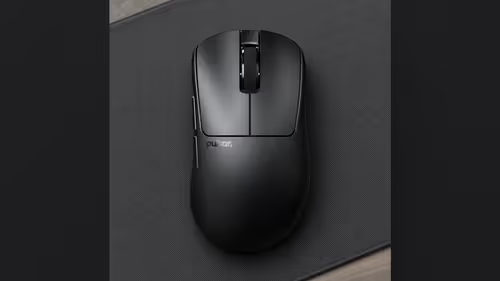
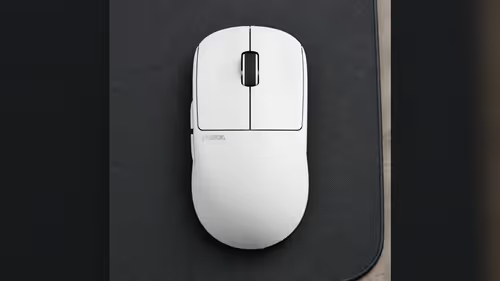
Four mice, one family name, and two different questions to answer before you choose. The Pulsar Pro Series splits along shape, symmetrical or ergonomic, and along weight, from 50g up to 61g. A second, quieter split sits in the box: two of the four come with a plain 8K dongle, the other two with a Link 8K Receiver. Get those straight and the range is easy to read.
Quick Answer
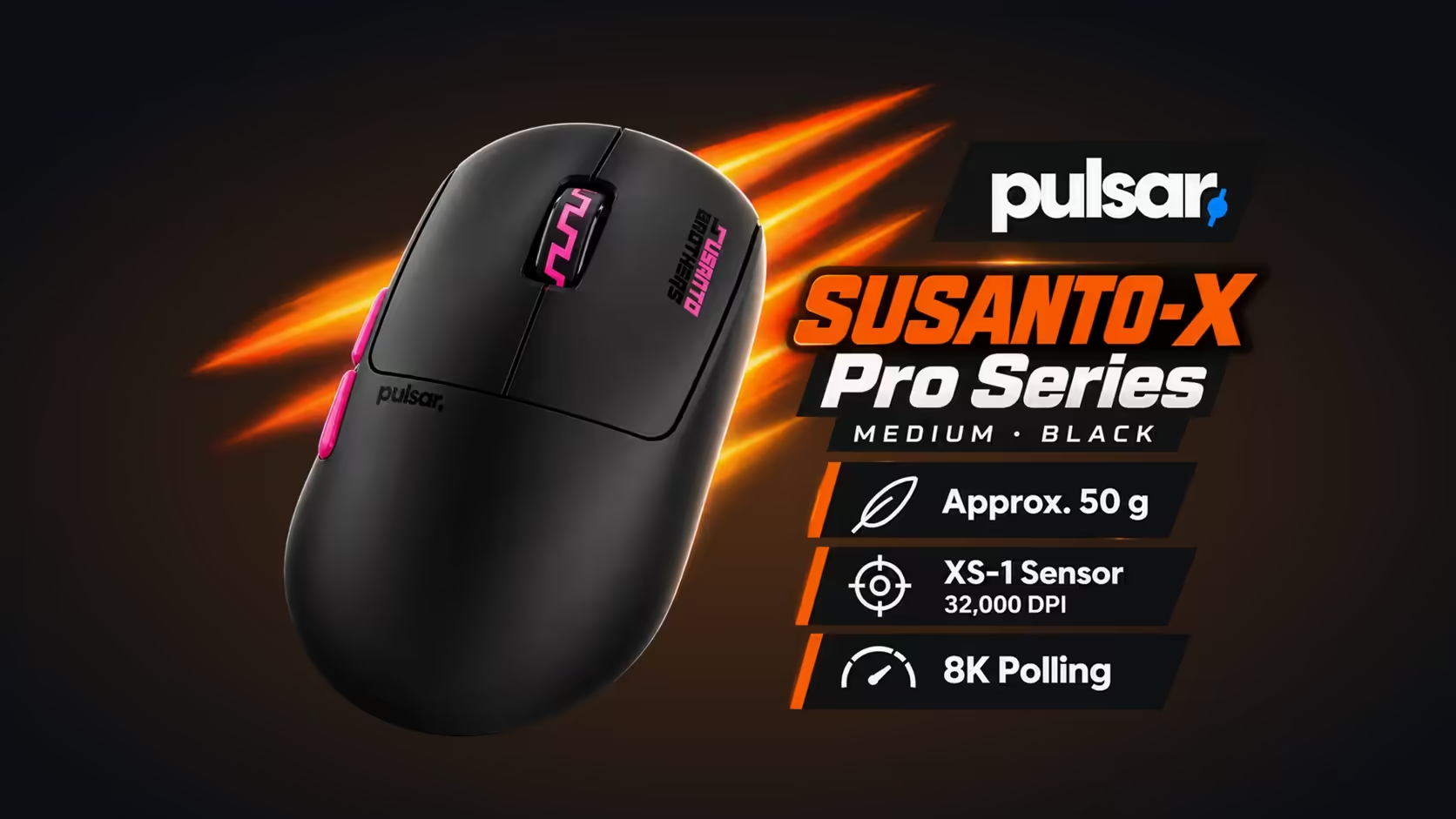
Three Pulsar Pro Series mice are symmetrical: Susanto-X at 50g, CARPE-X at 60g and BUZZ-X at 61g. The JV-X is the ergonomic one, at about 56g. Pick a symmetrical shell if more than one person shares the mouse or hands swap at a LAN, and the JV-X if you want a palm-shaped body. Evetech lists all four in Medium.
🧩 Shape: symmetrical or ergonomic
A symmetrical mouse has the same outline on both sides, so a left-handed or a right-handed player can use it. An ergonomic mouse is shaped for one hand, with a body that fills the palm.
Here is how the four sort, with the grips each one is listed for:
- Susanto-X: symmetrical, 118.7 x 62.3 x 38.6mm, for claw and relaxed claw.
- JV-X: ergonomic palm shape, 121 x 62 x 40.6mm, for palm and relaxed claw.
- CARPE-X: symmetrical, 126 x 65 x 40.3mm, for palm and claw.
- BUZZ-X: symmetrical, 124.6 x 65.4 x 40mm, for claw and palm, with a low hump and wide waist.
The lightest mouse is also the shortest and narrowest of the four, so a smaller hand with a lifted claw grip can start at the top of that list. A bigger palm and a flatter grip point further down.
⚖️ Weight: 50g, 56g, 60g and 61g
The four weights are Susanto-X at 50g, JV-X at about 56g, CARPE-X at 60g and BUZZ-X at 61g, all measured without the cable. The gap from lightest to heaviest is only 11g, so this is a family of mice that feel related, not a ladder from featherweight to brick.
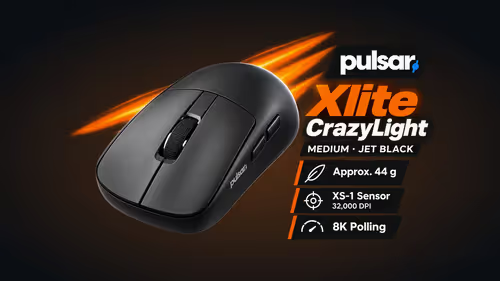
What the extra grams buy is a steadier shell. A heavier mouse tends to resist overshooting a flick, while a lighter one is quicker to lift and reset. Neither is better in the abstract; it comes down to how your arm moves. All four share the XS-1 sensor at up to 32,000 DPI and 750 IPS, so the sensor is not what separates them.
📡 Receivers, skates and software
This is the split most buyers miss. Susanto-X and JV-X ship with a plain 8K dongle and a sheet of 16 dot skates, and they use desktop software on Windows 7 or higher. CARPE-X and BUZZ-X swap in the Link 8K Receiver, which has two buttons and an LED so you can change DPI without software, and they use Bibimbap web software with no dot skates in the box.
All four connect over 2.4GHz using the receiver that ships with them. Getting the full 8000Hz out of any of them calls for USB 3.0 on the PC side plus a CPU from the Core i5 or Ryzen 5 tier upward. On switches, Susanto-X and JV-X are double-click free, while CARPE-X and BUZZ-X use optical switches that sidestep that fault.
🛒 Choosing
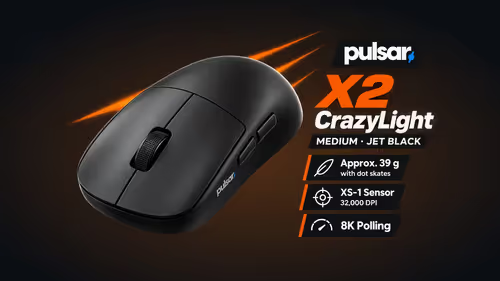
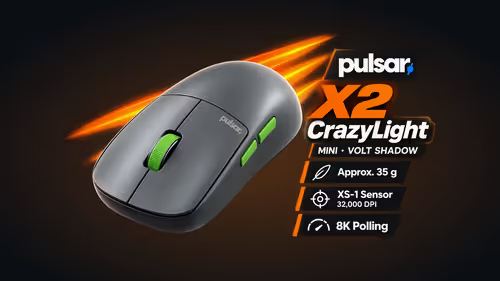
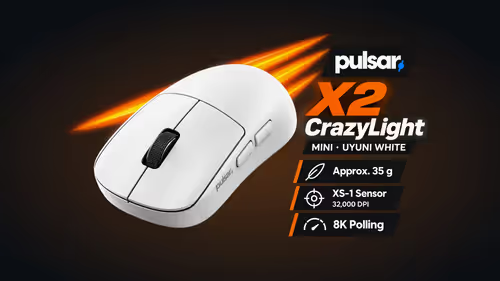
Evetech sells the range in South Africa, and the price of each one sits on its product page. Browse the gaming mice category to see them, or the wireless mouse page if cable-free is your starting point. Every mouse in the Pro Series, and the CrazyLight family beside it, appears on the Pulsar brand page.
Frequently Asked Questions
Which Pro Series mice are symmetrical?
Susanto-X at 50g, CARPE-X at 60g and BUZZ-X at 61g. The JV-X, at about 56g, is the ergonomic palm shape.
What grips does each model suit?
Susanto-X: claw and relaxed claw. JV-X: palm and relaxed claw. CARPE-X: palm and claw. BUZZ-X: claw and palm, with a low hump.
What differs in the box?
Susanto-X and JV-X ship a plain 8K dongle with 16 dot skates. CARPE-X and BUZZ-X carry the Link 8K Receiver and no dot skates.
Which software does each use?
Susanto-X and JV-X use desktop software on Windows 7 or higher. CARPE-X and BUZZ-X use Bibimbap web software.
Do all four share a sensor?
Yes, the XS-1 sensor, up to 32,000 DPI at 750 IPS.
Ready to find your shape?
Explore the gaming mice at Evetech and compare the Pro Series side by side.