


550W PSU Planning for RTX 5080 Super Builds in SA
550W for RTX 5080 Super needs a full-build check, not a simple yes. Review GPU guidance, CPU draw, transient load, connectors, PSU quality, and upgrade plans before deciding.
Read moreTactile switches add a physical bump during travel, while linear switches move without that deliberate feedback. The better choice depends on force, sound, repeat speed, typing confidence and control, not a universal claim that one category is faster.
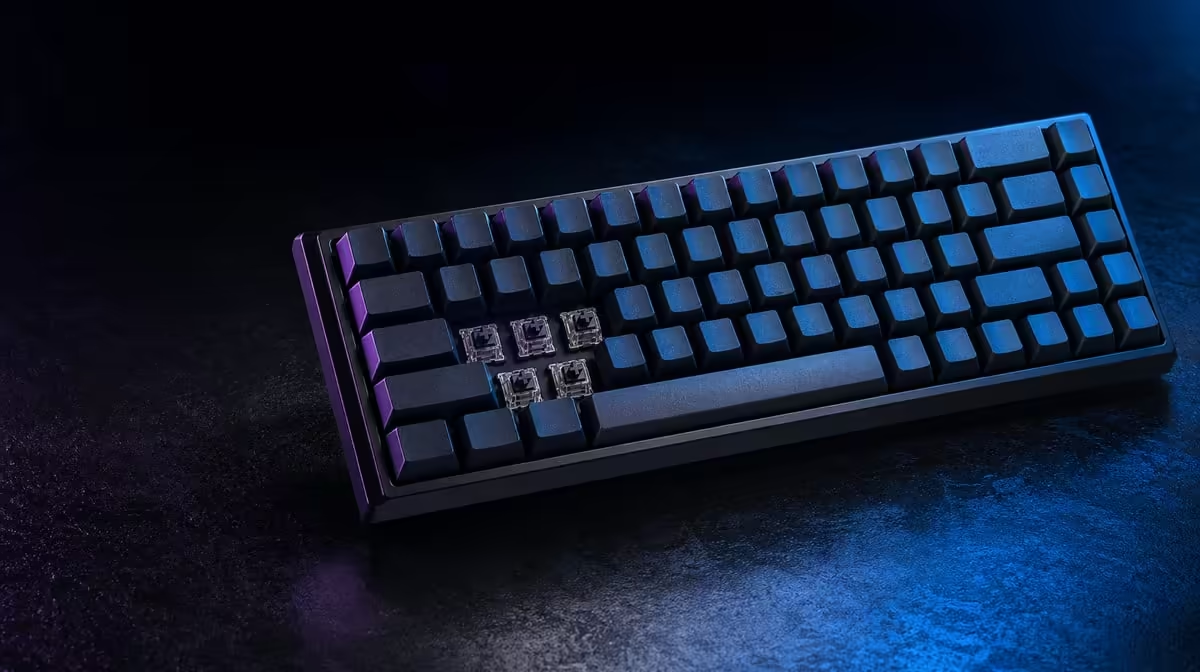
Feedback can support control, but only when it suits the hand using it. Tactile versus linear mechanical switches compares a deliberate bump with smoother uninterrupted travel; force, return, sound and technique determine the better gaming choice.
Choose tactile switches when a physical cue improves typing confidence or helps prevent accidental presses. Choose linear switches when smooth repeated movement feels more controlled; neither is automatically faster, so test gaming patterns and sustained typing on the exact mechanism.
A tactile switch creates a bump during travel. Its position and strength vary, so the label does not define one standard feel.
The bump can appear early, centrally or later depending on design. That placement affects how the user anticipates actuation and release.
A linear switch moves without that intentional event. Spring force, actuation and return can still differ across linear designs.
Smooth travel does not guarantee light force, silence or short movement. Those characteristics require the exact switch information.
Test press and release, not only the downstroke. Rapid direction changes depend on keys returning consistently.
Use movement holds, double taps and opposing directions. Record whether feedback improves control or creates hesitation.
Include rapid release into another command. The feeling on the way back can be as important as the initial press.
Explore switch options in Evetech's Logitech gaming-keyboard range.
Run held movement, quick taps, modifiers and neighbouring combinations. Record accidental inputs, missed release and fatigue.
Check weaker fingers on Shift, Control and outer keys. A force comfortable under the index finger can tire the little finger.
Type a realistic passage for long enough to reveal whether the bump helps confidence or interrupts rhythm.
Repeat the passage after a full work block. Early novelty may favour a mechanism that becomes uncomfortable later.
Use the room's normal sound environment. Tactile does not automatically mean quiet, and linear boards can still make sound through bottoming out.
Ask what a microphone or nearby person hears. The player behind a headset may not notice desk and case resonance.
Test without the headset once. Switch sound can affect concentration even when it is not loud enough to disturb the room.
Compare complete gaming-keyboard choices, not switch labels alone.
A sampler can narrow choices, but a mounted switch includes keycap, plate and case. Test candidates in equivalent positions where possible.
Use the same caps and keyboard angle. Changing several variables makes the feedback comparison unreliable.
Compatible hot-swap support can simplify small-group comparison. Label every position, inspect pins and keep originals.
Test a small cluster over several days and restore it before the next candidate. Frequent random switching creates socket wear and unclear impressions.
Map candidate switches to equivalent fingers and tasks. A tactile sample under a weak finger and linear sample under the index finger is not a balanced test.
Choose from consistent control across several sessions rather than one exciting press.
Keep errors, fatigue and sound notes. "Linear is faster" or "tactile is better for typing" is too broad without personal evidence.
If both remain suitable, choose on the complete board's layout, software and support. Switch category should not override a better daily fit.
Review the winner after a workday and competitive session. A mechanism should remain controllable after fatigue appears.
Keep a sentence explaining the choice and the rejected trade. That note prevents later marketing labels from replacing personal evidence.
Compare the same keys at the beginning and end of each trial. A mechanism that appears precise while the hand is fresh may encourage heavy presses, incomplete releases or hesitation once a longer session exposes fatigue.
Invite a room or voice-chat check before choosing click or bump strength. Preferred finger feedback still needs to coexist with nearby people, microphones and the desk's own resonance.
Use Evetech's accessory best sellers for wider context and review current availability.
It includes a deliberate bump during the key's travel.
They may prefer the smooth path for held movement and repeated presses.
The bump can give some users a physical cue that supports press confidence.
No. Force, technique, game processing and player control all affect the result.
Either can be audible; switch design, bottoming out, keycaps, plate and case shape sound.
Test the exact switches through repeatable game actions and a sustained typing block.
Yes, when it supports the candidate format and switches are changed carefully.
Choosing between a bump and a smooth press? Compare Evetech gaming keyboards through repeated control, typing and room-sound tests.
It includes a deliberate bump during the key's travel.
They may prefer the smooth path for held movement and repeated presses.
The bump can give some users a physical cue that supports press confidence.
No. Force, technique, game processing and player control all affect the result.
Either can be audible; switch design, bottoming out, keycaps, plate and case shape sound.
Test the exact switches through repeatable game actions and a sustained typing block.
Yes, when it supports the candidate format and switches are changed carefully.
550W for RTX 5080 Super needs a full-build check, not a simple yes. Review GPU guidance, CPU draw, transient load, connectors, PSU quality, and upgrade plans before deciding.
Read more
8000Hz polling is overrated for most SA gamers because gains can be tiny next to battery drain and monitor limits. Mbombela players should weigh mouse feel, game support, and system stability before chasing the number.
Read more
Magnetic switches are taking over SA gaming keyboards because actuation can be tuned. For Sandton gamers, rapid trigger, reset control, and profile depth can help, but layout, key feel, and software quality still matter.
Read more
Polokwane oled monitor value questions need cautious SA context because pricing can move with availability, exchange rates, specs, and warranty support. Treat the trend as a planning signal, not a fixed price promise.
Read more
Arc B580 budget builds for Midrand gamers can shift with exchange rates, supply, specs, and model tier. Treat the title as a buying prompt, then compare SA warranty, timing, and build priorities.
Read more
ROG Ally X may beat the LCD Steam Deck for SA gamers who value stronger handheld performance, more memory, and Windows flexibility. Compare battery life, controls, game libraries, and Polokwane support needs before deciding.
Read more
Minisforum's M2 Pro pairs Core Ultra X7, Arc B390 graphics and 32GB onboard memory in 1.8 litres. SA buyers should weigh its fixed memory and $1,439 launch offer against local mini PCs.

Lenovo says Legion Go failures linked to BIOS N3CN42WW are not user error. Affected SA owners should stop retrying the update, preserve proof and open a support case.

Smart monitors can add apps and convenience, but they also add privacy settings and unwanted-software risk. SA buyers should audit the operating system before paying for extras.

A fake 113GB GTA VI ISO reportedly used empty padding around a small malware payload. SA gamers should delete unofficial builds, keep Windows security active and wait for official channels.
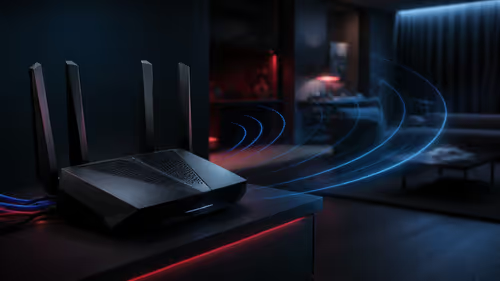
ASUS calls the ROG GT-BN98 the first Wi-Fi 8 gaming router. SA buyers should fix coverage and client limits before paying for a future wireless standard.
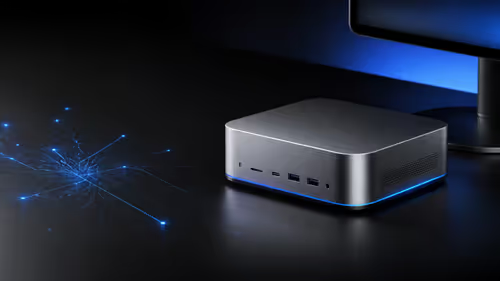
Apple's M6 Mac mini adds faster AI, graphics and networking in the same compact format. SA buyers should wait for a rand listing before comparing value.
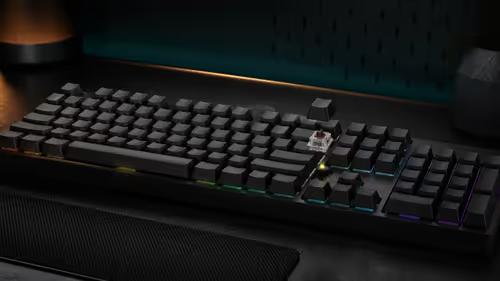
The Vulcan II XP adds hot-swappable switches, sound damping and gaming controls to a full-size wired board. SA buyers should compare feel before features.

Microsoft says Windows on Arm now has over 7,000 verified apps and games. SA buyers should still check each driver, game and work tool before switching.

Xbox Insiders can test disc-to-digital from 31 August 2026. Supported Xbox One and Series X discs gain a digital entitlement, but older discs, regions and title coverage still need exact checks.

ViewSonic's XG2738 pairs QHD QD-OLED with 240Hz and automatic panel care. SA buyers should compare warranty, brightness, ports and burn-in protection against today's R9,999-plus OLED shelf.

NVIDIA's final Windows 10 Game Ready driver is due in October 2026. SA gamers can keep using their GPU, but new game optimisations move on while critical security fixes continue quarterly.

JBL's new Quantum 520, 520X and 120 headsets cover wireless, Xbox-certified and wired use. SA buyers should compare connection, comfort and microphone needs before paying for a new badge.