Quick Answer
For Minecraft with shaders, the case floor is a ventilated mid-tower that clears a mid-range GPU and a tower cooler, around R1,200 to R2,000. Shaders push the graphics card hard, so airflow matters more than looks for steady frame rates.
Shaders turn Minecraft into a GPU load
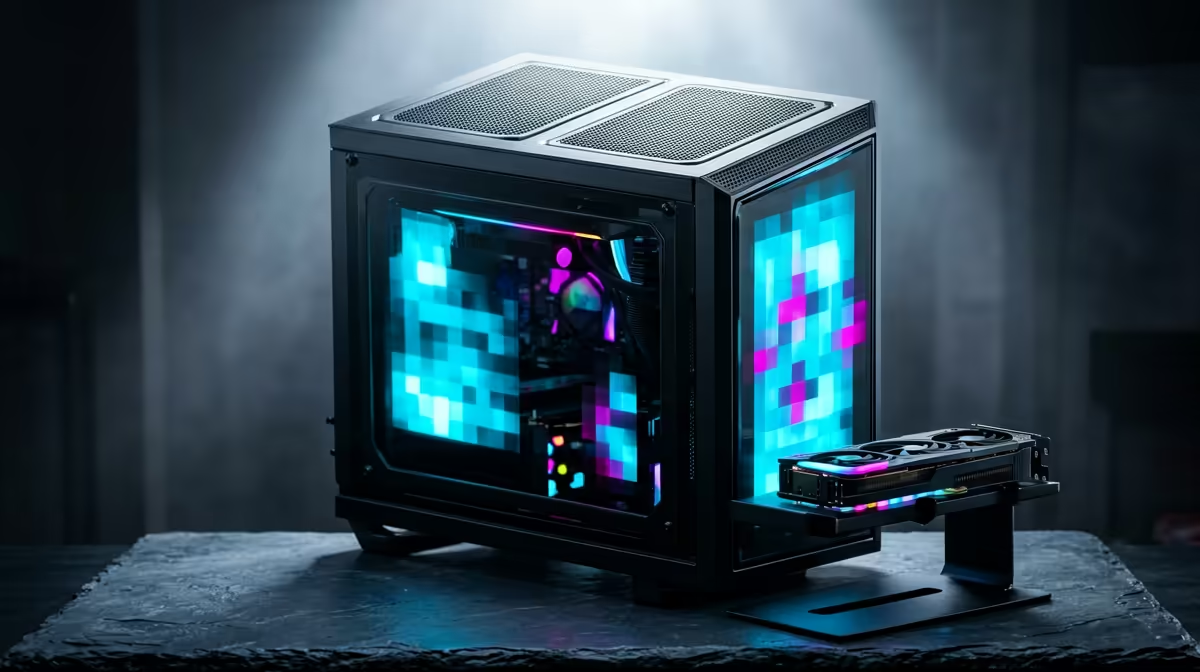
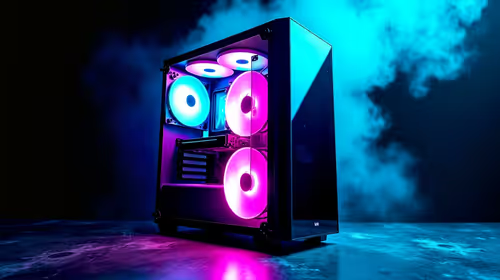
Vanilla Minecraft is light, but shaders like BSL or SEUS load the GPU heavily, especially at high render distances. That heat needs somewhere to go, so a mesh-front case with two intake fans keeps the card from throttling. A sealed glass box that looks blocky like the game itself will cook a shader rig.
If you raise render distance to 32 chunks with shaders, expect the GPU load to climb sharply, so leave a spare fan mount free for an extra intake later.
Clearance for a real graphics card
To run shaders at 60fps you want at least a mid-range GPU, which means checking the case clears its length, typically 280mm to 320mm. Confirm cooler height too, since a tower air cooler is the easy, quiet choice for the CPU in a Minecraft build.
Room to grow
A mid-tower around R1,800 leaves space to add fans or a larger card later as you push render distance and resolution. That headroom is cheap insurance for a build you will tinker with.
FAQ
Does Minecraft with shaders need good case airflow?
Yes. Shaders load the GPU heavily, generating real heat. A mesh case with two intakes keeps the card cool enough to hold steady frame rates at high render distances.
What GPU clearance should a shader build allow?
Plan for 280mm to 320mm so a mid-range card fits comfortably. Also confirm cooler height, since a tower air cooler keeps the CPU quiet and cool.
Is a small case enough for Minecraft shaders?
A compact case can work, but a mid-tower gives better airflow and room to add fans or a bigger GPU later as you raise render distance and resolution.
Keep shaders smooth and cool.
Pick a mesh mid-tower that clears a mid-range GPU, then add a second intake fan before pushing render distance and resolution.