Quick Answer
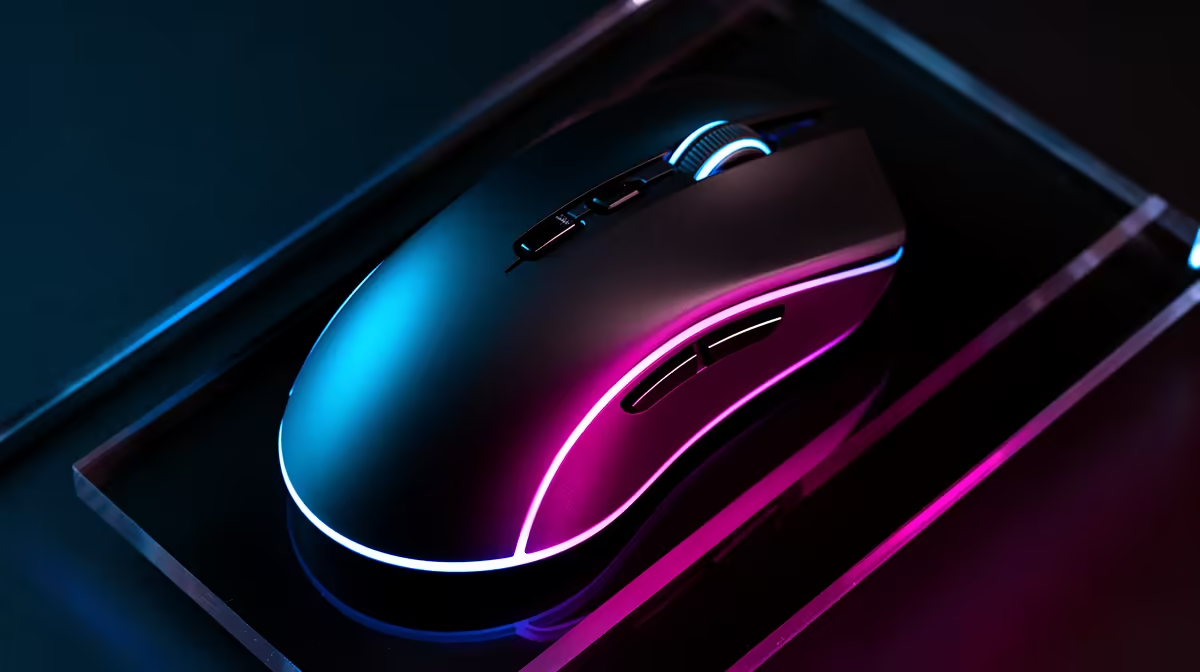
For SA esports players, wireless mice now match wired latency, so the cable is gone. Wireless mice have replaced wired ones in SA esports because modern 2.4GHz wireless now matches wired latency, around 1ms, while removing cable drag entirely. Top esports mice weigh 45-60g and use sensors tracking up to 30,000 DPI, with battery life spanning 70-100 hours. A competitive wireless mouse runs roughly R800-R2,500 at Evetech. For fast aim, the lighter weight and free movement give a real edge over a tethered mouse.
Why Wireless Won
Early wireless mice added lag, so pros stuck with cables. That changed once 2.4GHz dongles hit roughly 1ms latency, indistinguishable from wired in blind tests. With latency solved, the remaining advantages, no cable to snag or drag and lower overall weight, became decisive. The cable was always a small friction on fast flick shots; removing it is a genuine, if subtle, gain.
What Makes an Esports Mouse
The competitive formula is light weight (45-60g), a flagship optical sensor (up to 30,000 DPI, though pros play far lower), low click latency, and a reliable 2.4GHz dongle, not Bluetooth, which is too slow for gaming. Battery life of 70-100 hours means infrequent charging. For SA players, a 50-60g wireless mouse at R800-R2,500 covers the full competitive range.
Picking the Right One
Match shape and size to your grip and hand; a mouse that fits beats one with better specs. Use the 2.4GHz dongle, not Bluetooth, for play. Set DPI to 800-1600 and adjust in-game sensitivity, as most pros do. A good mousepad matters as much as the mouse for consistent tracking.
FAQ
Is a wireless mouse as fast as a wired one for esports?
Yes. Modern 2.4GHz gaming mice hit around 1ms latency, matching wired in real testing. Use the dongle, not Bluetooth, and you get wired-equal response with no cable drag.
How much should an esports wireless mouse cost in SA?
Roughly R800-R2,500 at Evetech covers the competitive range. The price reflects sensor quality, weight, and build, not just the brand. A 50-60g mouse with a flagship sensor is the target.
What DPI do esports players use?
Most play at 800-1600 DPI and adjust sensitivity in-game, despite sensors supporting up to 30,000 DPI. Lower DPI with a larger mousepad gives more consistent aim than chasing huge DPI numbers.
2.4GHz dongle, not Bluetooth, for true ~1ms latency, and set DPI to 800-1600 with in-game sensitivity adjusted. Match the mouse shape to your grip before chasing specs.