Quick Answer
For portable gaming while travelling, a three-tier AR glasses plan runs: budget XReal-class around R6,000-R8,000, balanced R8,000-R10,000, and premium Viture-class R10,000-R14,000+. Paired with a Steam Deck or ROG Ally, they give a private 1080p-per-eye screen around 120Hz at roughly 75g - far lighter than packing a portable monitor.
Why AR Glasses Win For Travel Gaming
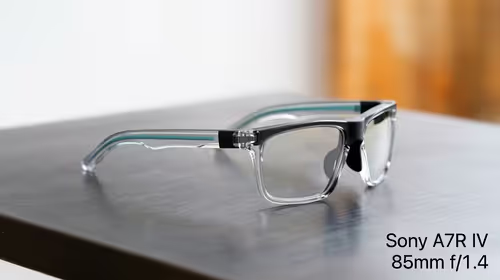
On a plane, bus or in a shared room, a handheld's 7-inch screen feels small and a portable monitor is bulky to pack. AR glasses fold into a case the size of a glasses pouch yet deliver a big private display. Plugged into a Steam Deck or ROG Ally over USB-C, you get a cinema-style screen no one else can see, which suits travel perfectly.
The Three Tiers For Travellers
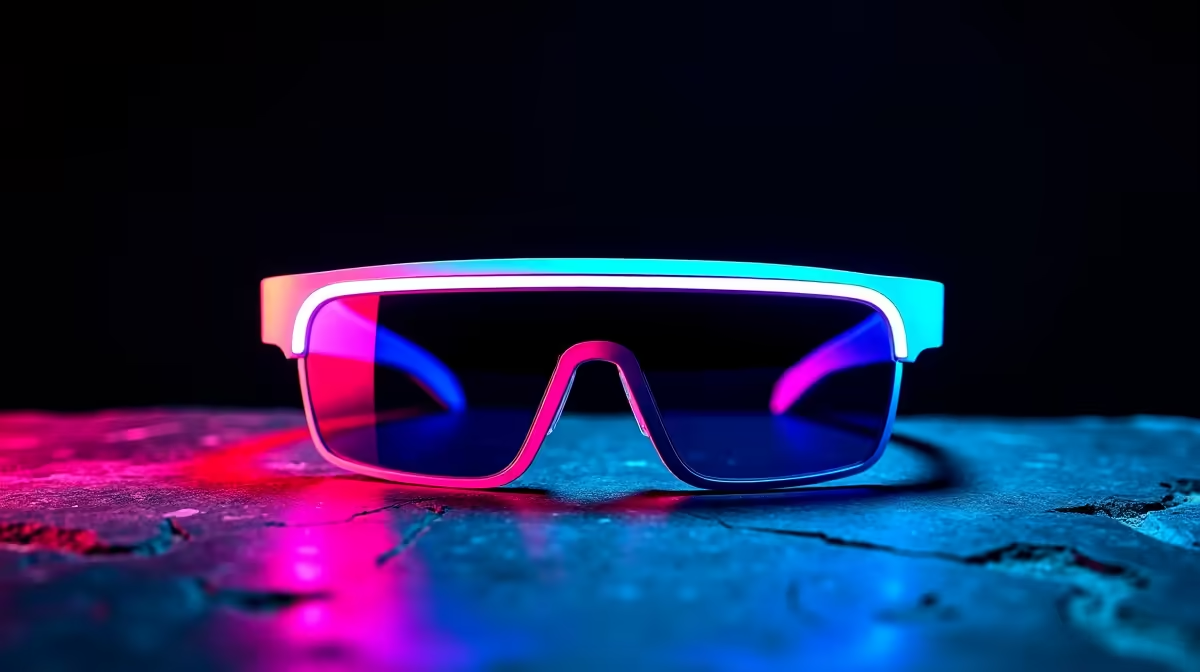
Budget (R6,000-R8,000): XReal-class glasses, 1080p per eye, ~46-degree FOV, ~75g - the lightweight entry point. Balanced (R8,000-R10,000): brighter screens and better speakers for noisy travel. Premium (R10,000-R14,000+): Viture-class with electrochromic dimming so cabin light does not wash out the image, plus the most comfortable frames for long-haul use.
Power And Source Notes
AR glasses draw power from the host device, so pair them with a 20,000mAh power bank to keep a Steam Deck running for hours. Confirm your handheld's USB-C carries video - the Deck and ROG Ally both do.
FAQ
Are AR glasses better than a portable monitor for travel?
For packing, yes. They weigh about 75g and fit a small pouch, versus a heavy portable monitor, while giving a bigger private screen on a handheld.
Do AR glasses drain my handheld's battery faster?
Yes, since they draw power from the device. Carry a 20,000mAh power bank to keep a Steam Deck or ROG Ally going through long sessions.
What do travel AR glasses cost in South Africa?
Budget XReal-class models start around R6,000-R8,000, with premium Viture-class units reaching R10,000-R14,000+ for wider FOV and dimming.
| Choose glasses with electrochromic dimming if you game in bright cabins, so daylight doesn't wash out the picture.