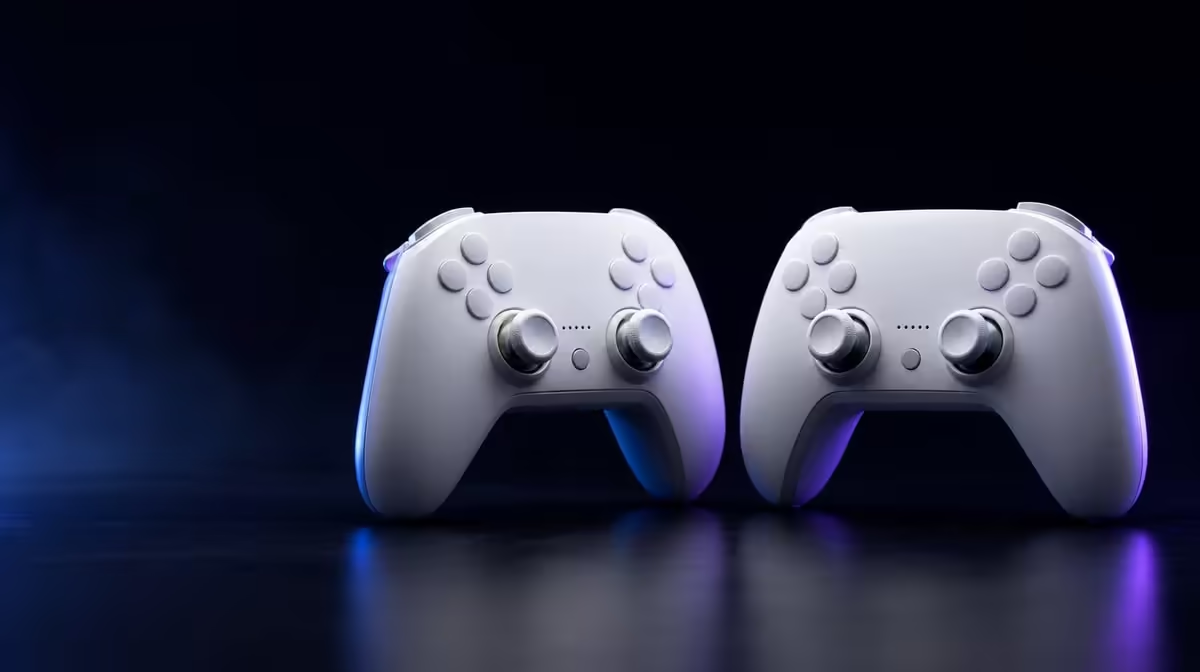
Two magnetic stick names do not settle a precision contest. In TMR vs Hall Effect sticks, both approaches use magnetic sensing, while the sensor implementation, calibration, mechanics and complete controller shape the result. The R999 GameSir Cyclone 2 uses Mag-Res TMR sticks, providing a real reference without claiming that its acronym automatically beats every Hall design.
Quick Answer
TMR and Hall Effect sticks both avoid the rubbing measurement contacts common in potentiometer controls. Neither name alone proves greater precision in every controller. The Cyclone 2 costs R999 and uses Mag-Res TMR sticks; compare neutral stability, fine movement, full range and the same game settings before judging it against Hall hardware.
🧲 What the two approaches share
Both technologies rely on magnetic position sensing. This changes the wear path by removing the conventional sliding contact used to measure stick movement in a potentiometer design.
That common strength can improve resistance to contact-related drift, but it does not eliminate calibration, centring mechanics, debris or physical damage. A magnetic label should lead to a better test, not a promise of permanent perfection.
The sensor is only one layer of a stick. Spring feel, surrounding mechanics, controller software and game response all influence what the player experiences. Comparing acronyms without those layers is incomplete.
The Evetech gaming controller range offers the proper place to compare complete controllers rather than sensor acronyms in isolation.
🎯 How to compare precision fairly
Use one game, one host, one connection and the same response settings. Rest each controller, observe stick centre, make slow corrections near neutral and then sweep through the full range.
Repeat several times. One perfect return or one poor turn is weak evidence. Consistency across directions and across a normal session provides the useful comparison.
Leave sensitivity unchanged during the hardware comparison. A faster game profile can make one stick feel more responsive while saying nothing about sensor precision.
Add a neutral hold, four slow directional corrections and one complete edge sweep. Record whether the result repeats, then exchange controllers without changing the title. This sequence values consistency over a dramatic first impression.
Run the comparison again after a normal session. A sensor should be judged through sustained play as well as a short menu check, while avoiding claims about durability that the test cannot prove.
🕹️ The Cyclone 2 control package
The Cyclone 2 names its sticks Mag-Res TMR. Its triggers use Hall magnetic sensing and report analog travel where a title accepts graduated input. Those controls should not both be called Hall merely because they are magnetic.
Tri-mode and multiplatform support also affect value. Precision only matters on a host and game that recognise the controller correctly. The included Smart Start-Stop dock adds storage and charging convenience rather than sensor performance.
The Hall analog triggers should receive a separate test. Their graduated press travels along one direction, unlike a stick moving around a centre. Calling both controls "magnetic" does not make their configuration interchangeable.
At R999, the Cyclone 2 combines those TMR sticks, Hall triggers and its dock. A buyer should value the whole package while remaining precise about which sensor does which job.
Browse Evetech gaming accessories for the wider setup, followed by popular accessory choices once control requirements are clear.
The fairest conclusion is conditional. TMR may be the right design in the Cyclone 2, while a well-implemented Hall controller can also provide strong magnetic input. Test complete products on equal terms instead of treating either name as a universal winner.
Price belongs in the complete comparison too. R999 covers the Cyclone 2, its TMR sticks, Hall triggers and included dock. Another controller may package different connections or accessories, so the sensor alone should not be asked to explain the entire Rand difference.
Choose the result that stays consistent in the games and host you use. That practical evidence is more valuable than declaring a permanent technology champion from a name.
For a fair personal comparison, keep the game, sensitivity and display unchanged. Move from neutral to small corrections, then through full range. The technology that produces the more predictable result in that exact controller matters more than a universal claim about either sensor family.
Frequently Asked Questions
Do TMR and Hall sticks both use magnets?
Yes. They are different magnetic sensing approaches, and both avoid the conventional rubbing measurement path.
Can the sensor name prove precision?
No. Controller implementation, calibration, mechanics, software and the test method all affect the final result.
Which stick technology is in the Cyclone 2?
The R999 Cyclone 2 uses Mag-Res TMR sticks. Its analog triggers use Hall sensing.
Can magnetic sticks still show poor input?
Yes. Calibration, obstruction, physical damage and unsuitable settings can still affect neutral or response.
Ready to compare magnetic sticks by controlled input rather than acronyms?
Browse Evetech gaming controllers and test TMR or Hall designs against the devices, games and settings you actually use.