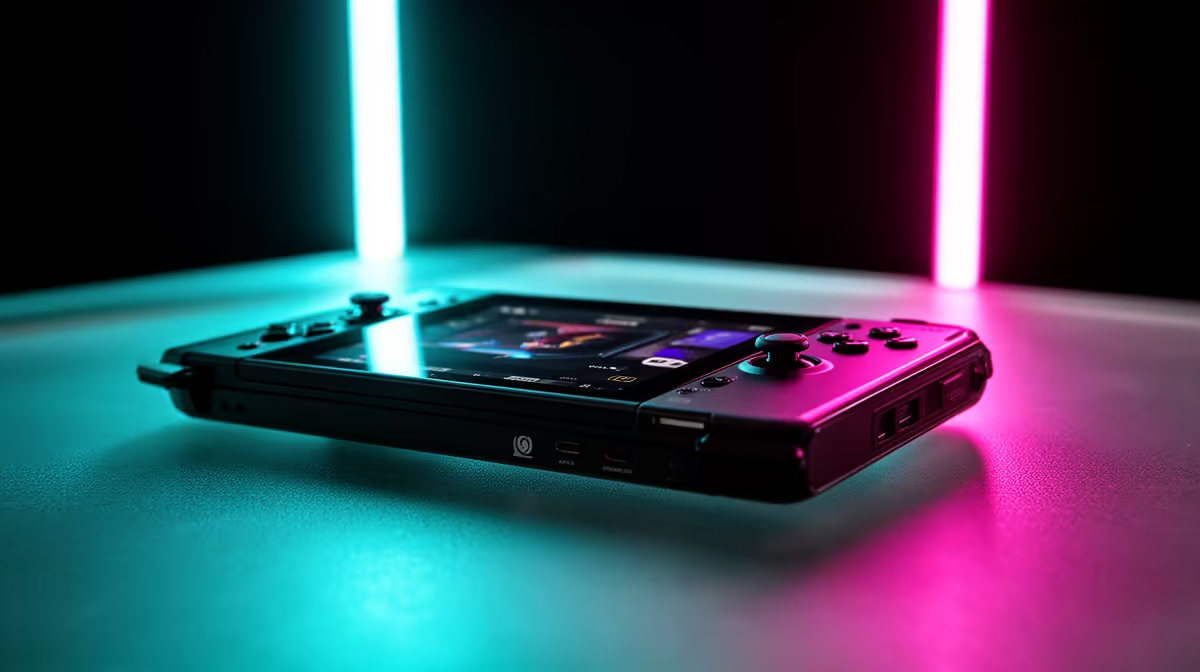
A VR fitness setup runs on a standalone headset for most people, so where does a handheld gaming PC fit in? The answer is nuanced: handhelds matter for some VR scenarios and are irrelevant for others. This guide helps South African VR fitness buyers plan their hardware and know when a handheld is worth including.
Quick Answer
For VR fitness, a handheld gaming PC usually does not matter: standalone headsets run fitness apps independently without a PC. A handheld becomes relevant only for PCVR fitness titles needing more grunt, and even then most handhelds lack the GPU power for smooth 90fps VR. Budget for a capable standalone headset first; treat a handheld as optional.
When Handhelds Do Not Matter For VR Fitness
Most VR fitness happens on a standalone headset that runs apps on its own onboard chip, with no PC needed. For the vast majority of fitness users, that means a handheld gaming PC adds nothing to the VR fitness experience. Your money is better spent on a good standalone headset and the space to move safely. Do not buy a handheld expecting it to power a standalone fitness headset, because it will not be involved.
When A Handheld Might Help
A handheld becomes relevant only if you want to play PCVR fitness titles that demand more horsepower than a standalone headset's onboard chip provides, streamed to the headset over a link. Even then, handhelds with a Ryzen Z1 or Z2-class APU struggle to hold the smooth 90fps that comfortable VR needs, since VR is far more GPU-intensive than flat gaming. So the handheld helps in a narrow, demanding niche, not general fitness use.
Plan The Hardware Sensibly
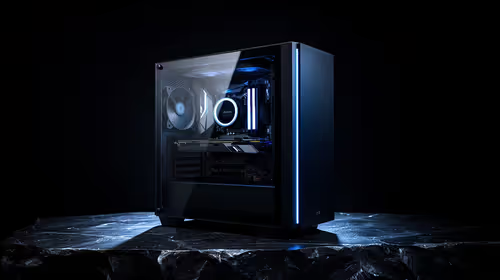
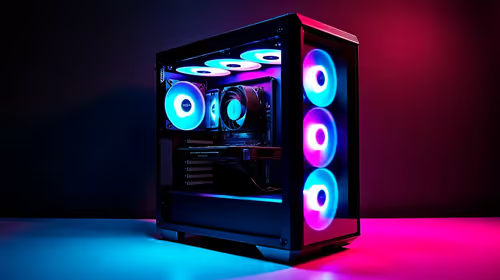
Prioritise a capable standalone VR headset and a clear, safe play area for fitness, since movement space and comfort matter most. If you specifically want PCVR fitness content, a desktop with a strong dedicated GPU is a far better driver than a handheld. Reserve any handheld spend for portable flat-screen gaming, where it excels, rather than expecting it to anchor a VR fitness plan it is poorly suited to.
FAQ
Do I need a handheld gaming PC for VR fitness?
No, for most users. Standalone VR headsets run fitness apps on their own chip with no PC needed, so a handheld adds nothing. Budget for a good standalone headset and safe play space first.
Can a handheld run PCVR fitness titles?
Only in a narrow case, and not well. Handhelds with a Ryzen Z1 or Z2-class APU struggle to hold the smooth 90fps comfortable VR needs, since VR is far more GPU-intensive than flat gaming.
What is the best driver for demanding PCVR fitness?
A desktop with a strong dedicated GPU, not a handheld. If you want demanding PCVR content, that is the right tool; reserve a handheld for portable flat-screen gaming where it excels.
For VR fitness, prioritise a capable standalone headset and safe play space from Evetech; a handheld is optional and poorly suited to VR, so save it for portable flat-screen gaming instead.