Quick Answer
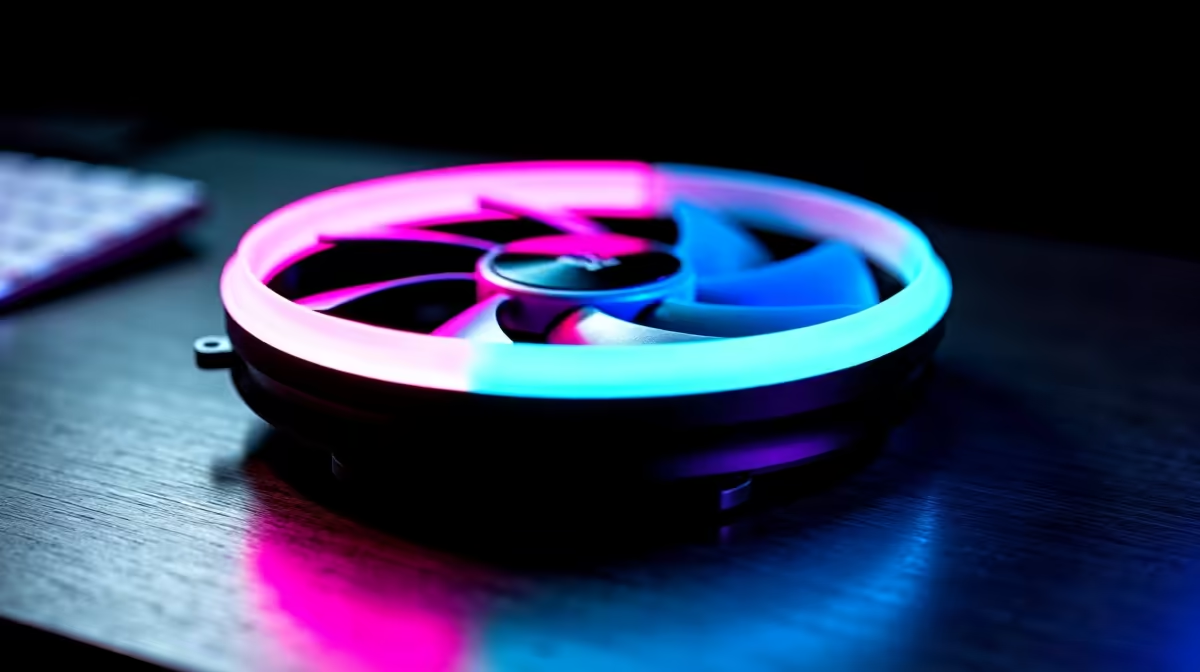
The bearing fails first. On a sleeve-bearing budget fan the rated MTBF is around 30,000 hours, versus roughly 60,000+ for an FDB fan and 150,000+ for a magnetic-levitation design, so during long VR sessions the cheap fan whines, then sticks, then stalls. Plan on R140 to R650 per quality fan rather than the R70 to R90 sleeve unit.
Why VR punishes the cheap bearing
A VR headset keeps the GPU pinned at 80-95% for the entire session because every frame is rendered twice and the target sits at 90Hz or higher. That sustained heat is roughly double a typical 1080p flatscreen load, where the card idles between scenes. A sleeve-bearing fan was speced for light desktop duty, so when the case interior climbs past 45C the lubricant thins and the bearing develops the classic startup click. The failure order is predictable: bearing whine, then RPM stickiness where the fan lags its PWM curve, then a full stall that lets the GPU thermal-throttle mid-game.
The fix is matching bearing class to duty cycle. A Tecware sleeve fan around R80 is fine for an office tower; a fluid-dynamic-bearing fan like an Arctic P12 PWM PST (about R140, ~58,000h rated) holds up far better under VR heat. For near-silent longevity, a Noctua NF-A12x25 with SSO2 bearing sits near R650 and shrugs off years of 90% sessions.
What to actually buy for a VR tower
Two reliable 120mm intakes and one exhaust beat six rattly cheapies. Aim for fans that hold 1,200-1,500 rpm without a tone change, and keep dust filters clean so airflow stays honest in a typical dusty Highveld room. If you can hear a new tone after ten minutes of headset play, that is heat building, not normal operation.
FAQ
How long do cheap case fans really last under VR load?
A sleeve-bearing fan rated near 30,000 hours assumes light desktop use; under sustained 90% VR heat that figure drops sharply, often to a year or two of heavy play. An FDB fan rated 58,000h or a Noctua at 150,000h gives you a far longer realistic runway.
Are Noctua fans worth roughly five times the price for VR?
For a daily VR rig, yes. The NF-A12x25 near R650 stays quiet at high static pressure and rarely needs replacing, so over five years it works out cheaper than swapping R90 fans repeatedly and risking a throttle mid-session.
Can a failing case fan cause VR motion sickness?
Indirectly. A stalled fan lets the GPU throttle, which drops frametime consistency and introduces stutter, and inconsistent frametimes are a known trigger for headset discomfort. Steady cooling that holds your 90fps target keeps the experience smooth.
20-minute VR session with a temperature monitor open on the desktop, then check whether any fan changed tone. A new whine after warm-up usually means the bearing is on its way out.