Quick Answer
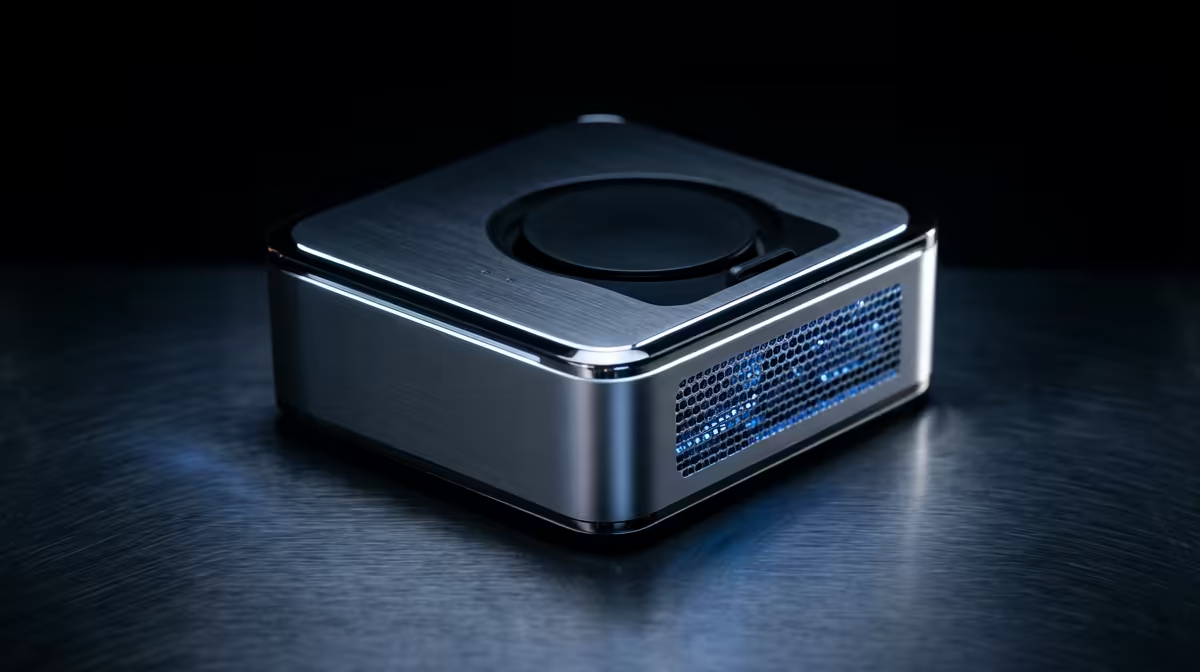
In cheap mini PCs used for Python data analysis, the first bottleneck is RAM, then thermals: 8-16GB fills fast on large datasets, and the small chassis throttles the CPU during long computations. For real data work, choose a mini PC with 32GB RAM (upgradeable to 64GB), a recent multi-core CPU and a fast NVMe SSD, around R10,000-R16,000.
What breaks first
Pandas and large dataframes are memory-hungry, so 8-16GB RAM is the first wall, you'll hit swapping and crashes on multi-gigabyte CSVs. Next, sustained model training or big joins push the CPU, and a cheap mini PC's cooling throttles it, slowing every run. A slow SSD compounds this when datasets spill to disk.
What data analysis actually needs
Aim for 32GB RAM minimum (64GB for big data), a 6-8 core CPU for parallel work, and a fast NVMe SSD so large files load in seconds. A discrete GPU helps only for GPU-accelerated ML; most pandas/NumPy work is CPU and RAM bound.
SA buyer notes
A mini PC with 32GB RAM and good cooling handles serious data work quietly and at low power. For very large datasets or deep learning, a tower with more RAM and a discrete GPU is better.
FAQ
What limits a cheap mini PC for Python data analysis?
RAM first, then cooling. 8-16GB fills fast on large dataframes, causing swapping and crashes, and the small chassis throttles the CPU during long computations.
How much RAM do I need for data analysis?
32GB minimum, 64GB for big datasets. Pandas holds data in memory, so multi-gigabyte files quickly exhaust 16GB and force slow disk swapping.
Do I need a GPU for Python data work?
Only for GPU-accelerated machine learning. Most pandas and NumPy analysis is CPU and RAM bound, so prioritise cores, memory and a fast SSD first.
data work, spec 32GB RAM and a fast NVMe SSD over a discrete GPU; most analysis is memory-bound, so RAM and storage prevent the crashes a cheap mini PC suffers.