Quick Answer
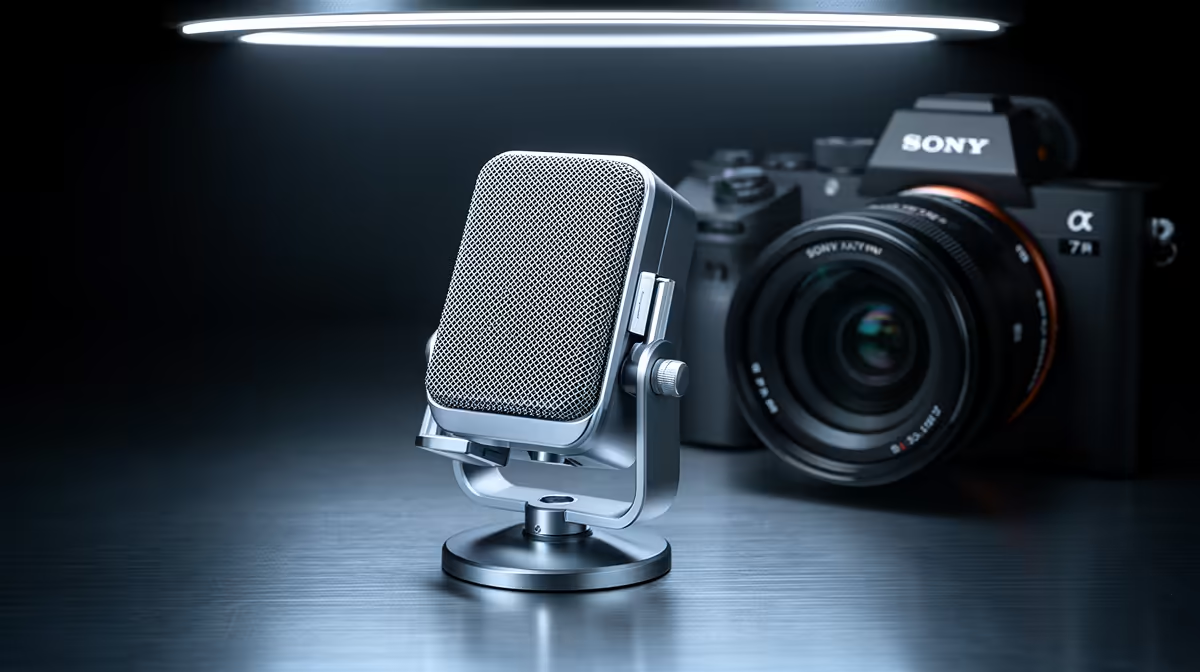
In cheap streaming mics used in a shared gaming room, the connector and gain control fail first, and a weak cardioid pattern lets roommates bleed in. Budget R600-R1,200 for a cardioid mic like the Fifine K669 or HyperX SoloCast, since tight pickup and a solid USB-C port are what keep a shared space out of your party chat.
What breaks first, in order
In a room shared with other gamers, the mic faces noise and frequent handling. The USB connector loosens from plugging and unplugging as people swap setups, the gain knob gets scratchy, and the shock-mount hardens and passes through desk bumps from a busy room. The bigger day-to-day problem is a loose cardioid pattern that lets a roommate's voice and game audio bleed into your stream or recording, so the mic sounds noisy long before it physically fails.
How to avoid the failures
Choose a mic with tight cardioid pickup and a low self-noise floor so the rest of the room stays out of frame, and keep it close at 12-15cm so your voice dominates. The Fifine K669 (R600-R900) and HyperX SoloCast (R1,200-R1,600) isolate well for the money. A shock mount blocks desk vibration in a shared space, and tap-to-mute spares the connector from constant unplugging. A headset-and-mic combo can also help, since closed earcups stop your speakers leaking into the mic.
Buying it in South Africa
Evetech ships mics nationwide, and a shared-room-ready mic sits at R600-R1,600. Prioritise a tight cardioid pattern and a robust USB-C connector over the cheapest sticker, since both directly affect how much of the room ends up in your audio. Add a shock mount and use headphones rather than speakers so your game sound does not loop back into the mic.
FAQ
Why does my mic pick up my roommate?
Because a cheap cardioid pattern is loose, letting nearby voices and game audio bleed in. A mic with tighter off-axis rejection, kept close to your mouth, keeps a shared room out of your recording.
What breaks first on a shared-room mic?
The connector and gain knob, since shared setups get plugged and adjusted constantly. A worn USB port causes dropouts, and a scratchy gain control makes levels unreliable mid-session.
Should I use headphones with a shared-room mic?
Yes. Closed-back headphones stop your speakers leaking back into the mic, which is a common source of echo and bleed in a shared space. Combined with a cardioid mic, they keep your audio clean.
shared room, run a cardioid mic up close and use headphones, not speakers. Tight pickup plus no speaker leak keeps roommates out of your chat.