


550W PSU Planning for RTX 5080 Super Builds in SA
550W for RTX 5080 Super needs a full-build check, not a simple yes. Review GPU guidance, CPU draw, transient load, connectors, PSU quality, and upgrade plans before deciding.
Read moreOxygen-free copper conductors slightly reduce resistance, helping a DisplayPort cable carry a cleaner signal. The DP114 uses OFC conductors alongside foil-and-braid shielding to support consistent 8K and high refresh output.
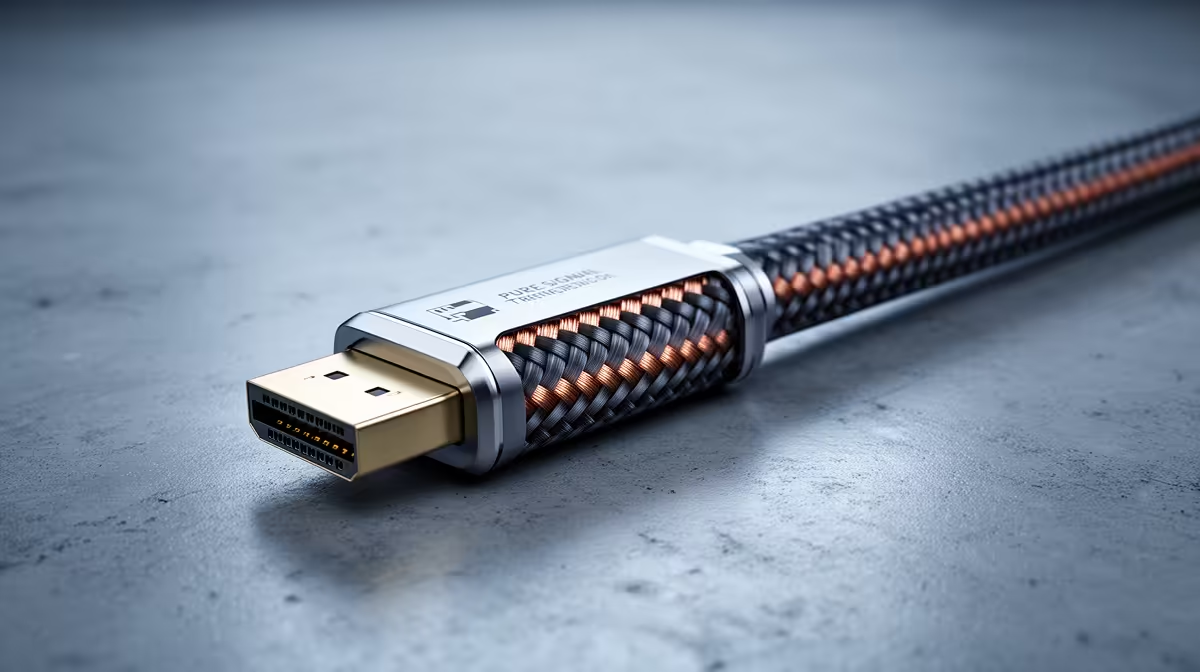
Copper is copper, or so the assumption goes, until you look at what standard copper actually carries alongside the metal itself: trace amounts of oxygen that form tiny oxide deposits inside the wire over time. Those deposits add resistance, and resistance is the enemy of a clean video signal. An 8k displayport cable built with oxygen-free copper conductors, such as the UGreen DP114 at R299, avoids that gradual resistance build-up from the start rather than developing it after months of use.
Oxygen-free copper, used in the UGreen DP114 at R299, removes the internal oxide impurities that standard copper accumulates, giving the conductor lower resistance and a cleaner signal path, which matters most at high resolutions and refresh rates where there is little margin for signal loss.
Standard copper wire contains a small percentage of oxygen trapped within its structure during manufacturing. Over time, and especially with heat cycling from regular use, that trapped oxygen forms oxide deposits at the grain boundaries inside the copper. Each of these deposits acts as a tiny point of added resistance along the conductor's length. Individually they are negligible, but across the full run of a cable carrying a demanding 8K or high refresh rate signal, the cumulative effect can show up as a weaker, noisier signal reaching the display.
Oxygen-free copper is refined to remove the vast majority of that trapped oxygen before the wire is drawn, which means fewer oxide deposits form over the cable's working life. Check current stock and pricing here to see how the DP114 pairs this conductor choice with its other build details.
Conductor quality and shielding solve different problems, and a cable needs both to perform consistently. Oxygen-free copper reduces resistance within the conductor itself, while the DP114's foil-and-braid shielding blocks electromagnetic interference from outside sources like power supplies and RGB controllers from reaching that conductor in the first place. Neither addresses the other's failure mode, which is why the DP114 combines both rather than relying on conductor quality alone.
The practical benefit of oxygen-free copper is most noticeable at the upper end of what a cable is rated to carry, since that is where signal margin is thinnest. At 8K resolution or high refresh rates, small amounts of added resistance from oxide deposits are more likely to translate into a visible artefact than they would at a lower, less demanding resolution with more signal headroom to spare. For everyday use at lower settings, the difference is less visible, but for anyone actually pushing the cable's rated limits, it is a meaningful factor. Comparing options across Evetech's broader cable lineup shows how conductor material varies between listings that otherwise look similar.
Beyond cabling, the broader accessories range is worth a look for anyone finishing off a desk setup built around signal reliability.
It reduces internal resistance by limiting the oxide deposits that form in standard copper over time, supporting a cleaner signal, particularly noticeable at higher resolutions and refresh rates.
No, shielding blocks external interference while oxygen-free copper reduces internal resistance, and a well built cable needs both working together.
Some benefit is immediate through lower baseline resistance, but the gap widens over time as standard copper accumulates more oxide deposits with use while oxygen-free copper resists that build-up.
The effect is present at any resolution, but it is most noticeable at demanding settings like 8K or high refresh rates where there is less signal margin to begin with.
Ready to learn what oxygen-free copper does for your signal? OFC copper inside the UGreen DP114 cuts resistance along the cable, helping signal quality hold over its full length. Evetech prices it at R299 within its DisplayPort cable range.
It reduces internal resistance by limiting the oxide deposits that form in standard copper over time, supporting a cleaner signal, particularly noticeable at higher resolutions and refresh rates.
No, shielding blocks external interference while oxygen-free copper reduces internal resistance, and a well built cable needs both working together.
Some benefit is immediate through lower baseline resistance, but the gap widens over time as standard copper accumulates more oxide deposits with use while oxygen-free copper resists that build-up.
The effect is present at any resolution, but it is most noticeable at demanding settings like 8K or high refresh rates where there is less signal margin to begin with.
550W for RTX 5080 Super needs a full-build check, not a simple yes. Review GPU guidance, CPU draw, transient load, connectors, PSU quality, and upgrade plans before deciding.
Read more
8000Hz polling is overrated for most SA gamers because gains can be tiny next to battery drain and monitor limits. Mbombela players should weigh mouse feel, game support, and system stability before chasing the number.
Read more
Magnetic switches are taking over SA gaming keyboards because actuation can be tuned. For Sandton gamers, rapid trigger, reset control, and profile depth can help, but layout, key feel, and software quality still matter.
Read more
Polokwane oled monitor value questions need cautious SA context because pricing can move with availability, exchange rates, specs, and warranty support. Treat the trend as a planning signal, not a fixed price promise.
Read more
Arc B580 budget builds for Midrand gamers can shift with exchange rates, supply, specs, and model tier. Treat the title as a buying prompt, then compare SA warranty, timing, and build priorities.
Read more
ROG Ally X may beat the LCD Steam Deck for SA gamers who value stronger handheld performance, more memory, and Windows flexibility. Compare battery life, controls, game libraries, and Polokwane support needs before deciding.
Read more
Minisforum's M2 Pro pairs Core Ultra X7, Arc B390 graphics and 32GB onboard memory in 1.8 litres. SA buyers should weigh its fixed memory and $1,439 launch offer against local mini PCs.

Lenovo says Legion Go failures linked to BIOS N3CN42WW are not user error. Affected SA owners should stop retrying the update, preserve proof and open a support case.

Smart monitors can add apps and convenience, but they also add privacy settings and unwanted-software risk. SA buyers should audit the operating system before paying for extras.

A fake 113GB GTA VI ISO reportedly used empty padding around a small malware payload. SA gamers should delete unofficial builds, keep Windows security active and wait for official channels.
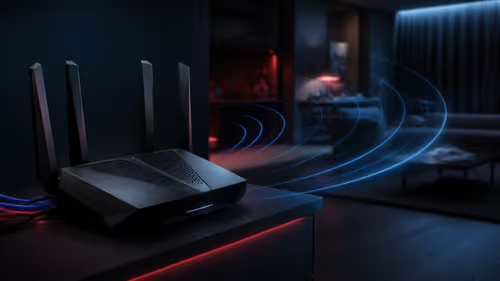
ASUS calls the ROG GT-BN98 the first Wi-Fi 8 gaming router. SA buyers should fix coverage and client limits before paying for a future wireless standard.
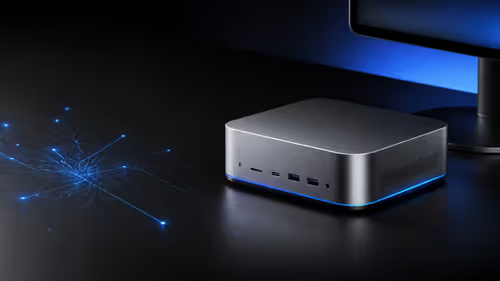
Apple's M6 Mac mini adds faster AI, graphics and networking in the same compact format. SA buyers should wait for a rand listing before comparing value.
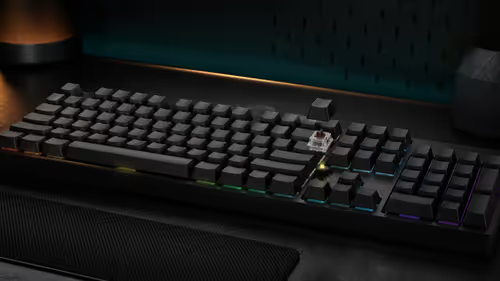
The Vulcan II XP adds hot-swappable switches, sound damping and gaming controls to a full-size wired board. SA buyers should compare feel before features.

Microsoft says Windows on Arm now has over 7,000 verified apps and games. SA buyers should still check each driver, game and work tool before switching.

Xbox Insiders can test disc-to-digital from 31 August 2026. Supported Xbox One and Series X discs gain a digital entitlement, but older discs, regions and title coverage still need exact checks.
ViewSonic's XG2738 pairs QHD QD-OLED with 240Hz and automatic panel care. SA buyers should compare warranty, brightness, ports and burn-in protection against today's R9,999-plus OLED shelf.

NVIDIA's final Windows 10 Game Ready driver is due in October 2026. SA gamers can keep using their GPU, but new game optimisations move on while critical security fixes continue quarterly.

JBL's new Quantum 520, 520X and 120 headsets cover wireless, Xbox-certified and wired use. SA buyers should compare connection, comfort and microphone needs before paying for a new badge.