Quick Answer
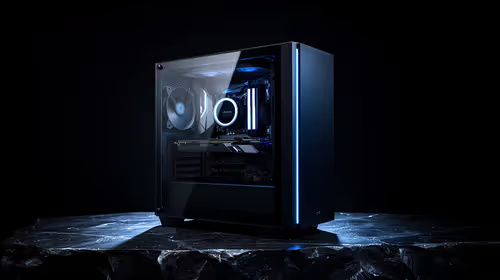
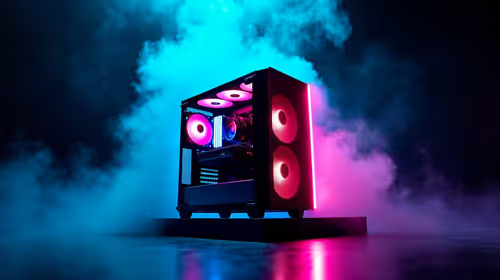
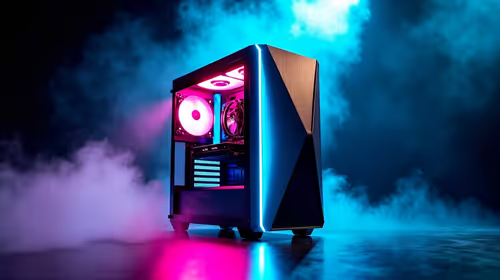
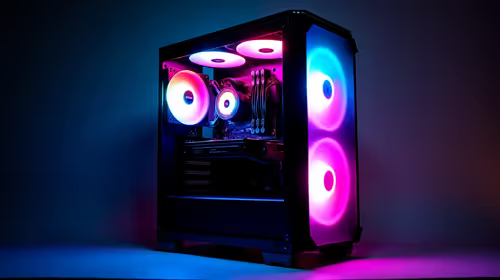
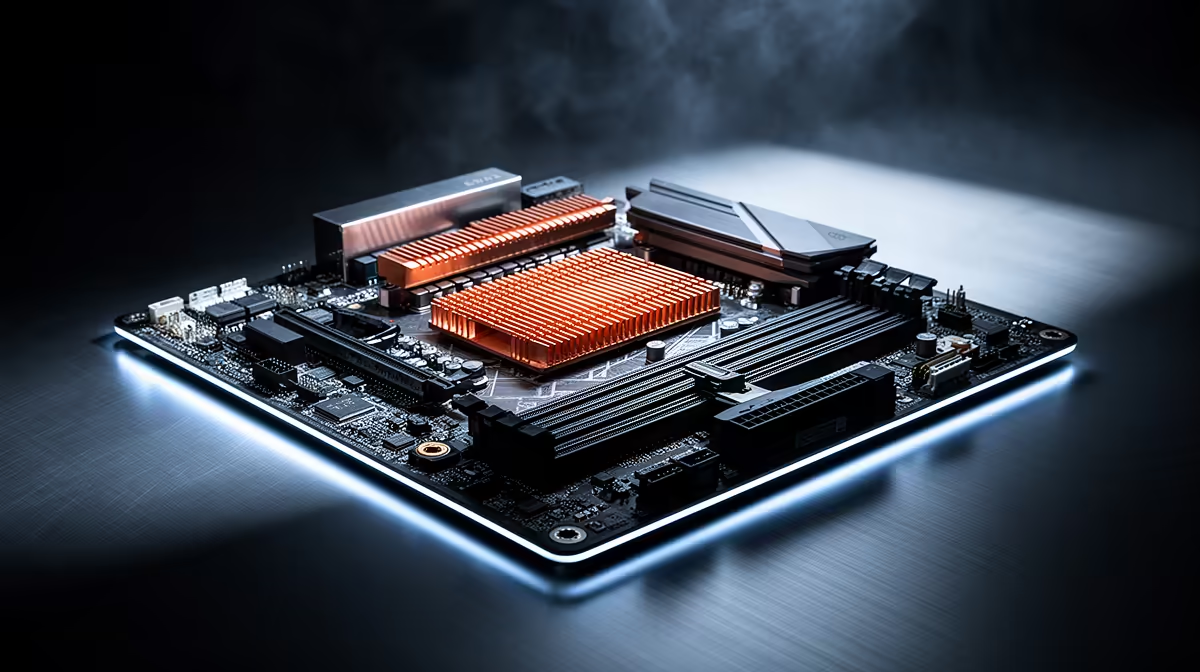
BTF (Back to Front) motherboard compatibility means the board routes power and data connectors to the back of the PCB, so cables connect behind the motherboard tray rather than across the visible front face of the build. The result is a cable-free view through the glass side panel without tucking, braiding, or hiding a single wire.
How BTF Architecture Changes the Build Process 🔧
On a conventional ATX build, the 24-pin ATX power connector, EPS CPU connector, SATA cables, and front-panel headers all plug into the front face of the motherboard, creating a bundle of cables that must be routed through cutouts in the case and managed behind the tray. This works, but requires planning, cable combs, and patience to achieve a clean result.
BTF eliminates this problem by moving those connectors to edge-facing or rear-facing positions on the PCB. The 24-pin power, CPU EPS, SATA, and USB headers exit at the right edge or back of the board and connect directly into a BTF-compatible case's routed channel system. From the front, the build shows only the motherboard, GPU, RAM, and cooling, with no cable bundles between components.
ASUS, Gigabyte, and MSI each have BTF-compatible board families: ASUS offers BTF versions of ROG and Prime boards on Z890 and X870E platforms, running R4,000 to R12,000 locally. Gigabyte has Project STEALTH motherboards. MSI uses a similar approach under its BTF branding.
Case Compatibility Is Non-Negotiable 💡
BTF motherboards require BTF-compatible cases. The case must have a dedicated pass-through channel or connector dock on the right side of the motherboard tray that aligns with the board's BTF connectors. Standard ATX cases will not work because the connector positions do not line up with any routing cutout.
Compatible BTF cases include models from Lian Li, ASUS, and several third-party brands that have partnered with motherboard manufacturers. The case's specification page will explicitly state BTF or STEALTH or CAMM2 connector compatibility.
Is BTF Worth the Premium for SA Builders? 💰
BTF motherboards typically carry a R500 to R1,500 premium over equivalent standard ATX boards at the same feature tier. BTF-compatible cases add R500 to R2,000 to case cost compared to non-BTF equivalents.
For a utility build that lives in a cupboard or under a desk, the BTF premium does not improve performance and wastes budget that could go toward a better GPU or storage. The technology is squarely targeted at builders who want a professional, clean interior that is visible through a glass panel.
Plan Your Full BTF Ecosystem Before Buying Any Component ⚡
requires a matched set: BTF motherboard, BTF-compatible case, and ideally a BTF or tool-free routed PSU. Buying only the motherboard without a compatible case locks you out of the system's main benefit. Map out all three components before adding any to your basket and confirm model-level compatibility in the manufacturer's BTF compatibility table.
FAQ
Can a BTF motherboard work in a standard ATX case?
Yes, but the BTF connector routing benefit is lost. The BTF connectors still function; they just plug in at unusual angles in a standard case, and cable management reverts to conventional methods. Buying a BTF board for a non-BTF case is not a recommended combination.
Does BTF affect cooling or airflow inside the case?
Not negatively. With cables routed to the rear chamber, the front-to-back airflow path through the case interior is unobstructed by cable bundles.
Are BTF components available to buy in South Africa currently?
Yes, ASUS BTF motherboards and compatible cases are stocked through South African PC retailers. Gigabyte STEALTH boards are also available locally. Availability changes with stock cycles, so checking current inventory at the time of purchase is advisable.
Planning a clean BTF build? Evetech stocks BTF-compatible motherboards and cases to help you achieve a cable-free interior without compromise. Check the motherboards and cases sections for current stock.