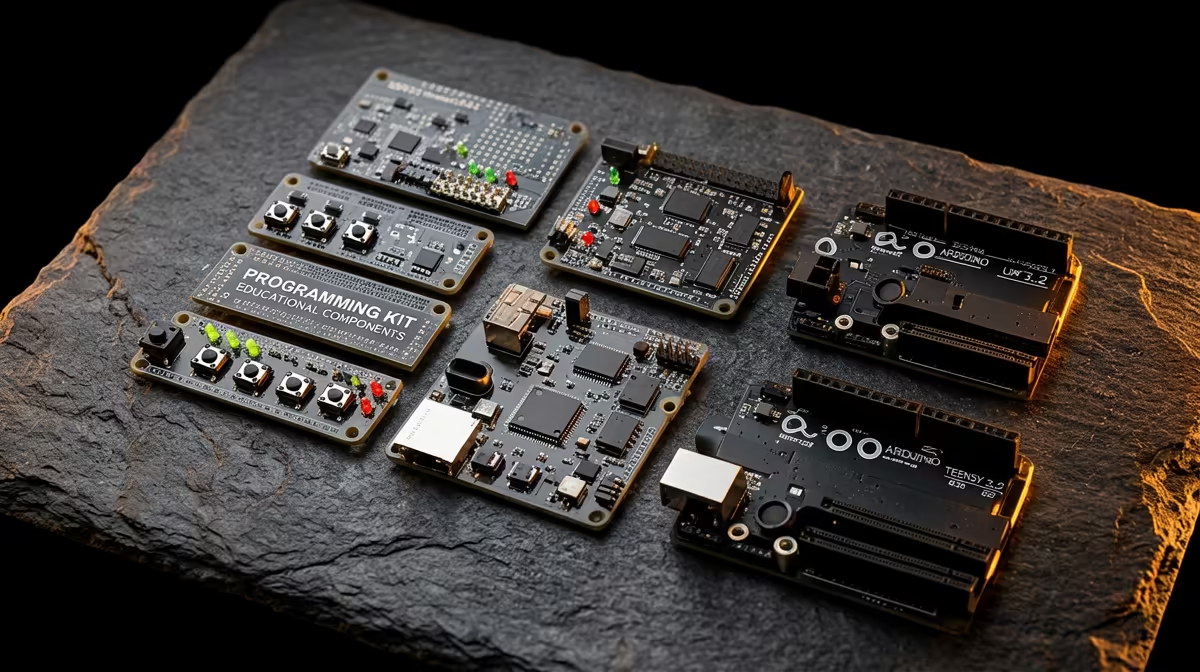
Plenty of apps promise to teach children to code, but most leave them tapping a screen with nothing physical to show for it. A coding kit closes that gap by pairing real hardware, a board, sensors or a small robot, with software, so the moment a child runs their code, a light blinks, a motor turns or a buzzer sounds. That instant, tangible reaction is the whole point and the thing pure screen-based courses cannot match.
Quick Answer
A coding kit is a bundle of physical hardware and matching software that lets a learner see their code produce a real-world result, such as lights, sound or movement. The defining feature is that feedback loop: write a line, run it, and something physical happens. That immediate cause and effect is what separates a coding kit from an app-only coding lesson.
How the hardware and software work together
At the centre of most kits sits a small programmable board, often a microcontroller, which is a tiny computer designed to read inputs and control outputs. Sensors feed it information about the world, like light, temperature, distance or a button press. Outputs, such as LEDs, motors, speakers or a display, are the parts that visibly react.
The software is where the child writes instructions. Beginner kits usually start with block-based coding, where you drag and snap colourful command blocks together, then graduate to typed languages as confidence grows. When the child presses run, the code travels to the board, which carries out the steps and drives the outputs. Seeing the result makes an abstract instruction suddenly concrete.
Why physical feedback teaches better
A line of code that only changes a number on a screen is easy to ignore. A line of code that makes a robot turn left is impossible to ignore. That difference matters for learning. When a child can see, hear and touch the outcome, debugging becomes a game of observation rather than a wall of error messages, and persistence comes naturally because the reward is so clear.
This is also how real engineering works. Embedded systems, robotics and the connected devices around us all rest on the same loop of input, processing and output that a good coding kit teaches in miniature. Children who grasp it early build intuition that carries into far more advanced work.
Choosing a first coding kit
Match the kit to the child's age and reading level. Younger children do best with chunky, colourful components and block-based coding, while older learners can handle smaller boards and typed code. Look for a kit with a clear progression of projects, decent instructions and the ability to grow beyond the starter activities, so it does not become a one-afternoon toy.
The connected gadgets and smart devices in the smart home and appliances range show the kind of real products that grow out of these foundational skills, and supporting bits like cables, batteries and small add-ons sit in the accessories best sellers for when a project expands.
Frequently Asked Questions
What is the difference between a coding kit and a coding app?
A coding app usually keeps everything on screen, while a coding kit links code to physical hardware so a child sees lights, sound or movement when the program runs. That real-world feedback is the core difference and the main reason kits hold attention so well.
Do I need to know how to code to help my child?
No. Most kits are designed for beginners and start with drag-and-drop block coding plus guided projects, so you and your child can learn together. The instructions assume no prior coding knowledge from either of you.
What age is right for a first coding kit?
Block-based kits suit children from around six or seven, while typed-code kits work better from roughly ten upward. The best starter kits scale across a wide age range, growing in difficulty as the child improves.
What can a child actually build with a coding kit?
Typical first projects include flashing light patterns, a simple alarm, a distance sensor that beeps, or a small robot that follows commands. As skills grow, children combine sensors and outputs into more inventive creations of their own design.
A coding kit turns abstract instructions into lights, sound and motion a child can see, which is exactly why it teaches so well. Explore the smart home and connected tech at Evetech to find the gear that brings a young coder's first projects to life.