Spend eight hours at a desk and your back eventually files a complaint. The fix a lot of SA home-office and gaming setups land on is a sit-stand desk, a work surface that moves up and down so you can swap between sitting and standing without ever leaving your screen.
Quick Answer
A sit-stand desk is a height-adjustable desk whose top raises and lowers so you can alternate between sitting and standing through the day. Electric models typically cover a 70cm to 120cm height range at the press of a button, while manual crank versions reach the same range for less money.
How a height-adjustable desk works
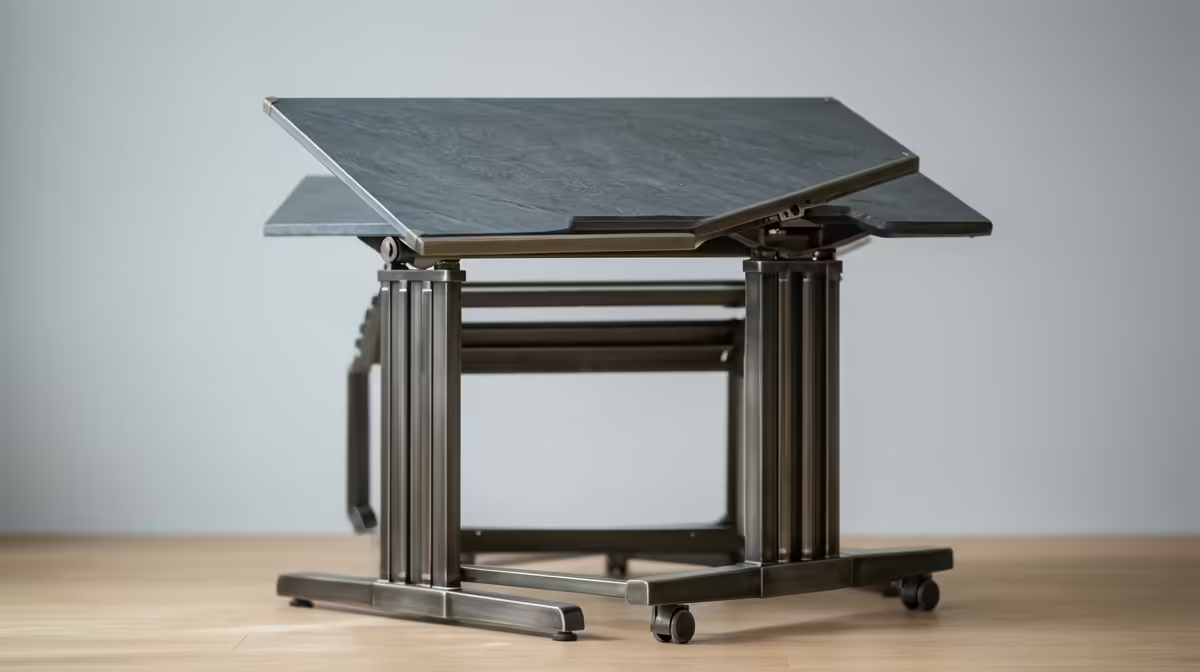
The whole idea sits in the legs. Each leg is a column that telescopes, sliding sections that extend and retract to change the height of the top. The two common ways to drive that movement are electric motors and a manual crank.
An electric sit-stand desk puts a small motor in each leg and a control panel on the edge. Tap up or down and the motors raise or lower the surface smoothly, usually across roughly a 70cm to 120cm range, which covers a comfortable seated position through to standing height for most people. Better models add memory presets, so one button takes you straight to your saved sitting height and another to your standing height.
A manual crank desk reaches the same range using a fold-out handle that turns a screw mechanism. It costs less and never needs a plug, at the cost of a few seconds of winding each time you switch. If you change height only a couple of times a day, that is a fair trade.
Who actually benefits
The honest answer is people who sit for long, continuous stretches: developers, gamers on marathon sessions, students grinding assignments, anyone whose work keeps them at one desk for hours. Alternating posture takes the constant load off your lower back and keeps you from locking into a single position. The point is not to stand all day, which brings its own aches, but to switch before either posture gets uncomfortable.
If your day already involves moving around, or you only sit for short bursts, a fixed desk and a genuinely good chair will serve you just as well for less. A height-adjustable desk earns its place when long, static sitting is the default. Pairing one with the right desk surface matters too, and you can browse the full gaming and standing desk range at Evetech to round out the setup.
Electric or manual: picking the right one
Choose electric if you will change height often, want memory presets, or simply value the convenience of a one-tap switch. Choose manual if budget is the priority, your desk lives away from a plug point, or you only stand occasionally. Either way, look at the load rating: your monitors, PC, peripherals and a mug all add up, and the desk needs to lift the lot smoothly. To see which desk accessories SA buyers reach for most, the top-selling workspace accessories right now are a quick guide before you finalise the whole desk setup.
Frequently Asked Questions
What height range does a sit-stand desk cover?
Most electric models span roughly 70cm to 120cm, enough to go from a comfortable seated height to a standing position for the majority of users. Manual crank desks reach a similar range.
Is an electric desk worth it over a manual one?
If you switch posture several times a day or want memory presets, yes, the convenience adds up. If you only stand occasionally and want to save money, a manual crank desk does the same job.
Should I stand at my desk all day?
No. Standing all day brings its own fatigue. The benefit comes from alternating between sitting and standing before either position becomes uncomfortable.
How much weight can a sit-stand desk lift?
It varies by model, so check the load rating. Add up your monitors, PC, peripherals and accessories to be sure the desk can raise the full load smoothly.
Do I need a special chair with a sit-stand desk?
A supportive chair makes the seated half of the day far better. Pairing a height-adjustable desk with a good ergonomic chair gives you comfort in both postures.