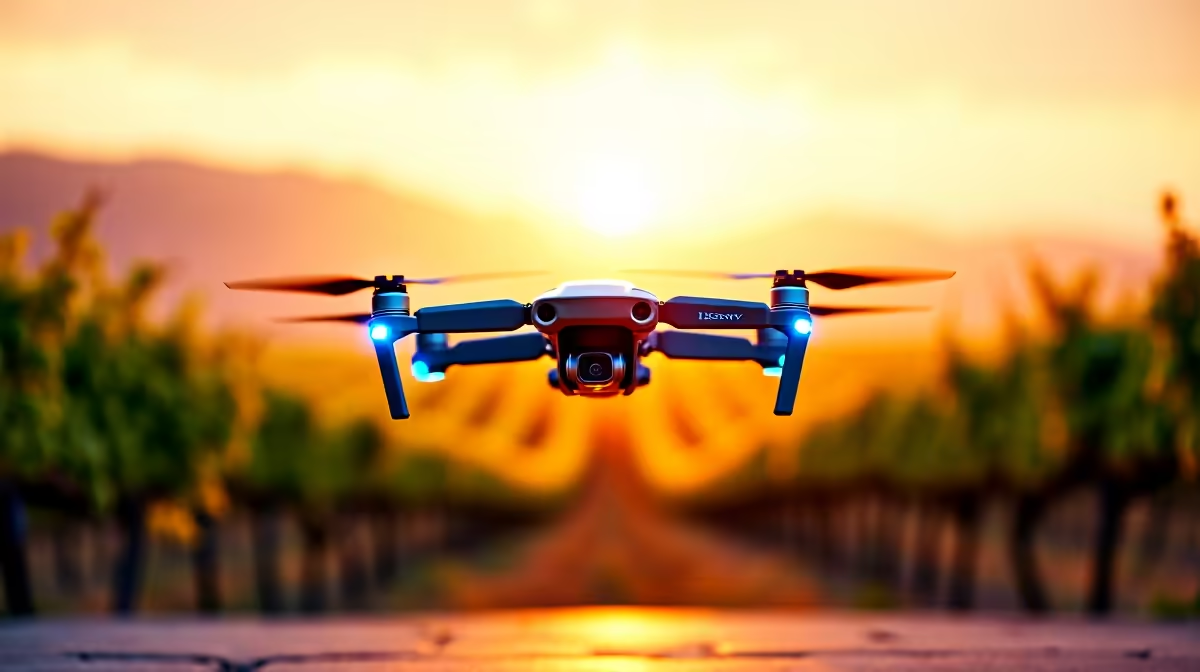
Fly a drone past the point where you can still see it clearly with your own eyes, and you have crossed into BVLOS territory, beyond visual line of sight. In South Africa that is not a grey area: SACAA Part 101 explicitly prohibits it for recreational and commercial pilots without specific prior approval. Knowing exactly where that line sits keeps you legal and keeps your drone in the sky rather than grounded by a rule you did not realise you were breaking.
Quick Answer
BVLOS means operating a drone beyond your direct, unaided visual line of sight. Under SACAA Part 101, that is prohibited for both recreational and commercial flights unless you hold specific BVLOS authorisation granted in advance. By default you must keep your drone within sight at all times, without binoculars or relying on the camera feed.
What "visual line of sight" actually requires
Visual line of sight, or VLOS, means you can see your drone with your own eyes, unaided, well enough to know its position and orientation and to avoid other aircraft and obstacles. Glasses and contact lenses are fine, but binoculars, a zoom lens or the live video feed from the drone do not count toward maintaining line of sight.
The moment your drone disappears behind a building, over a ridge, into cloud or simply too far to make out clearly, you are flying BVLOS. The first-person camera view feels like seeing, but the regulation is about your direct unaided vision, not the screen.
Why SACAA restricts it
The rule exists for airspace safety. A pilot who cannot see their drone cannot reliably spot a crewed aircraft, another drone or a sudden obstacle in time to avoid a collision. Keeping the drone within sight is the simplest way to ensure the operator can react to what is actually around it.
BVLOS removes that safety net, which is why special authorisation is only granted for specific, justified operations with extra safeguards in place. It is not a box recreational flyers can casually tick.
Who can fly BVLOS, and how
BVLOS authorisation is reserved for operators who apply to SACAA and demonstrate the systems and procedures to fly safely without direct sight. That typically means commercial operations such as long infrastructure inspections, agricultural surveys or mapping over large areas, where the operator has the right approvals, equipment and risk controls.
For the average hobbyist or a small commercial operator, the practical takeaway is simple: assume you must keep your drone in view at all times unless you have gone through the formal authorisation process. Browsing Evetech's drone and smart home listings shows just how many modern devices rely on a remote feed, but for RPAS operations that feed never replaces the obligation to keep the aircraft in your own unaided view.
Staying on the right side of the rule
In everyday flying, hold a comfortable distance where you can clearly track the drone, avoid flying behind solid objects that break your view, and never push range just because the camera still shows a picture. If a job genuinely needs flight beyond sight, that is a conversation with SACAA and the authorisation process, not something to attempt on the assumption nobody will notice.
If you are still choosing a drone, checking what accessories other pilots buy at Evetech gives a useful picture of the spare batteries, props and cases that come with owning a new aircraft.
Frequently Asked Questions
Is BVLOS legal in South Africa?
Only with specific prior authorisation from SACAA. Under Part 101, both recreational and commercial flights must stay within visual line of sight by default, and flying beyond it without approval is prohibited.
Does the drone's camera count as line of sight?
No. The first-person video feed does not satisfy the requirement. Visual line of sight means seeing the drone with your own unaided eyes, well enough to track its position and avoid hazards.
Can I use binoculars to keep my drone in sight?
No. Aids like binoculars or a zoom lens do not count toward maintaining line of sight under the rule. Corrective glasses or contact lenses are the only permitted vision aids.
Who is allowed to fly beyond visual line of sight?
Operators who apply to SACAA and obtain specific BVLOS authorisation, usually for justified commercial tasks like large-scale inspection or surveying, with the required systems and safety procedures in place.
Getting into drones and want to fly within the rules? Browse the smart home and connected devices range at Evetech, keep your aircraft in sight at all times, and apply to SACAA before attempting any flight beyond visual line of sight.