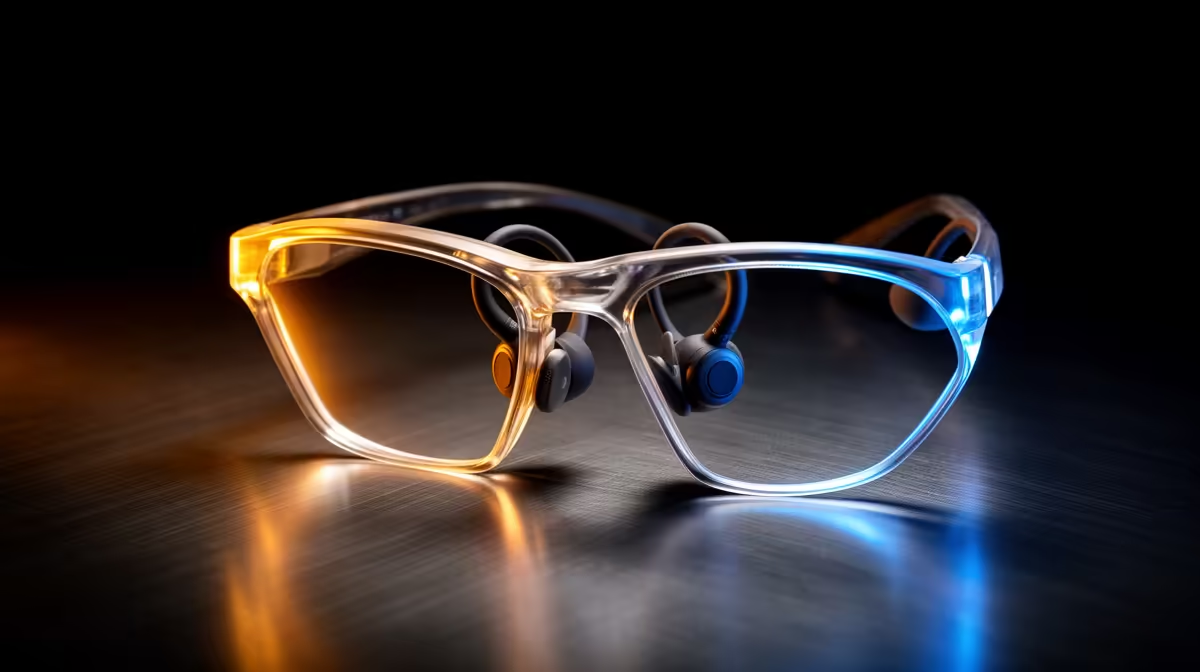
Smart glasses sound a bit magical the first time you hear audio from them with nothing in your ears. The trick is open-ear audio, a design that places tiny speakers in the arms of the frame, just above each ear, and aims sound at you without ever sealing the ear canal. You hear your music, a call, or a voice assistant, and you also hear the world around you at the same time. It is a different idea from earbuds, and it suits a different set of situations.
Quick Answer
Open-ear audio on smart glasses uses small speakers built into the temples, the arms of the frame, that direct sound toward your ears without blocking them. Because nothing seals the ear canal, you stay fully aware of your surroundings while listening. It trades some bass and isolation for safety and all-day comfort, which is why it suits walking, cycling, and staying reachable.
How The Temple Speakers Work
The speakers sit in the temples of the glasses, positioned just above and slightly forward of each ear. They fire sound downward and toward the ear opening. Because the ear stays open, ambient sound mixes naturally with what the glasses play. This is the same principle as a small open speaker held near your head, miniaturised and tuned so that the wearer hears it clearly while people nearby hear very little. Clever audio processing keeps the sound focused at your ears and limits leakage, though in a quiet room someone close by may catch a faint hint of it.
How It Differs From Earbuds
Earbuds, especially ones with active noise cancelling, seal your ear and isolate you from your surroundings. That gives them deep bass and immersive sound, but it cuts you off from traffic, conversation, and announcements. Open-ear audio does the opposite. It keeps you connected to the room, which is its whole point, at the cost of weaker bass and far less isolation. In a loud environment, a sealed earbud will always win on raw audio quality; in a setting where awareness matters, open-ear is the safer and more sociable choice. If you want to see how AR and smart eyewear are shaping up, the AR glasses range at Evetech is a useful starting point.
When Open-Ear Is The Right Choice
Open-ear audio shines when you need to stay aware. Walking or cycling on a busy Cape Town road, you keep full hearing of traffic. Working at a desk, you take calls and hear a colleague without pulling anything out of your ear. Parents and anyone who needs to stay reachable benefit from never being fully sealed off. It is also far more comfortable for long stretches, since nothing presses into the ear canal, so fatigue from all-day wear largely disappears. The trade-off is that it is not the format for critical listening or for drowning out a noisy gym. To pair smart glasses with the rest of your kit, the accessories best sellers cover the cases, cables, and chargers worth having.
Frequently Asked Questions
Can other people hear my open-ear audio?
At normal volumes in a typical environment, very little leaks out. Someone standing close in a quiet room may catch a faint trace, but it is far quieter than a phone speaker and not a privacy concern in most settings.
Does open-ear audio have good bass?
Bass is the main compromise. Because the speakers do not seal the ear, low frequencies are weaker than on in-ear buds. It is fine for podcasts, calls, and casual music, less so for bass-heavy listening.
Is open-ear audio safe for cycling?
Yes, that is one of its strengths. You hear traffic and your surroundings clearly while still getting audio, which is safer than blocking your ears with sealed earbuds on the road.
Will it work in a noisy place?
Less well. Without isolation, loud surroundings drown out the audio, so you end up raising the volume. In very noisy settings, sealed earbuds remain the better tool.
Open-ear audio is what makes smart glasses comfortable to wear all day while staying aware of the world. Explore the smart and AR glasses range at Evetech to see which frames bring the feature to life.