


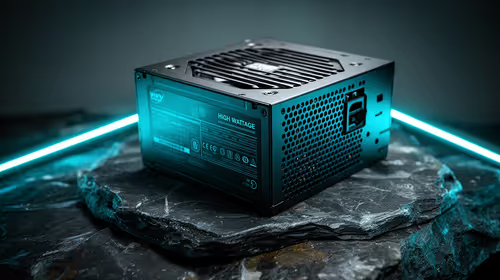
550W PSU Planning for RTX 5080 Super Builds in SA
550W for RTX 5080 Super needs a full-build check, not a simple yes. Review GPU guidance, CPU draw, transient load, connectors, PSU quality, and upgrade plans before deciding.
Read moreSouth African buyers should verify chair fit, rated load, adjustment ranges and seat construction. The R9,599 E3 Ultra offers 8D lumbar support, omni armrests, a 4D headrest and an aluminium base.
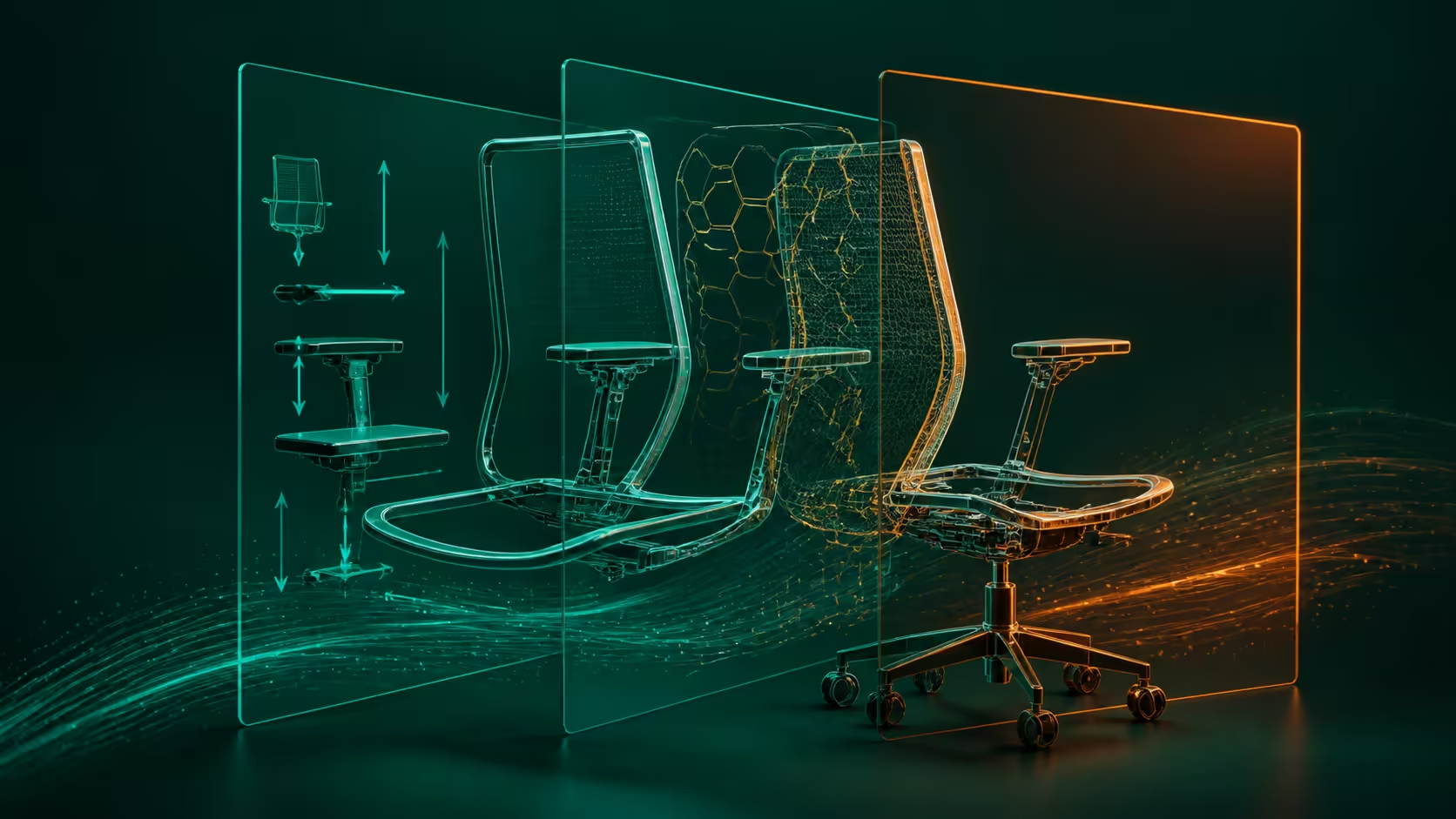
South African buyers choosing an adjustable office chair should verify the essentials before admiring the movement range. Seat fit, intended-user capacity, desk clearance and exact materials can decide suitability before any advanced control is counted.
South African buyers can check the E3 Ultra's mesh composition, 1.97-inch seat travel, lumbar ranges, five arm movements, headrest dimensions and 140-degree recline before purchase.
Check dimensions, load rating, seating surface and room fit first. Then test lumbar, arm, head and recline controls through real tasks one at a time. At R9,599, the HBADA E3 Ultra brings a broad adjustment package, while individual fit still needs direct answers.
Measure the user's required seating space, desk height, leg clearance and room behind the chair. Ask for a model-specific capacity rather than inferring it from price or metal parts. If one essential figure fails, extra adjustability cannot fix the mismatch.
Nylon and yarn form the E3 Ultra's fully meshed cushion, whose 16.5% breathable structure determines the relevant care approach. Do not infer a routine from an image or broad ergonomic label.
Begin with the E3 Ultra's 8D adjustable lumbar support, using a neutral reference and one modest change. Then assess its 720-degree omni armrest range for keyboard, pointer and desk clearance.
Compare alternative control sets in Evetech's HBADA office-chair department. Keep the settings that solve an observed task problem and can be recovered later.
This E3 Ultra provides 70 degrees of rotation and tilt through a biaxial 4D headrest. Place the display for a relaxed gaze before adding head contact, and do not infer extra adjustment mechanics.
Its backrest reaches 140 degrees. Test the screen, armrest and room relationship after reclining, since usable travel depends on more than the maximum number.
Aluminium alloy runs through the E3 Ultra's support bar and five-star base. This should never be converted into steel construction, a load capacity or a certification claim. Give each property its own checklist line.
Use Evetech's office chair category to complete a comparable shortlist. Final value comes from required fit plus useful controls, not the length of the feature list.
Perform a reset test if the chair will serve several people. Each user should be able to restore the lumbar, arm and head positions without forcing controls or relying on another person's memory. Reset clarity belongs beside the headline range in a shared-workspace comparison.
Keep a separate note for each desk if the chair moves between rooms. Identical controls can need different references when the work surface and display relationship changes.
Inspect transitions as well as sitting. Approach the desk, perform a task, enter shallow recline, come upright and stand. This short sequence exposes furniture collisions, lost settings and control access problems that a stationary showroom pose can hide.
Run the sequence on the intended floor where practical and observe ordinary castor movement. Floor behaviour, chair fit and base material are related to use but should stay as distinct checklist entries.
Finally, repeat the core measurements from the chair rather than relying on a visual estimate. White finishes and slim-looking components cannot tell the buyer whether the user or desk clearance fits.
The gravity chassis and aluminium base are also known. Remaining fit questions belong to the user's dimensions and room, not to uncertainty about whether the chair includes mesh, multi-zone lumbar or adaptive recline.
The maximum user fit still depends on measurements that are separate from the adjustment count.
Verify dimensions, user capacity, seat construction, desk clearance and floor suitability. These determine whether the basic chair can work in the intended space.
The E3 Ultra combines 8D lower-back adjustment with armrests offering 720 degrees of omni movement. Test them independently.
Its biaxial head support carries a 4D description and spans 70 degrees across rotation and tilt. Additional mechanics should not be assumed.
HBADA provides up to 140 degrees of recline. Exact locks, resistance and suitable working angles require an individual chair test.
Its five-star base is aluminium alloy, and so is the support bar. Neither part supplies the chair's load figure by implication.
No. Identify the precise seat surface before comparing airflow, contact feel or cleaning needs with another chair.
The white E3 Ultra is R9,599. Compare that number only after candidates meet the same essential measurements and task requirements.
Ready to turn chair shopping into a verified fit checklist? Explore Evetech office chairs with measurements first, exact materials second and advanced movement tested only after both are settled.
Verify dimensions, user capacity, seat construction, desk clearance and floor suitability. These determine whether the basic chair can work in the intended space.
The E3 Ultra combines 8D lower-back adjustment with armrests offering 720 degrees of omni movement. Test them independently.
Its biaxial head support carries a 4D description and spans 70 degrees across rotation and tilt. Additional mechanics should not be assumed.
HBADA provides up to 140 degrees of recline. Exact locks, resistance and suitable working angles require an individual chair test.
Its five-star base is aluminium alloy, and so is the support bar. Neither part supplies the chair's load figure by implication.
No. Identify the precise seat surface before comparing airflow, contact feel or cleaning needs with another chair.
The white E3 Ultra is R9,599. Compare that number only after candidates meet the same essential measurements and task requirements.
550W for RTX 5080 Super needs a full-build check, not a simple yes. Review GPU guidance, CPU draw, transient load, connectors, PSU quality, and upgrade plans before deciding.
Read more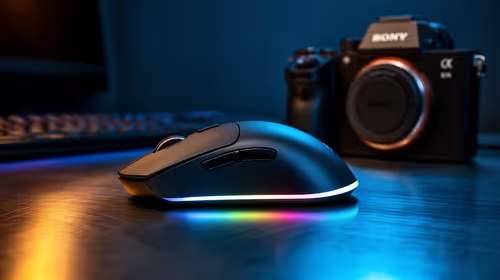
8000Hz polling is overrated for most SA gamers because gains can be tiny next to battery drain and monitor limits. Mbombela players should weigh mouse feel, game support, and system stability before chasing the number.
Read more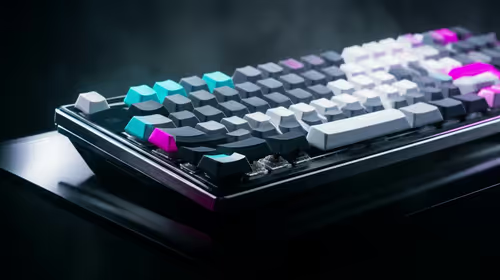
Magnetic switches are taking over SA gaming keyboards because actuation can be tuned. For Sandton gamers, rapid trigger, reset control, and profile depth can help, but layout, key feel, and software quality still matter.
Read more
Polokwane oled monitor value questions need cautious SA context because pricing can move with availability, exchange rates, specs, and warranty support. Treat the trend as a planning signal, not a fixed price promise.
Read more
Arc B580 budget builds for Midrand gamers can shift with exchange rates, supply, specs, and model tier. Treat the title as a buying prompt, then compare SA warranty, timing, and build priorities.
Read more
ROG Ally X may beat the LCD Steam Deck for SA gamers who value stronger handheld performance, more memory, and Windows flexibility. Compare battery life, controls, game libraries, and Polokwane support needs before deciding.
Read more
Minisforum's M2 Pro pairs Core Ultra X7, Arc B390 graphics and 32GB onboard memory in 1.8 litres. SA buyers should weigh its fixed memory and $1,439 launch offer against local mini PCs.

Lenovo says Legion Go failures linked to BIOS N3CN42WW are not user error. Affected SA owners should stop retrying the update, preserve proof and open a support case.

Smart monitors can add apps and convenience, but they also add privacy settings and unwanted-software risk. SA buyers should audit the operating system before paying for extras.

A fake 113GB GTA VI ISO reportedly used empty padding around a small malware payload. SA gamers should delete unofficial builds, keep Windows security active and wait for official channels.
ASUS calls the ROG GT-BN98 the first Wi-Fi 8 gaming router. SA buyers should fix coverage and client limits before paying for a future wireless standard.
Apple's M6 Mac mini adds faster AI, graphics and networking in the same compact format. SA buyers should wait for a rand listing before comparing value.
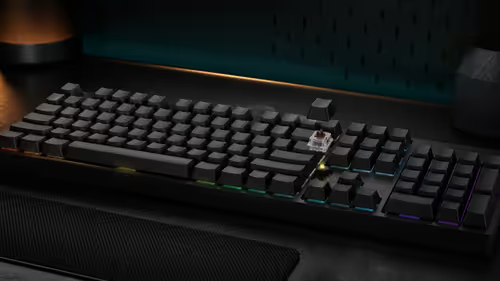
The Vulcan II XP adds hot-swappable switches, sound damping and gaming controls to a full-size wired board. SA buyers should compare feel before features.

Microsoft says Windows on Arm now has over 7,000 verified apps and games. SA buyers should still check each driver, game and work tool before switching.

Xbox Insiders can test disc-to-digital from 31 August 2026. Supported Xbox One and Series X discs gain a digital entitlement, but older discs, regions and title coverage still need exact checks.
ViewSonic's XG2738 pairs QHD QD-OLED with 240Hz and automatic panel care. SA buyers should compare warranty, brightness, ports and burn-in protection against today's R9,999-plus OLED shelf.

NVIDIA's final Windows 10 Game Ready driver is due in October 2026. SA gamers can keep using their GPU, but new game optimisations move on while critical security fixes continue quarterly.

JBL's new Quantum 520, 520X and 120 headsets cover wireless, Xbox-certified and wired use. SA buyers should compare connection, comfort and microphone needs before paying for a new badge.