Quick Answer
For LAN party preparation, ignore RGB lighting and extreme speed ratings on DDR5 kits; a stable 32GB DDR5-6000 kit, around R2,000, is what wins. Reliability and quick setup matter more at a LAN than chasing benchmark numbers nobody notices mid-match.
What to Ignore
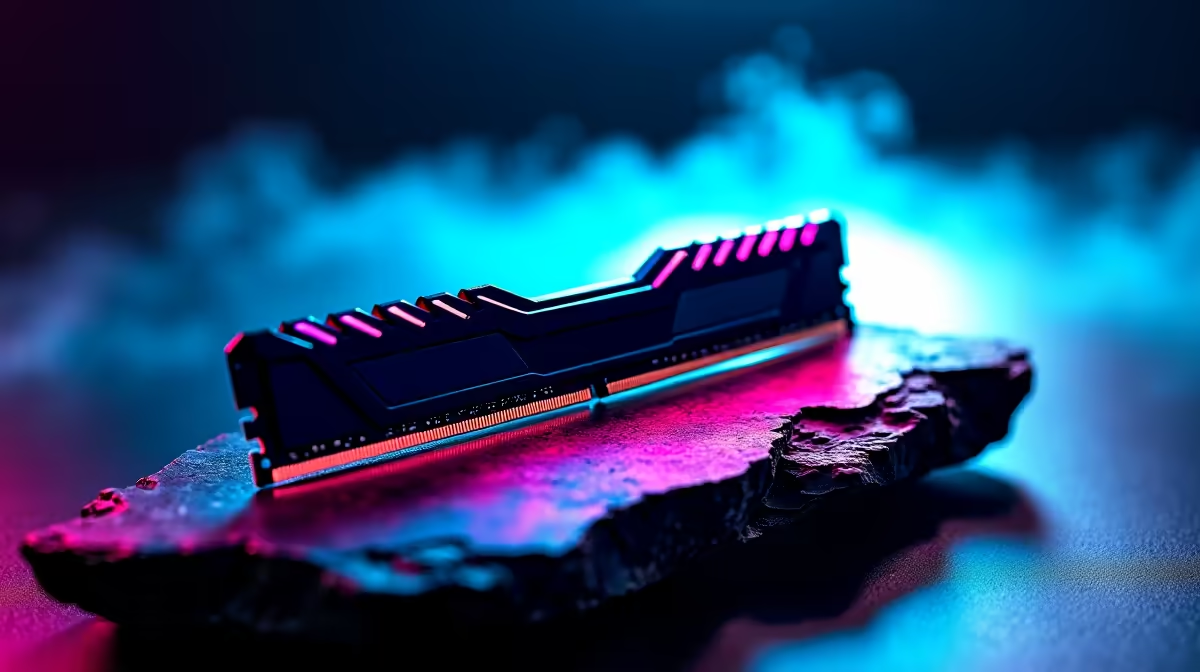
At a LAN, flashy RGB and headline speeds like DDR5-8000 add cost without real-world benefit for gaming, where DDR5-6000 already hits the sweet spot on AM5. Very high-speed kits can also be fiddlier to get stable, the last thing you want when setting up quickly in a venue. Tall heatspreaders can clash with big air coolers too.
What Actually Matters
Buy a matched two-stick 32GB DDR5-6000 kit from your board's supported list and confirm the EXPO or XMP profile loads cleanly at home before the event. Stability and a one-click profile that just works are the real priorities for a smooth LAN setup.
Pre-LAN Checklist
Test the EXPO profile, run a quick memory stability check, and confirm cooler clearance days before the LAN so you arrive ready to plug in and play.
FAQ
Do I need DDR5-8000 for LAN gaming?
No. DDR5-6000 is the gaming sweet spot on AM5 and is easier to run stably. Faster kits cost more and can be fiddly, with little real benefit in actual matches.
How much RAM should a LAN rig have?
32GB is the comfortable standard for modern games plus voice chat and a browser. 16GB still works for many titles, but 32GB avoids stutter when multitasking at a LAN.
Should I worry about RGB RAM for a LAN?
No. RGB is cosmetic and adds cost. Spend on a stable, matched kit at the right speed, and confirm the profile loads cleanly before the event for a hassle-free setup.
Will tall RAM clash with my cooler?
It can. Tall heatspreaders sometimes overlap big tower coolers. Check clearance against your cooler before buying, or choose low-profile sticks for a tight LAN-ready build.
Buy a stable 32GB DDR5-6000 kit, confirm the EXPO profile loads cleanly at home, and skip RGB and extreme speeds for LAN day.