


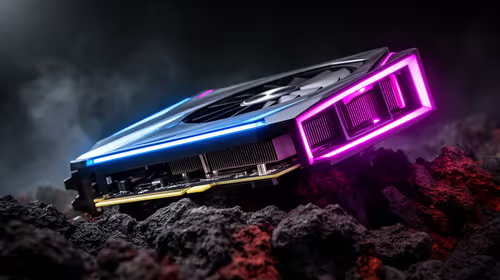
How to Fix FPS Drops on an RTX 5090 Build
FPS drops on an RTX 5090 build often have a fixable cause. Check settings, drivers, thermals, background tasks, network conditions, and bottlenecks before assuming a part must be replaced.
Read moreWhere cheap streaming microphones become should be shortlisted around the job it must do. South African buyers should compare audio quality, mic clarity, comfort, and connection type, warranty path, and upgrade room before treating any pick as best.
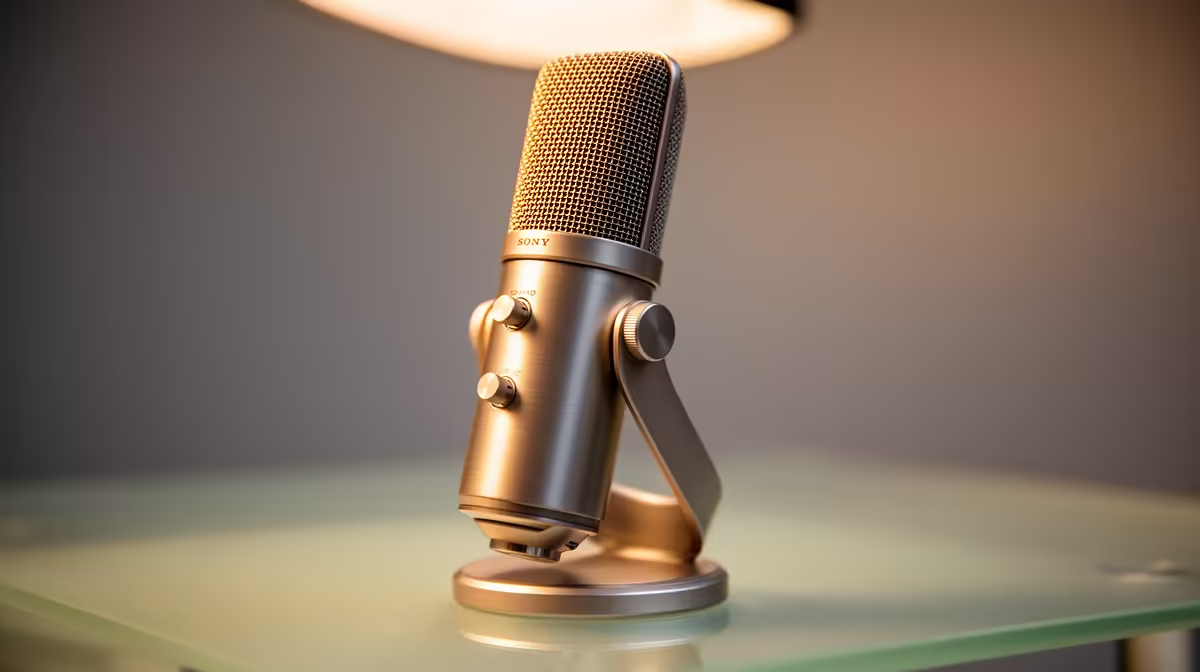
Pay for the microphone feature only when it solves a real limit in the setup. For shared gaming spaces, use R650-R3,500 as a cautious SA buying band and compare examples such as HyperX SoloCast, Razer Seiren Mini and Elgato Wave:3. Check USB cardioid pickup and 16-bit/48 kHz to 24-bit/96 kHz capture, because that is where the purchase starts affecting real daily use.
Start with the problem already in the setup: multiple users and evening voice chat. If the microphone fixes that problem, shortlist it; if it only adds a nicer label, spend elsewhere. Room noise, mic position and mute control matter more than studio-style spec sheets. In SA homes, res rooms and shared flats, also check warranty support, cable length and the exact laptop, PC, console or monitor connection before you buy.
A practical shortlist has three tiers. Budget picks around R650 should cover the basic job without vague specs. Balanced picks in the middle of the R650-R3,500 range are usually the sweet spot because they add better build quality and headroom for daily use. Premium choices near R3,500 make sense only when the device is used for long sessions, shared by several people, or connected to expensive hardware.
Test against numbers, not hype: USB cardioid pickup and 16-bit/48 kHz to 24-bit/96 kHz capture, cable reach, desk space, heat and setup time. For gaming-adjacent setups, consistency is the target: a 60 fps casual game, a 120 Hz or 144 Hz display, clear voice chat, or stable Ethernet should not become worse after adding the microphone.
Plan around R650-R3,500 for streaming microphones, then move up only when the model adds a spec you will use every week. For multiple users and evening voice chat, the balanced tier is usually safer than the cheapest listing.
Check USB cardioid pickup and 16-bit/48 kHz to 24-bit/96 kHz capture first, then confirm compatibility with the exact PC, laptop, console, monitor or room. Specs that do not improve comfort, stability or setup time should not drive the final price.
Skip premium when the current problem is placement, cabling, dust, room noise or unrealistic expectations rather than the microphone itself. Pay more when the upgrade removes a measurable limit such as heat, unstable signal, bad audio, cramped controls or poor comfort.
write down your exact device model, room size, monitor refresh rate and budget band; then compare streaming microphones against those facts.
FPS drops on an RTX 5090 build often have a fixable cause. Check settings, drivers, thermals, background tasks, network conditions, and bottlenecks before assuming a part must be replaced.
Read more
How to fix low FPS on 240Hz monitor starts with refresh rate, GPU load, and game caps. In South Africa, also check power mode, thermals, and display cable quality before assuming your PC cannot keep up.
Read more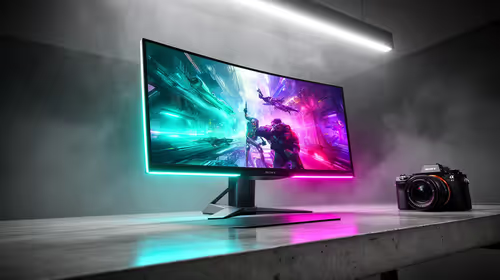
31.5-inch 4K OLED gives SA gamers sharp work space and rich contrast for play. It suits buyers who want one high-end display for study, streaming, or editing by day, then immersive gaming after hours. Check desk depth and panel care first.
Read more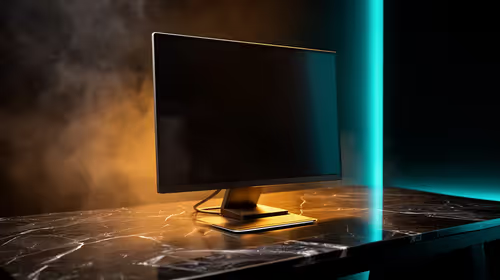
All-in-One PCs are niche in SA because they package the display and desktop into one tidy unit. That helps with space and setup, but SA buyers should weigh repair access, upgrade limits, monitor choice, and gaming expectations.
Read more
All-in-One PCs are niche in SA because the neat design comes with upgrade, repair, and performance trade-offs. They appeal to tidy desks and shared spaces, but buyers often compare them against laptops, towers, and separate monitors.
Read more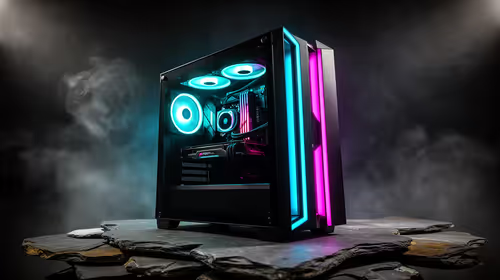
ARGB Cases In Mid-Tier SA Builds can change budget, compatibility or upgrade plans. SA PC builders should compare fit, warranty, platform needs and real workload value before committing.
Read more
Pre-Black Friday AIO cooler needs practical checks before buyers act. Build the shortlist around specs, warranty, fit, and real discount checks before campaign prices or ranges change. Keep it guide-safe for South African readers.
Used parts can lower the build cost, while buying new gives the SA warranty angle named in the title.
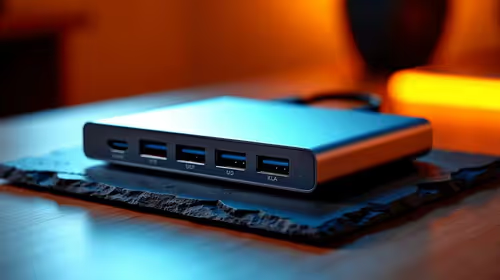
Choosing the right USB-C hub is essential for a clean, efficient desk setup. 🖥️ Discover exactly how many ports you need to replace your bulky desktop docking station without sacrificing performance or connectivity. ⚡
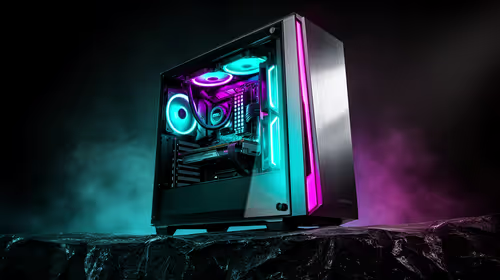
Black Friday Gaming PC Wait can help if your PC need is flexible. On a R5,000 SA budget, compare deal risk, component balance, warranty, and timing before waiting.
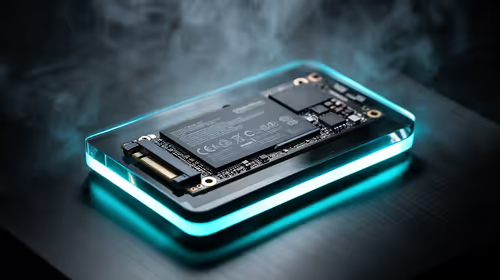
A recovery drive and system restore points turn a failed driver or BIOS update on a gaming pc from a full reinstall into a five-minute fix. Setting both up takes about 15 minutes, and Evetech recommends doing it the week you unbox a new build, before tweaking drivers.
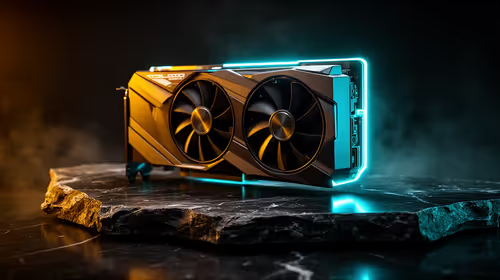
RTX 5090 with a 1000W PSU is a strong compatibility target for high-end builds. SA buyers should still match the exact PSU quality, connector support, CPU choice, case airflow, and upgrade needs to the final system.
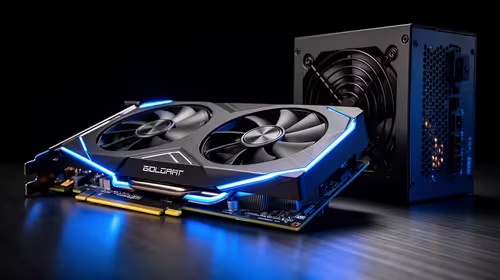
RTX 5090 on a 1000W PSU offers the best headroom in this PSU tier set. SA builders can plan more confidently for top-tier CPUs, cooling, and cautious OC, while still checking cable support and total system load.
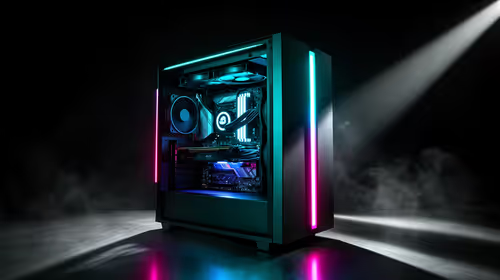
A 550W PSU is a risky fit for an RTX 5080 Super system in SA unless guidance and demand support it. Check CPU draw, cabling, PSU age, cooling, and upgrade margin before deciding whether the setup is safe enough.
FPS drops on an RTX 5090 build often have a fixable cause. Check settings, drivers, thermals, background tasks, network conditions, and bottlenecks before assuming a part must be replaced.
The real world difference between PCIe 5.0 and PCIe 4.0 in competitive esports is rarely raw FPS. SA esports players should compare GPU lane needs, CPU limits, latency goals, and NVMe loading before upgrading.
How to fix low FPS on 240Hz monitor starts with refresh rate, GPU load, and game caps. In South Africa, also check power mode, thermals, and display cable quality before assuming your PC cannot keep up.
PCIe 5.0 vs PCIe 4.0 for aAA single-player gaming buyers - what changes is mostly about compatibility, budget, upgrade path, and setup fit. SA buyers should check device support and real needs before expecting a clear win from either option.