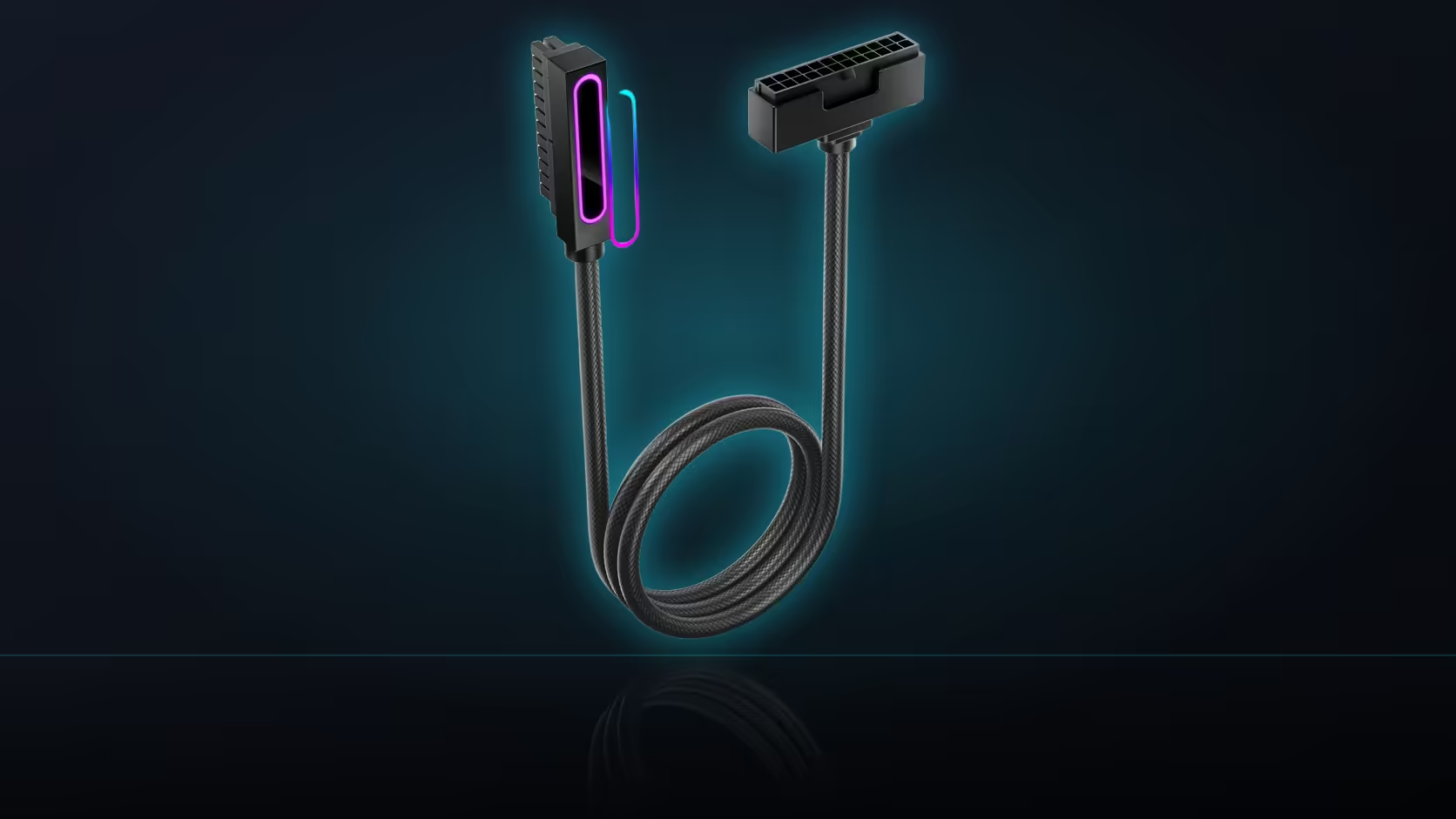
A seated power connector, once properly pushed home, tends to stay exactly where it is for the life of a build with almost no attention required. The 5V 3-pin lighting connection on a Hydrus EPS cable behaves quite differently, and treating it with the same buried, out-of-sight placement is a decision worth reconsidering.
Quick Answer
Leave the 5V 3-pin connection somewhere you can reach without dismantling. It is the part most likely to need attention later, where the power connection rarely moves. A lead pushed deep under a cooler is one you will regret.
🔄 Why the lighting lead needs more ongoing access than the power plug
A header connection like this can genuinely work loose over time through vibration and handling, or need repositioning entirely when additional lighting components get added to a build down the line - where a properly seated power plug, by contrast, generally stays firmly put once installed and rarely demands any further attention for the remaining life of the machine.
📍 Where a genuinely good position looks like
Somewhere near the board's own edge, or just behind the tray, positioned close enough to its target header to keep the lead itself short while still remaining reachable without needing to move anything else out of the way first - that combination of proximity and accessibility is what makes a header position genuinely convenient rather than merely functional.
🚫 What actually makes for a bad position
Tucked under a cooler, buried beneath the heavier power cable, or hidden behind a drive cage are all positions that share the same underlying flaw: reaching the connector in any of those spots means removing something else entirely first, turning what should be a thirty-second adjustment into a genuinely involved job.
🪢 Whether the lead needs deliberate slack
A small amount of slack is worth building in deliberately, enough that the connector can be pulled free without any real tension working against the join - and that same slack proves useful again if a future rebuild ever relocates the target header to a slightly different position on a replacement board, since a lead with some give can often reach a nearby alternate header without needing to be re-routed entirely from scratch.
⚠️ Extra care on the EPS version specifically, and what to do if access does get lost
The EPS version's lighting lead runs specifically through the genuinely crowded top corner of the board, where cooler mounting hardware and other cabling already compete for the same limited space - that tighter routing environment makes access considerably easier to accidentally lose here than at the more open main board socket, so it is worth planning this specific lead's position with extra deliberate care. If the connection genuinely does need extending to reach a more convenient header, any standard addressable lighting extension would serve that purpose well, though it is worth knowing that adding one does introduce a further junction into the lighting run - one more connection point that could, in principle, eventually need its own attention. And if access ends up lost anyway despite the planning, nothing breaks: the lighting simply stays as it currently is until the next time other parts happen to come out of the case for unrelated reasons - a workable, if not ideal, outcome that a little upfront planning genuinely avoids needing to rely on. The wider range this connection belongs to is at cable solutions, while extensions and splitters worth keeping in mind for this exact scenario sit at NZXT case lighting.
Frequently Asked Questions
Why does the lighting lead need more access?
Because a header connection can work loose or need moving when other lighting is added, where a seated power plug generally stays put.
Where is a good position for it?
Near the board edge or just behind the tray, close enough to the header to be short but reachable without moving anything else.
What makes a bad position?
Under a cooler, beneath the power cable, or behind a drive cage, all of which mean removing something else to reach the connector.
Should the lead have slack?
A little, so the connector can be pulled free without tension. Slack also helps if the header position changes in a future rebuild.
Does the EPS version need more care here?
Its lead runs through the crowded top corner, so the route is tighter and access is easier to lose than at the board socket.
Can the connection be extended?
Any standard addressable extension would serve, though adding one introduces another join to the lighting run.
What if it becomes unreachable?
The lighting simply stays as it is until the next time parts come out, which is workable but avoidable with a little planning.
Keeping your lighting connection accessible for later?
Browse Evetech's power supply range and plan the header position before dressing the rest of the build.