The best-value chair feature is the one that improves a repeated task without adding an unresolved fit or power problem. An ergonomic chair features value in ZAR score should keep support, airflow and active comfort separate. The HBADA X7 costs R14,999.
Quick Answer
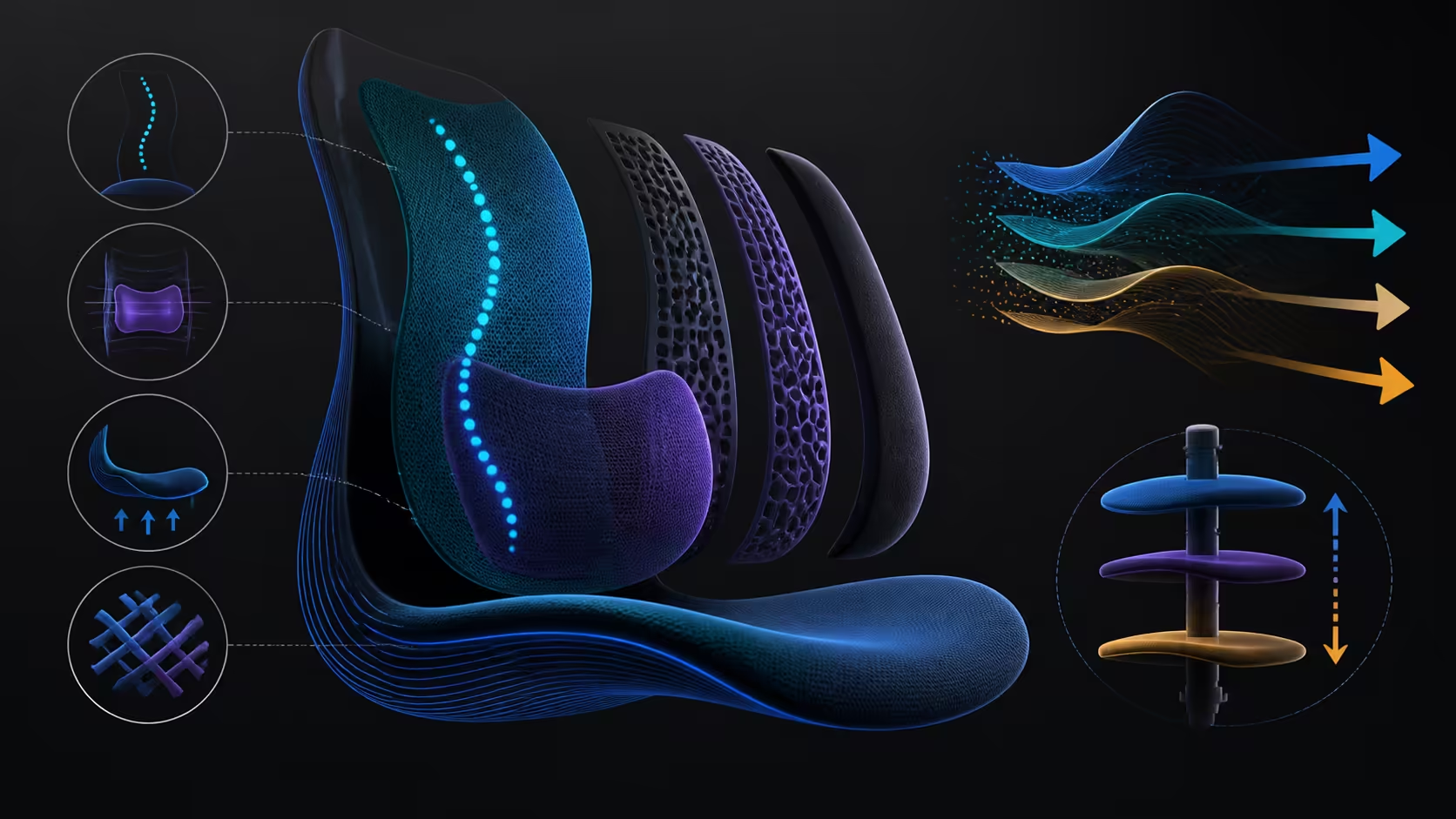
At R14,999, the X7's strongest ZAR value comes from automatic lumbar tracking, remembered settings, ten support levels, 720-degree arms and active seat ventilation.
Adjustable support often creates strong value when it helps through daily posture changes, followed by useful seat airflow or preferred active comfort. The R14,999 X7 follows lumbar posture, ventilates its cushion and adds massage plus warmth. Buyers obtain its battery separately, while dimensions and load capacity must be verified before a verdict.
🧭 Weight features by daily frequency
List posture changes, moments when seat warmth matters and chair-based breaks. Weight a daily improvement above a function chosen twice monthly, rather than treating every smart feature as one bundle.
Compare feature sets through Evetech's HBADA office-chair selection. Keep the exact desk and user requirements visible so frequency does not hide poor physical fit.
🧭 Test support, airflow and sensation independently
Run automated lumbar tracking through a fixed movement sequence and count corrections. Assess the ventilated cushion during an ordinary work block. Try massage and heat separately during short breaks, without assigning modes, temperatures or medical results.
Add the separately required X7 battery to the ZAR score only after identifying its exact item and verified price, leaving capacity and runtime unguessed.
🧭 Keep missing physical rows visible
Exact dimensions, load rating, chassis material and lift class can be mandatory even though they are not smart functions. Leave them open until verified. A feature-rich chair cannot pass for a user or room when critical physical fit remains unknown.
Use Evetech's wider office-chair range to build a real comparison. After a week, remove value from unused functions and keep the features that reduced repeated friction.
Build a feature-removal trial
Use the accepted chair for one session with a selected feature absent. Keep desk position and task stable. If the user's work changes noticeably, the feature may deserve strong value; if nothing changes, reduce its weighting instead of defending it from the specification list.
Run separate trials for automated tracking, active comfort and any preferred ventilation condition that can be observed fairly. Do not disable safety functions or operate the chair outside its guidance. The goal is to learn what the user notices, not to modify the product.
Record the result in plain language: fewer lumbar corrections, easier return from a break, or no meaningful difference. Avoid converting a comfort observation into a health claim. A feature can be worthwhile for convenience without treating or preventing anything.
Repeat the strongest result later in the month. Durable value should survive novelty and a changed workload. Keep missing dimensions, capacity and structure outside this experiment; those rows require exact verification and cannot be made optional by a successful smart-function trial.
The 4D headrest, kneading massage, graphene heat and touch interface add secondary value for users who will use them. The aluminium backrest support and stainless-steel base also supply concrete construction details beyond the electronic feature set.
Rank the features by weekly use so sophisticated systems do not receive automatic value simply for existing.
Frequently Asked Questions
Which feature usually creates the strongest value?
Useful support adjustment often ranks highly because it affects daily seated posture. The actual winner depends on the user's repeated needs.
How can lumbar tracking be valued?
Count whether it maintains broad contact and reduces correction through real posture changes. Do not score hidden sensor assumptions.
When do massage and heat add value?
They add value when the user chooses them regularly and they support a preferred break without distraction or discomfort.
How does the X7 seat address airflow?
Its seat combines DuPont performance polymer material with active ventilation. Foam density and measured cooling performance remain separate checks.
Why are dimensions and load rating important?
They determine physical suitability for the user and room. Smart functions cannot compensate for a failed fit or capacity requirement.
What is the final Rand reference?
The HBADA X7 costs R14,999 before the excluded battery is added. Compare complete verified cost with how often tracking, ventilation, massage and heat help. A feature that remains unused should not retain its original value weighting. Keep dimensions, capacity and structure as mandatory physical rows rather than burying them inside the smart-feature score.
A chair with attractive daily functions remains conditional until dimensions, capacity and structure close as exact physical-suitability checks.
Preserve the strongest feature-removal result with its date, desk task and exact candidate before updating the final ZAR score.
Ready to rank chair features by frequency and full cost?
Compare Evetech seating with support, airflow, active comfort and physical requirements separated.