


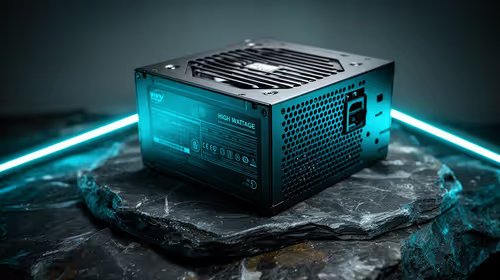
550W PSU Planning for RTX 5080 Super Builds in SA
550W for RTX 5080 Super needs a full-build check, not a simple yes. Review GPU guidance, CPU draw, transient load, connectors, PSU quality, and upgrade plans before deciding.
Read moreChoose a 13.3-inch OLED touchscreen when its size, resolution and touch suit the intended use. For R17,999, the PZ13QA places Snapdragon X Plus behind the display; 1TB storage, 16GB LPDDR5X and 45 TOPS AI complete the configuration.

One screen may serve detailed creative review in the afternoon and entertainment later, but the two uses do not have identical priorities. Choosing a 13.3-inch WQXGA+ OLED touchscreen means deciding whether its canvas, touch input and panel behaviour suit both roles.
Choose this display format when a 13.3-inch workspace, WQXGA+ resolution, OLED pixels and direct touch match the intended applications and viewing habits. ASUS packages that screen in the R17,999 PZ13QA with Snapdragon X Plus behind it. The wider system assigns 16GB LPDDR5X to active work, 1TB to content and 45 TOPS to supported local AI. None proves display or entertainment performance.
Open the creative application's busiest layout and check canvas, tool panels, layers or timeline together. Resolution can place more information on screen, while scaling and interface design determine practical workspace.
Use familiar images and projects. OLED's self-emissive pixels explain the panel mechanism, while colour accuracy, brightness and calibration behaviour require relevant measurements. Do not turn the OLED name into a professional grading claim.
Compare creator laptops on Evetech using the same application layout and viewing material. This makes the screen test about work rather than specifications alone.
Decide whether the laptop will be used for films, browsing, casual viewing or another format. Screen size, sound, software and content source can all affect the experience. Test speakers and media performance directly instead of extending the PZ13QA display result to them.
Touch may improve navigation in compatible interfaces. It does not confirm a pen standard and should not be used to promise drawing support. Test gestures that are actually useful rather than treating touch as a universal advantage.
The ProArt's 16GB LPDDR5X and 1TB storage provide active and file capacities for creative applications and media libraries. Estimate both from the intended work and retained content.
Its 45 TOPS NPU can serve compatible local AI features, though it does not change the panel mechanism. Use Evetech's AI PC range if supported AI functions belong in the brief, and keep them outside the screen score.
Creative work and entertainment often use different brightness, scaling and application layouts. Save appropriate presets where the software allows it and check that returning to work restores the visual conditions used for review. A vivid media setting should not quietly become the basis for a colour decision.
Manage attention as well as display settings. Close entertainment applications and background playback before a demanding project test so the workload represents creative use. Conversely, do not claim media performance from a test run inside design software.
If content is shared with another screen, treat that connection as a separate system question. Verify the exact interface and target display before planning a two-screen routine.
The best dual-purpose setup keeps the two acceptance sheets distinct: one for workspace and visual review, another for comfortable personal viewing. A screen can pass both, one or neither. Schedule the change deliberately so a leisure preset never becomes an accidental editing baseline.
Check the return path after entertainment use. Restore the creative display preset, close media processes and reopen a known reference file. If the material looks different, investigate settings before editing. Mode switching is useful only when the professional baseline remains easy to recover.
It provides a 13.3in WQXGA+ OLED canvas with direct touch. Suitability depends on application layout, visual requirements and exact panel measurements.
The diagonal sets part of the physical workspace, while resolution and interface scaling shape what remains readable. Test the full application layout.
No. It identifies a resolution class. Colour, brightness, motion and other panel behaviour need separate evidence relevant to the content.
It can make navigation more direct in touch-friendly interfaces. The benefit depends on posture, application design and how often the screen is touched.
The complete dual-purpose PZ13QA costs R17,999. That amount covers the laptop rather than its OLED screen in isolation.
Ready to test one OLED screen across work and downtime? Use the actual creative interface and familiar viewing material, then score touch and visual behaviour as separate qualities.
It provides a 13.3in WQXGA+ OLED canvas with direct touch. Suitability depends on application layout, visual requirements and exact panel measurements.
The diagonal sets part of the physical workspace, while resolution and interface scaling shape what remains readable. Test the full application layout.
No. It identifies a resolution class. Colour, brightness, motion and other panel behaviour need separate evidence relevant to the content.
It can make navigation more direct in touch-friendly interfaces. The benefit depends on posture, application design and how often the screen is touched.
The complete dual-purpose PZ13QA costs R17,999. That amount covers the laptop rather than its OLED screen in isolation.
550W for RTX 5080 Super needs a full-build check, not a simple yes. Review GPU guidance, CPU draw, transient load, connectors, PSU quality, and upgrade plans before deciding.
Read more
8000Hz polling is overrated for most SA gamers because gains can be tiny next to battery drain and monitor limits. Mbombela players should weigh mouse feel, game support, and system stability before chasing the number.
Read more
Magnetic switches are taking over SA gaming keyboards because actuation can be tuned. For Sandton gamers, rapid trigger, reset control, and profile depth can help, but layout, key feel, and software quality still matter.
Read more
Polokwane oled monitor value questions need cautious SA context because pricing can move with availability, exchange rates, specs, and warranty support. Treat the trend as a planning signal, not a fixed price promise.
Read more
Arc B580 budget builds for Midrand gamers can shift with exchange rates, supply, specs, and model tier. Treat the title as a buying prompt, then compare SA warranty, timing, and build priorities.
Read more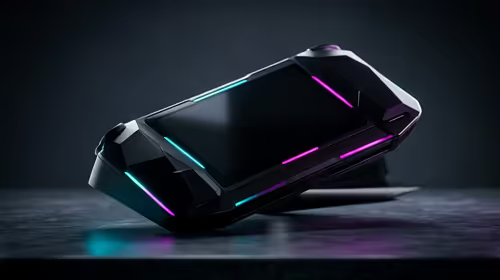
ROG Ally X may beat the LCD Steam Deck for SA gamers who value stronger handheld performance, more memory, and Windows flexibility. Compare battery life, controls, game libraries, and Polokwane support needs before deciding.
Read more
Minisforum's M2 Pro pairs Core Ultra X7, Arc B390 graphics and 32GB onboard memory in 1.8 litres. SA buyers should weigh its fixed memory and $1,439 launch offer against local mini PCs.

Lenovo says Legion Go failures linked to BIOS N3CN42WW are not user error. Affected SA owners should stop retrying the update, preserve proof and open a support case.

Smart monitors can add apps and convenience, but they also add privacy settings and unwanted-software risk. SA buyers should audit the operating system before paying for extras.

A fake 113GB GTA VI ISO reportedly used empty padding around a small malware payload. SA gamers should delete unofficial builds, keep Windows security active and wait for official channels.
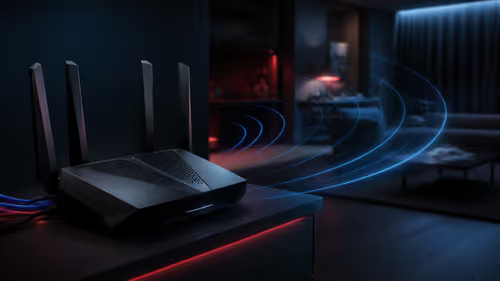
ASUS calls the ROG GT-BN98 the first Wi-Fi 8 gaming router. SA buyers should fix coverage and client limits before paying for a future wireless standard.
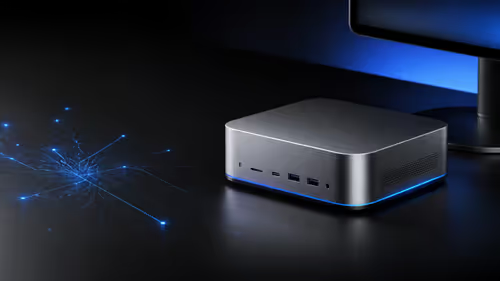
Apple's M6 Mac mini adds faster AI, graphics and networking in the same compact format. SA buyers should wait for a rand listing before comparing value.
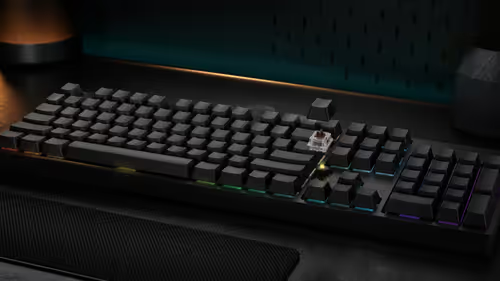
The Vulcan II XP adds hot-swappable switches, sound damping and gaming controls to a full-size wired board. SA buyers should compare feel before features.

Microsoft says Windows on Arm now has over 7,000 verified apps and games. SA buyers should still check each driver, game and work tool before switching.

Xbox Insiders can test disc-to-digital from 31 August 2026. Supported Xbox One and Series X discs gain a digital entitlement, but older discs, regions and title coverage still need exact checks.
ViewSonic's XG2738 pairs QHD QD-OLED with 240Hz and automatic panel care. SA buyers should compare warranty, brightness, ports and burn-in protection against today's R9,999-plus OLED shelf.

NVIDIA's final Windows 10 Game Ready driver is due in October 2026. SA gamers can keep using their GPU, but new game optimisations move on while critical security fixes continue quarterly.

JBL's new Quantum 520, 520X and 120 headsets cover wireless, Xbox-certified and wired use. SA buyers should compare connection, comfort and microphone needs before paying for a new badge.