


550W PSU Planning for RTX 5080 Super Builds in SA
550W for RTX 5080 Super needs a full-build check, not a simple yes. Review GPU guidance, CPU draw, transient load, connectors, PSU quality, and upgrade plans before deciding.
Read moreChoose this display combination when a large, detailed, high-refresh touchscreen supports work and creative interaction. The R37,999 Prestige 16 Flip AI+ uses a 16-inch 2.8K 120Hz OLED panel in a convertible form with 32GB LPDDR5X and 1TB NVMe.
A large premium laptop display can replace some external-screen time when its detail, motion, touch and application scaling suit the work. The 16-inch 2.8K 120Hz OLED laptop combination should be judged as four distinct capabilities. The MSI Prestige 16 Flip AI+ offers that display in a R37,999 convertible.
Choose this screen class when a 16-inch workspace, 2.8K detail, 120Hz motion and OLED touch each improve recurring work. The Prestige costs R37,999 and folds into multiple positions. Verify creative colour metrics, pen compatibility, brightness needs and battery behaviour instead of assuming them from the panel description.
Open the applications, documents and side panels used every day. Adjust Windows scaling until small text and controls are readable without wasting the 16-inch area. Check specialised software for blurry or misplaced interface elements.
Resolution describes pixels, not colour accuracy or application performance.
Compare scrolling, pointer movement, animation and timeline scrubbing at available refresh settings. Keep resolution and scaling fixed. Record whether the smoother motion helps navigation, precision or comfort after a full session.
The creator laptop range at Evetech offers wider display comparisons.
OLED describes the panel's light-production method. It does not provide gamut coverage, colour error or calibration. Use the project's required colour standard and a suitable measurement process.
Touch can assist zoom, selection and presentation. Active-pen support remains a separate protocol check before precision drawing is assigned.
Thunderbolt 4 can connect a tested display or dock path when more screen space is needed. Verify cables, devices and required resolution. Browse Evetech's MSI professional notebook range, judging each candidate as a complete arrangement.
A 16-inch diagonal does not establish portability. Pack the charger and accessories, measure bag fit and run the intended battery session. The best display is one the owner can use in both primary environments without an unplanned compromise.
Arrange the central document, reference panel and tools as they appear during a demanding session. Check whether 2.8K scaling keeps labels legible while preserving useful space. Move the same layout through typing, touch review and presentation positions; the hinge may change how far the panel sits from the viewer.
Capture the chosen scale and application zoom. A repeatable layout prevents every location change from becoming another round of interface tuning.
Use the screen for a full reading or editing block under the actual room lighting. Record reflections, text comfort, scrolling preference and any need to alter the panel angle. Then repeat with the refresh choice likely to be used away from power, keeping the application and file unchanged.
This test does not manufacture a battery promise. It simply shows whether the premium display remains comfortable and workable after the initial OLED impact has faded.
Define the task that genuinely needs more area than the internal display provides. It might involve several reference panes, a large timeline or a measured delivery monitor. Test that exact arrangement through the verified connection chain. Until the trigger appears, judge the 16-inch panel on its own merit rather than assuming every premium workflow requires a permanent second screen.
Save the scaling, refresh choice, application layout and panel angle used at home, in the office or during presentations. Do not assume the lighting and viewing distance will match. A quick location profile reduces repeated adjustment and makes display comfort easier to compare across the places where the laptop actually earns its keep.
Application rendering and Windows scaling matter. Test the exact software rather than assuming uniform behaviour.
No. It may improve compatible motion and navigation, while many static tasks work well at lower refresh.
No. Panel technology and colour measurement are separate. Verify the required gamut and error.
No universal pen support should be assumed. Confirm protocol and device compatibility first.
Ready to test every part of a premium OLED workspace? Compare Evetech creator and MSI laptops with scaling, motion, colour, input and travel checks prepared for the 16-inch format.
Application rendering and Windows scaling matter. Test the exact software rather than assuming uniform behaviour.
No. It may improve compatible motion and navigation, while many static tasks work well at lower refresh.
No. Panel technology and colour measurement are separate. Verify the required gamut and error.
No universal pen support should be assumed. Confirm protocol and device compatibility first.
550W for RTX 5080 Super needs a full-build check, not a simple yes. Review GPU guidance, CPU draw, transient load, connectors, PSU quality, and upgrade plans before deciding.
Read more
8000Hz polling is overrated for most SA gamers because gains can be tiny next to battery drain and monitor limits. Mbombela players should weigh mouse feel, game support, and system stability before chasing the number.
Read more
Magnetic switches are taking over SA gaming keyboards because actuation can be tuned. For Sandton gamers, rapid trigger, reset control, and profile depth can help, but layout, key feel, and software quality still matter.
Read more
Polokwane oled monitor value questions need cautious SA context because pricing can move with availability, exchange rates, specs, and warranty support. Treat the trend as a planning signal, not a fixed price promise.
Read more
Arc B580 budget builds for Midrand gamers can shift with exchange rates, supply, specs, and model tier. Treat the title as a buying prompt, then compare SA warranty, timing, and build priorities.
Read more
ROG Ally X may beat the LCD Steam Deck for SA gamers who value stronger handheld performance, more memory, and Windows flexibility. Compare battery life, controls, game libraries, and Polokwane support needs before deciding.
Read more
Minisforum's M2 Pro pairs Core Ultra X7, Arc B390 graphics and 32GB onboard memory in 1.8 litres. SA buyers should weigh its fixed memory and $1,439 launch offer against local mini PCs.

Lenovo says Legion Go failures linked to BIOS N3CN42WW are not user error. Affected SA owners should stop retrying the update, preserve proof and open a support case.

Smart monitors can add apps and convenience, but they also add privacy settings and unwanted-software risk. SA buyers should audit the operating system before paying for extras.

A fake 113GB GTA VI ISO reportedly used empty padding around a small malware payload. SA gamers should delete unofficial builds, keep Windows security active and wait for official channels.
ASUS calls the ROG GT-BN98 the first Wi-Fi 8 gaming router. SA buyers should fix coverage and client limits before paying for a future wireless standard.
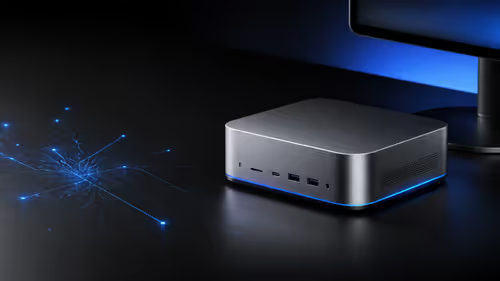
Apple's M6 Mac mini adds faster AI, graphics and networking in the same compact format. SA buyers should wait for a rand listing before comparing value.
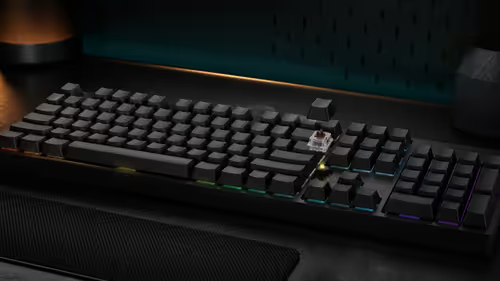
The Vulcan II XP adds hot-swappable switches, sound damping and gaming controls to a full-size wired board. SA buyers should compare feel before features.

Microsoft says Windows on Arm now has over 7,000 verified apps and games. SA buyers should still check each driver, game and work tool before switching.

Xbox Insiders can test disc-to-digital from 31 August 2026. Supported Xbox One and Series X discs gain a digital entitlement, but older discs, regions and title coverage still need exact checks.
ViewSonic's XG2738 pairs QHD QD-OLED with 240Hz and automatic panel care. SA buyers should compare warranty, brightness, ports and burn-in protection against today's R9,999-plus OLED shelf.

NVIDIA's final Windows 10 Game Ready driver is due in October 2026. SA gamers can keep using their GPU, but new game optimisations move on while critical security fixes continue quarterly.

JBL's new Quantum 520, 520X and 120 headsets cover wireless, Xbox-certified and wired use. SA buyers should compare connection, comfort and microphone needs before paying for a new badge.