Quick Answer
High-end workstations need more airflow because their total thermal load is significantly higher and sustained for far longer periods than gaming. A gaming build might peak at 400W combined for 30 minutes, while a rendering workstation can sustain 500W to 700W for hours, requiring a case with a larger air volume throughput to prevent heat soak.
TDP Comparison: Gaming vs Workstation Real-World Numbers 🌡️
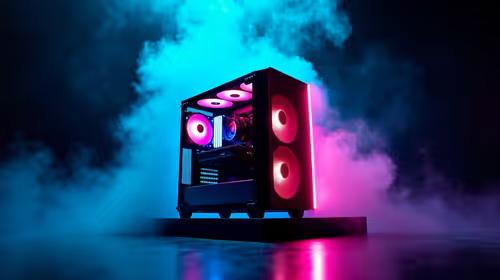
The distinction is in sustained versus peak thermal output. A gaming PC running an RTX 5080 and Ryzen 7 9700X hits its combined TDP ceiling for 30 to 60 minutes, then the session ends and thermals recover. A DaVinci Resolve render with GPU acceleration runs at near-peak GPU power for six to eight hours continuously. A higher-tier workstation with a Ryzen 9 9950X (TDP 170W, boosting to 230W sustained) plus an RTX 5090 at 575W generates over 800W of heat that case airflow must continuously remove to prevent throttling. This level of sustained output requires at minimum a 420mm AIO for the CPU, three or more front intake fans, and a well-designed top exhaust area to vent rising hot air before it heat-soaks the GPU zone.
Duty Cycle: The Key Difference 🕐
Gaming builds operate at a 30 to 60 percent duty cycle at peak thermal load. Workstations run at 80 to 100 percent duty cycles during production hours. This matters because component temperatures stabilise at equilibrium with their cooling system over time. In a gaming build, the session ends before the thermal equilibrium temperature is reached. In a workstation running a six-hour render, the system fully heat-soaks to equilibrium within the first 30 minutes and stays there. If the equilibrium CPU temperature is 88 degrees Celsius, it stays there for the entire render. Insufficient airflow pushes that equilibrium to 100 degrees where throttling begins.
Case Selection for Workstation Duty Cycles 🔧
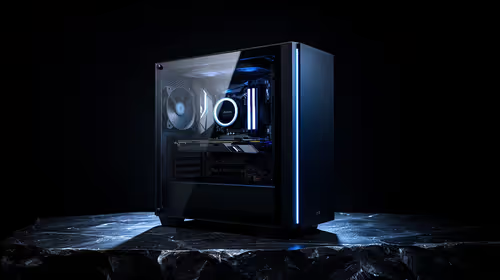
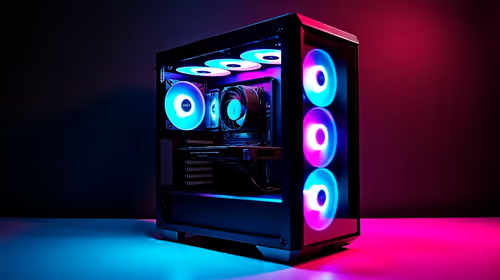
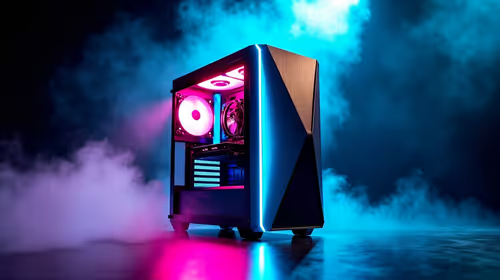
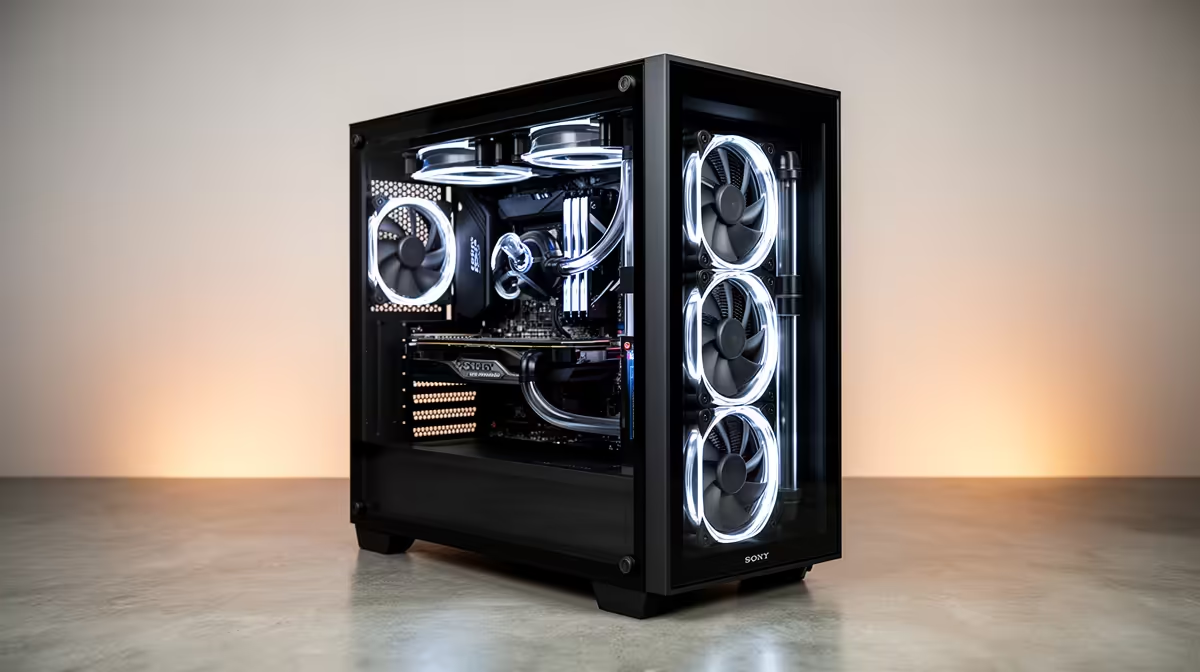
For SA professionals running DaVinci Resolve, Blender, CAD simulations, or machine learning training, case selection is a performance decision. The practical requirements are a top panel with at least 55 percent open mesh area, three or more 140mm front intake fans or two 200mm front intakes, 420mm AIO compatibility, and GPU clearance of 380mm. The fan curve should run at higher minimum speeds than a gaming build: a workstation CPU fan at 900 RPM idle better prepares the case for the immediate ramp to full load when a render job starts.
Workstation Fan Curve Setup ⚡
Set workstation fans to a linear ramp curve starting at 40 percent speed from 40 degrees Celsius rather than the default stepped gaming curve. This keeps the case interior at a lower baseline temperature before a render job starts, reducing the thermal ramp-up time and preventing CPU package temp overshoot in the first minutes of a heavy workload.
FAQ
Can I use a gaming PC case for a workstation build?
Yes, provided the case meets the cooling specifications the workstation demands. A quality gaming mid-tower with 420mm top radiator support and three front 140mm fans is adequate for a Ryzen 9 workstation. The case category label matters less than the thermal specifications.
How much airflow improvement does a mesh front add for workstation use?
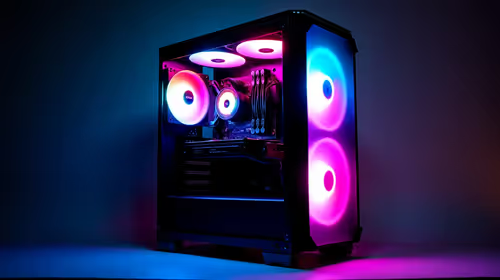
A mesh-front case typically sustains 5 to 10 degrees Celsius lower CPU and GPU temps under long render loads compared to a glass-front case with the same fan count. For a six-hour render session, this prevents heat soak and maintains full boost clock for the entire job duration.
Is water cooling mandatory for a high-end workstation?
For CPUs with TDPs above 200W sustained, yes in practice. A 420mm AIO is the minimum recommendation for a Ryzen 9 9950X or Core i9-14900K running sustained rendering loads. Air cooling is adequate for lower-TDP workstation CPUs like the Ryzen 7 9700X at 65W TDP.
Need a workstation that sustains peak performance for hours? Evetech stocks desktop workstation PCs, full-tower cases, and 420mm AIOs engineered for the sustained thermal loads that professional workloads demand. Browse the workstation range today.