Quick Answer
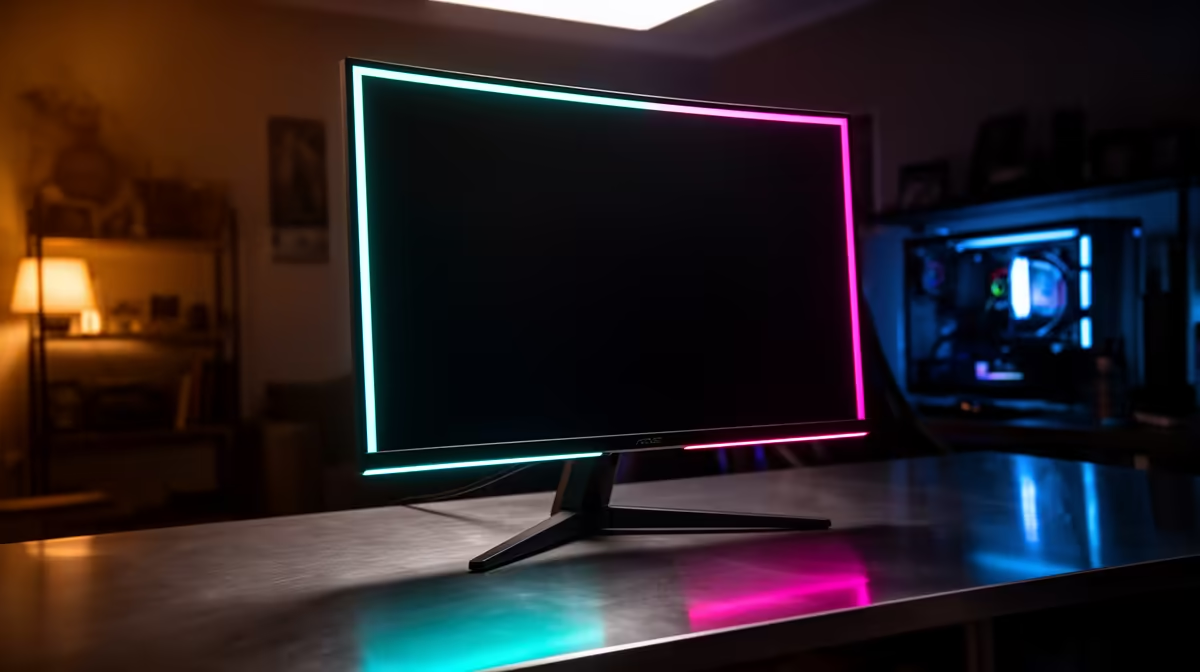
1440p is the SA gaming sweet spot because it looks sharper than 1080p while keeping GPU costs and frame rates realistic. The practical SA answer is to match the screen to the GPU and desk distance, not just the biggest spec badge. 1440p gives 78% more pixels than 1080p without the heavy GPU demand of 4K, while the likely price band is R4,000-R9,000 for strong 27-inch 1440p high-refresh displays.
The spec that changes daily use
A display upgrade is visible every minute, so the right target matters. Buyers should compare size, resolution, refresh rate, panel type, and warranty before chasing one headline number. RTX 4070-class cards can target roughly 80-140 fps at 1440p depending on the game and settings, which is why the GPU and monitor should be planned together.
Useful reference points include 27-inch 1440p 165Hz IPS monitors, RTX 4060 Ti, RTX 4070 Super, and Radeon RX 7800 XT. For esports, refresh rate and response consistency matter more than 4K sharpness. For productivity, text clarity, stand adjustment, USB-C or KVM features, and burn-in protection can matter more than peak brightness.
SA buyer fit
SA changes the value question because many buyers use one screen for gaming, work, study, and streaming. A 27-inch 1440p monitor is easier to drive than 4K and still sharp on a normal desk. A 31.5-inch 4K or OLED panel makes more sense when the user edits media, keeps several windows open, or owns a GPU that can feed it properly.
Do not ignore the cable and port check. HDMI 2.1, DisplayPort 1.4, USB-C display mode, and GPU support decide whether the advertised refresh rate works at the chosen resolution.
When the expensive option is worth it
The premium tier is worth it when the whole setup uses it: high frame rates for esports, accurate colour for creator work, or 4K workspace for productivity. It is wasteful when the GPU cannot reach the panel target or the buyer sits too far away to notice the resolution jump.
FAQ
Is 1440p better value than 4K for SA gaming?
Yes for most gaming PCs. 1440p is much sharper than 1080p, but it does not demand the same GPU spend as 4K.
Do I need 240Hz or 8000Hz gear to play competitively?
Only if the PC and game can hold very high frame rates. A stable 144Hz or 165Hz setup with low input lag is better than an expensive spec that stutters.
Are OLED monitors safe for productivity?
They can be excellent, but static toolbars and spreadsheets need care. Use pixel-shift features, sensible brightness, and hide static UI when possible.
Match screen and GPU
Before buying, check the GPU output port, target resolution, refresh rate, desk depth, and the games or apps used most often. That prevents paying for display performance the PC cannot drive.