


FPS Drops Troubleshooting for DDR5 build
DDR5 build FPS drops needs a methodical troubleshooting pass. Review drivers, thermals, power settings, background apps, cables and game settings before replacing parts in an SA gaming setup.
Read moreUntidy cables block intake fans and recirculate hot air over the CPU and GPU, raising temps by 3-8 C in a typical ATX chassis, so clean cable routing is part of effective airflow design. Match specs to your build and use case before you commit to the upgrade.
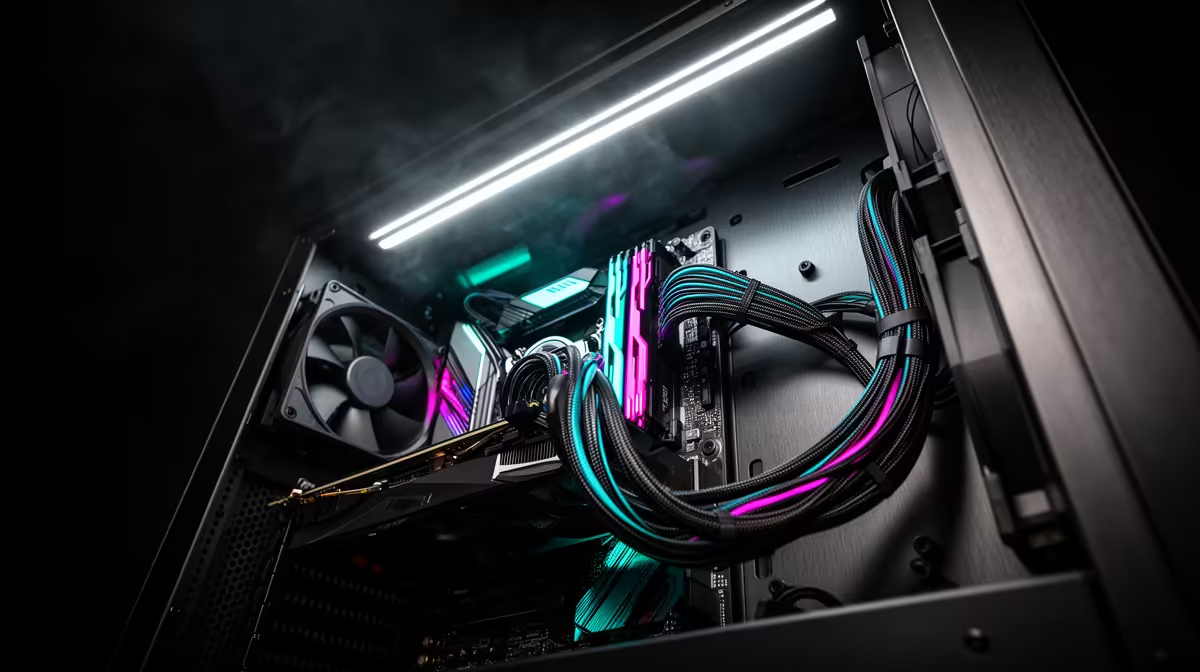
Poor cable management creates physical obstructions in the airflow path between intake fans and the CPU and GPU heatsinks. Bundles of loose cables hanging across the interior can raise GPU temperatures by 5 to 12 degrees Celsius compared to a well-managed build with the same fans and case.
Air moves from high-pressure intake zones (front and bottom fans) to low-pressure exhaust zones (rear and top fans) in a straight path through the case. Any solid object in that path creates turbulence and reduces the volume of cool air reaching the GPU heatsink and CPU cooler. A tangle of SATA cables and an unmanaged 24-pin ATX bundle in front of the GPU can reduce intake airflow by 15 to 25 percent, equivalent to losing a full intake fan. For a high-TDP GPU like the RTX 5080 or RX 9070 XT, reduced airflow raises junction temperatures and triggers thermal throttling during extended gaming sessions.
Thermal testing in peer-reviewed PC hardware publications has demonstrated GPU temperature increases of 5 to 12 degrees Celsius between messy and clean cable management configurations in identical cases with identical hardware. At the high end of this range, a GPU that runs at 78 degrees Celsius in a clean build hits 90 degrees in a cable-obstructed build. Many GPUs apply thermal throttling above 83 to 87 degrees Celsius, reducing core clocks and directly lowering frame rates. For a gamer in Johannesburg whose summer ambient room temperature already adds 8 to 10 degrees above a temperate baseline, eliminating cable obstruction is one of the most effective free thermal improvements available.
Three techniques have the greatest airflow impact. First, route all cables behind the motherboard tray so nothing runs across the front face of the board or in front of the GPU. Second, bundle SATA and front-panel cables with zip ties or velcro into compact bundles that lie flat against the PSU shroud rather than looping across the interior. Third, cut the 24-pin ATX cable's run to the shortest practical length by using a cable extension of the correct length rather than coiling the excess. Coiled cables take up significantly more volume than a tightly-routed single run. A modular PSU eliminates unused cables entirely, the most impactful single step for airflow after a mesh front panel.
A fully modular PSU lets you use only the cables the build requires. An 800W build with one GPU, one SSD, and no additional drives needs only the 24-pin, EPS 8-pin, and one GPU cable. That eliminates three to five unused cable bundles from the interior entirely, removing the single largest source of cable-related airflow obstruction in a typical mid-tower build.
Yes. Loose cables that vibrate against fan blades or case panels add a rattling noise at specific fan speeds. Properly bundled and secured cables eliminate this vibration. Many users who investigate fan noise issues find a loose cable touching a fan blade as the source.
For an experienced builder, 45 to 90 minutes. For a first-time builder, plan for two to three hours. A case with deep rear tray, grommeted cutouts, and tie-down points cuts this time significantly versus one with minimal routing infrastructure.
Yes. The thermal benefit exists regardless of glass panels. A solid-panel case with clean cable management will run three to eight degrees Celsius cooler than the same case with loose cables, which extends component lifespan and reduces the frequency of thermal throttling events.
Want a cooler, quieter gaming PC? Evetech stocks modular PSUs, cable-management-friendly cases, and accessories that make clean builds straightforward, available for delivery or collection across South Africa.
DDR5 build FPS drops needs a methodical troubleshooting pass. Review drivers, thermals, power settings, background apps, cables and game settings before replacing parts in an SA gaming setup.
Read more
Fps drops on ddr5 build in south africa usually needs a settings, driver, thermal, or power check first. Work through safe SA troubleshooting steps before replacing parts or assuming a full upgrade.
Read more
X870E motherboard frame pacing issues needs a step-by-step check before replacing parts. Review drivers, settings, thermals, power, background apps, display limits, cables, and game options before changing hardware.
Read more
4K monitors cost more as sharp panels raise the bar. See why 4k monitors still expensive for gamers in cape town before choosing screen specs, GPU targets, and value trade-offs.
Read more
4K monitors still feel expensive for Gqeberha gamers because panel quality, higher refresh rates, and GPU demands raise total setup cost. Compare 1440p, screen size, ports, and refresh rate before paying more for 4K.
Read more
ARGB cases explain mid-tier SA build appeal with visible style, airflow room, and cable control. For SA buyers, the smarter choice is a case where lighting, fan layout, and GPU clearance work together instead of just looking bright.
Read more
The Epomaker RT75 is a tri-mode 75% keyboard with a removable TFT screen. Local screen-equipped compact boards started at R1,199 in our snapshot.
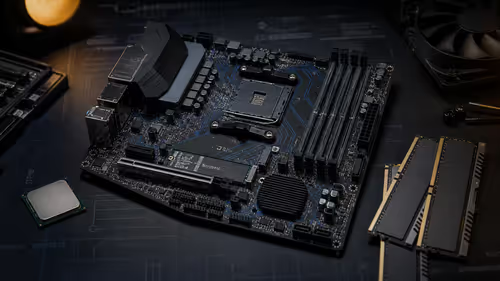
Gigabyte has launched two B450M D3HP boards for Ryzen 3000 to 5000 CPUs. The exact models had no confirmed Evetech listing on 15 August.

Attackers are exploiting a patched Mac screen-sharing flaw to gain root access. Update macOS and remove public port 5900 exposure immediately.
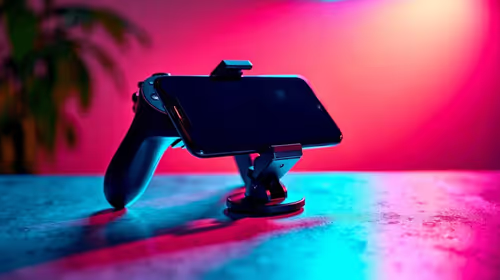
An auto-clamping phone holder offers seamless, one-handed convenience for your vehicle. Discover how it compares to manual cradle mounts to see which keeps your device secure during your daily drive. 🚗📱
A 10,000-hour test found similar image retention across older and newer OLED TVs, while newer panels were brighter and more efficient. Local OLED monitors started at R9,999.
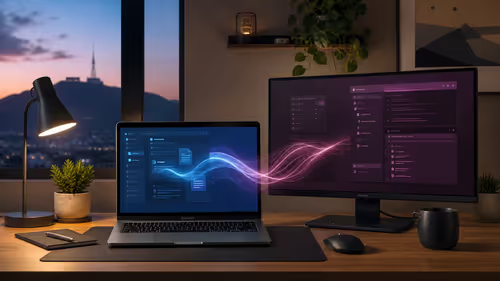
Canonical expects Ubuntu on WSL users to outnumber native Ubuntu desktop users before the end of 2026. The software is open source and runs inside supported Windows PCs.
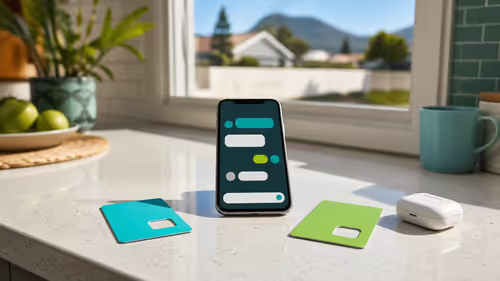
Telkom's daily bundles pair WhatsApp access with 10 all-network voice minutes. The R15 option includes 300MB, while the R17 option uses a fair-use threshold.
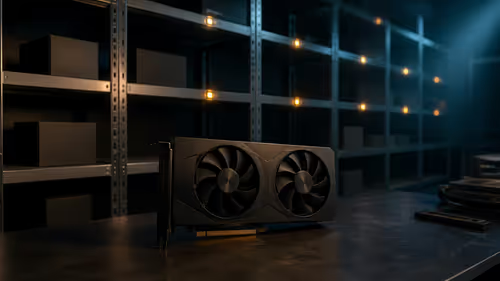
PC Partner expects entry-level graphics-card shortages to worsen in the second half of 2026. Current Evetech GPU listings started at R4,399 in our snapshot.

YouTube will count public views from the first frame across video formats from 24 August, while earnings and eligibility remain tied to engaged viewing.
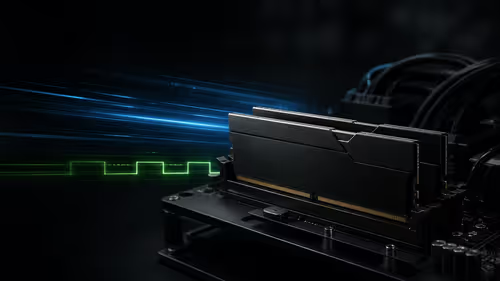
CXMT memory has been demonstrated at DDR5-9000 and DDR5-6000 CL28, but the results depend on tuned hardware and do not represent a broad retail specification.
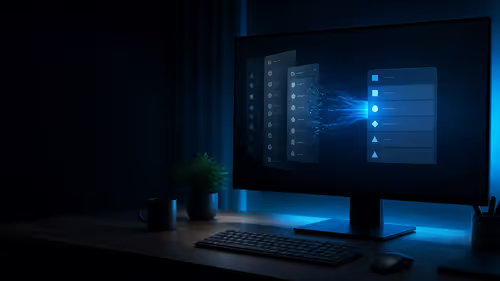
Microsoft is testing a simpler File Explorer context menu with controls for built-in commands, app extensions, icon labels and the position of Properties.
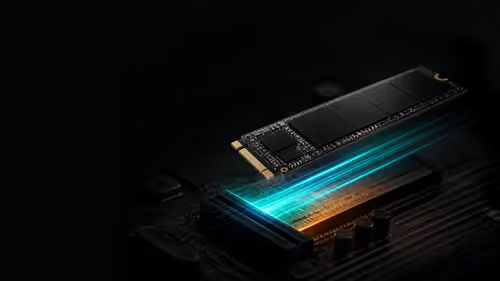
Lexar's THOR ULTRA is a DRAMless PCIe 5.0 SSD rated up to 11,000MB/s reads and 10,000MB/s writes, with capacities from 512GB to 4TB.