


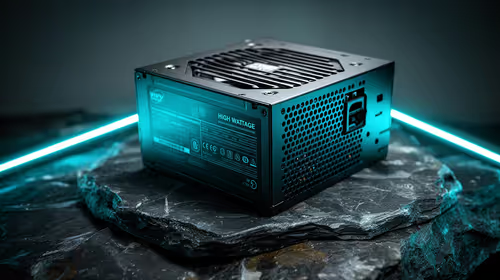
550W PSU Planning for RTX 5080 Super Builds in SA
550W for RTX 5080 Super needs a full-build check, not a simple yes. Review GPU guidance, CPU draw, transient load, connectors, PSU quality, and upgrade plans before deciding.
Read moreDesk-chair discomfort can come from fit, support position, desk alignment or sitting duration. Change one element at a time, move regularly and seek professional advice for persistent pain.
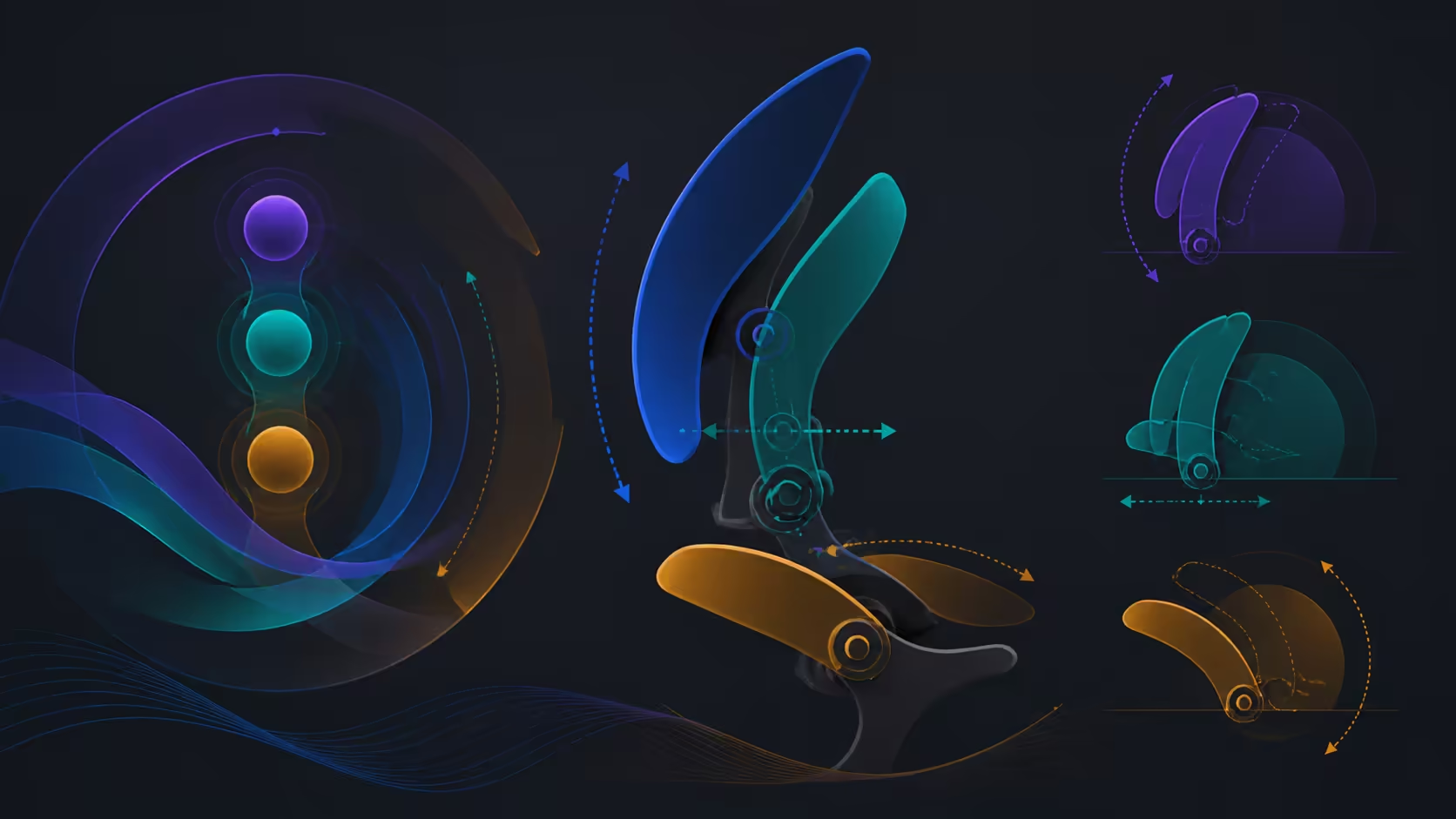
Discomfort that appears after hours often comes from a combination of desk reach, support contact, pressure and too little movement. A desk chair uncomfortable after a few hours needs one change at a time, not every control moved together. The HBADA X7 is a R14,999 adjustable reference.
After several hours, use the X7's ten lumbar-intensity levels and 50mm depth range to reduce excessive pressure or restore missing contact without changing every setting.
Reset the chair to a simple desk-ready position, align the keyboard and screen, then test seat pressure and lumbar contact separately. For R14,999, the X7 offers posture-following lower-back support, adjustment across directions and airflow at the cushion, while massage and warmth are active options. None guarantees relief, and persistent pain deserves professional attention.
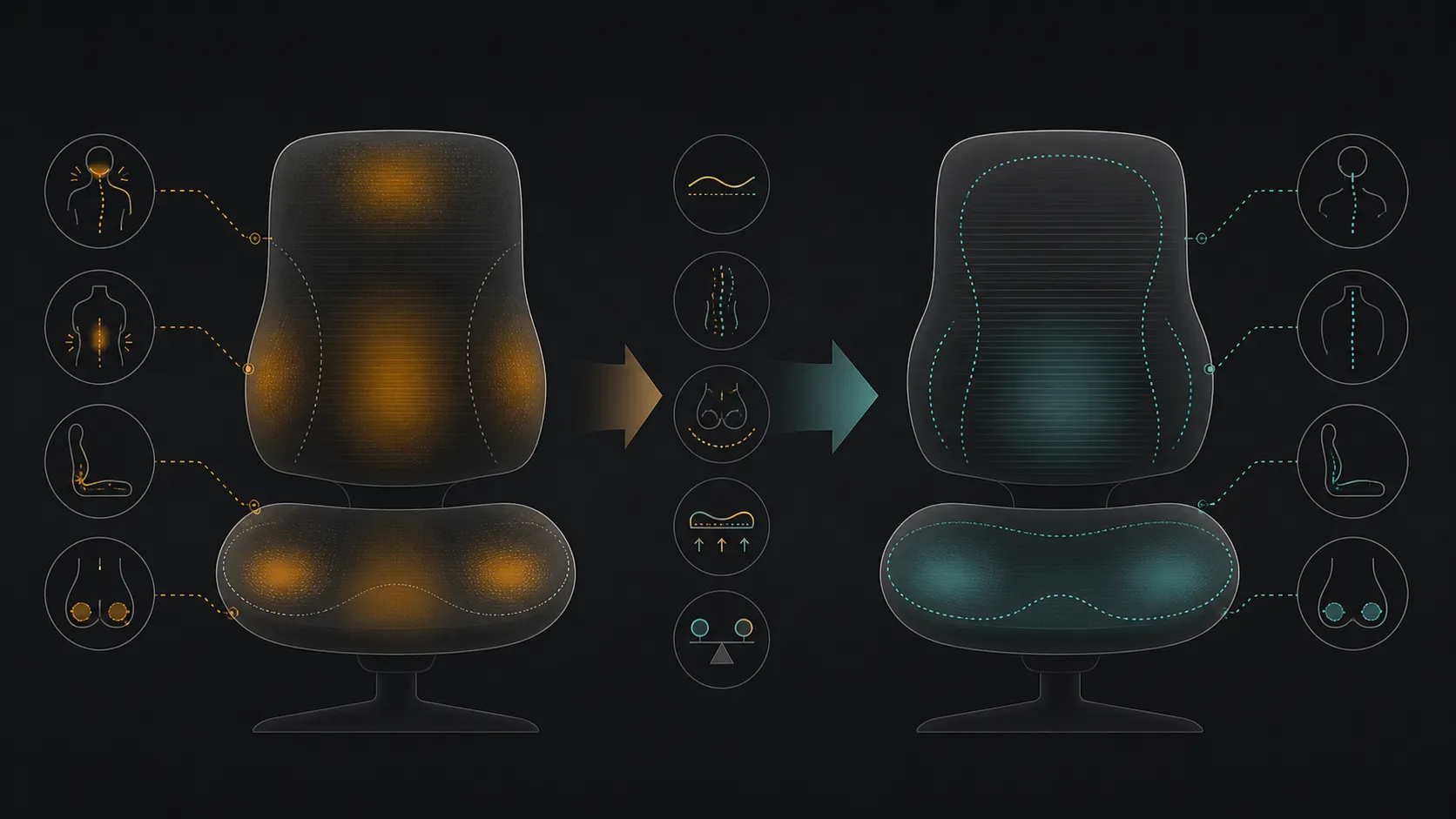
Write down the task, elapsed time and exact area of discomfort. Notice whether the user has started leaning toward the screen, crossing the legs, losing foot support or reaching for the controls. The timing can reveal whether the problem follows one posture or grows with uninterrupted sitting.
Use Evetech's HBADA chair category only after defining the symptom and desk position. A new chair comparison becomes clearer when the user can reproduce the condition rather than relying on a vague end-of-day memory.
Return the desk and chair to a neutral reach. Test lumbar contact without changing seat position, then assess the cushion during another equal work block. The X7's automated tracking can be observed through normal posture changes, but its internal sensors should not be guessed.
Ventilation addresses airflow, not every cause of pressure. Massage or heat can change perceived comfort, yet they should not mask a fit issue or be treated as medical care. Stop any active function that makes the user uncomfortable.
Add regular standing or movement that fits the workday. Recheck screen scale, document position and input reach so the chair is not compensating for a difficult desk arrangement. Compare notes before and after the change instead of seeking one permanent pose.
Broaden the test through Evetech's office-chair range. Exact dimensions, capacity and materials should be verified for the intended user; do not assume them from the X7's smart feature set.
When discomfort normally appears, reproduce the same task with the reset chair and corrected desk reach. Keep a simple timeline of body area, pressure and posture. If the symptom moves or disappears, note which single change preceded the result.
Repeat on another day rather than declaring success from one session. Workload, stress and movement can vary, so a durable correction should survive a similar routine. If a smart lumbar setting works initially but later creates pressure, restore the neutral baseline instead of layering more adjustments.
Share the timeline with the appropriate professional when symptoms persist. It can show when discomfort begins and which seating changes were tried without asking the chair to diagnose the cause. The goal is a safer, more explainable setup, not a claim that the X7 or any feature cures long-session discomfort.
The microsecond sensors can follow leaning automatically, but the initial support level still matters. Lower an aggressive setting for a lighter user, increase support gradually where the lower back sags, and reassess foot support and desk reach after every small adjustment.
Identify the task, time, body area and posture at the first sign. Then check desk reach and foot support before moving multiple chair controls.
One-at-a-time adjustment exposes cause and effect. Moving several controls together can hide what helped or introduce a pressure point that did not exist before.
No. Airflow is one seating property, while pressure, shape, desk alignment and movement habits remain separate.
Its lower-back support follows posture automatically and can be adjusted across several directions.
Seek suitable healthcare advice for persistent, severe or worsening pain, numbness or weakness. A chair feature is not a diagnosis.
No. They may change perceived comfort for some users, but they cannot diagnose or treat the cause of discomfort. Test them only after physical fit is stable, and stop relying on chair adjustments when symptoms persist or worsen. Preserve the symptom timeline for appropriate professional review.
Keep the task, elapsed time and single adjustment made before each symptom change in the professional-review timeline.
Ready to troubleshoot the desk before replacing random parts? Compare Evetech chairs with the symptom, task timing and one-change test recorded.
Identify the task, time, body area and posture at the first sign. Then check desk reach and foot support before moving multiple chair controls.
One-at-a-time adjustment exposes cause and effect. Moving several controls together can hide what helped or introduce a pressure point that did not exist before.
No. Airflow is one seating property, while pressure, shape, desk alignment and movement habits remain separate.
Its lower-back support follows posture automatically and can be adjusted across several directions.
Seek suitable healthcare advice for persistent, severe or worsening pain, numbness or weakness. A chair feature is not a diagnosis.
No. They may change perceived comfort for some users, but they cannot diagnose or treat the cause of discomfort. Test them only after physical fit is stable, and stop relying on chair adjustments when symptoms persist or worsen. Preserve the symptom timeline for appropriate professional review. Keep the task, elapsed time and single adjustment made before each symptom change in the professional-review timeline.
550W for RTX 5080 Super needs a full-build check, not a simple yes. Review GPU guidance, CPU draw, transient load, connectors, PSU quality, and upgrade plans before deciding.
Read more
8000Hz polling is overrated for most SA gamers because gains can be tiny next to battery drain and monitor limits. Mbombela players should weigh mouse feel, game support, and system stability before chasing the number.
Read more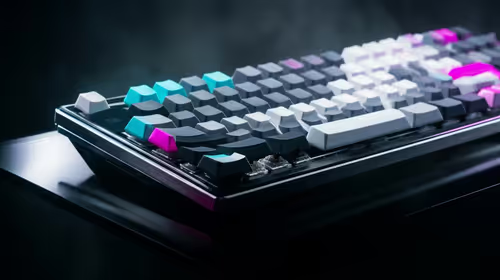
Magnetic switches are taking over SA gaming keyboards because actuation can be tuned. For Sandton gamers, rapid trigger, reset control, and profile depth can help, but layout, key feel, and software quality still matter.
Read more
Polokwane oled monitor value questions need cautious SA context because pricing can move with availability, exchange rates, specs, and warranty support. Treat the trend as a planning signal, not a fixed price promise.
Read more
Arc B580 budget builds for Midrand gamers can shift with exchange rates, supply, specs, and model tier. Treat the title as a buying prompt, then compare SA warranty, timing, and build priorities.
Read more
ROG Ally X may beat the LCD Steam Deck for SA gamers who value stronger handheld performance, more memory, and Windows flexibility. Compare battery life, controls, game libraries, and Polokwane support needs before deciding.
Read more
Minisforum's M2 Pro pairs Core Ultra X7, Arc B390 graphics and 32GB onboard memory in 1.8 litres. SA buyers should weigh its fixed memory and $1,439 launch offer against local mini PCs.

Lenovo says Legion Go failures linked to BIOS N3CN42WW are not user error. Affected SA owners should stop retrying the update, preserve proof and open a support case.

Smart monitors can add apps and convenience, but they also add privacy settings and unwanted-software risk. SA buyers should audit the operating system before paying for extras.

A fake 113GB GTA VI ISO reportedly used empty padding around a small malware payload. SA gamers should delete unofficial builds, keep Windows security active and wait for official channels.

ASUS calls the ROG GT-BN98 the first Wi-Fi 8 gaming router. SA buyers should fix coverage and client limits before paying for a future wireless standard.

Apple's M6 Mac mini adds faster AI, graphics and networking in the same compact format. SA buyers should wait for a rand listing before comparing value.

The Vulcan II XP adds hot-swappable switches, sound damping and gaming controls to a full-size wired board. SA buyers should compare feel before features.

Microsoft says Windows on Arm now has over 7,000 verified apps and games. SA buyers should still check each driver, game and work tool before switching.

Xbox Insiders can test disc-to-digital from 31 August 2026. Supported Xbox One and Series X discs gain a digital entitlement, but older discs, regions and title coverage still need exact checks.
ViewSonic's XG2738 pairs QHD QD-OLED with 240Hz and automatic panel care. SA buyers should compare warranty, brightness, ports and burn-in protection against today's R9,999-plus OLED shelf.

NVIDIA's final Windows 10 Game Ready driver is due in October 2026. SA gamers can keep using their GPU, but new game optimisations move on while critical security fixes continue quarterly.

JBL's new Quantum 520, 520X and 120 headsets cover wireless, Xbox-certified and wired use. SA buyers should compare connection, comfort and microphone needs before paying for a new badge.