Quick Answer
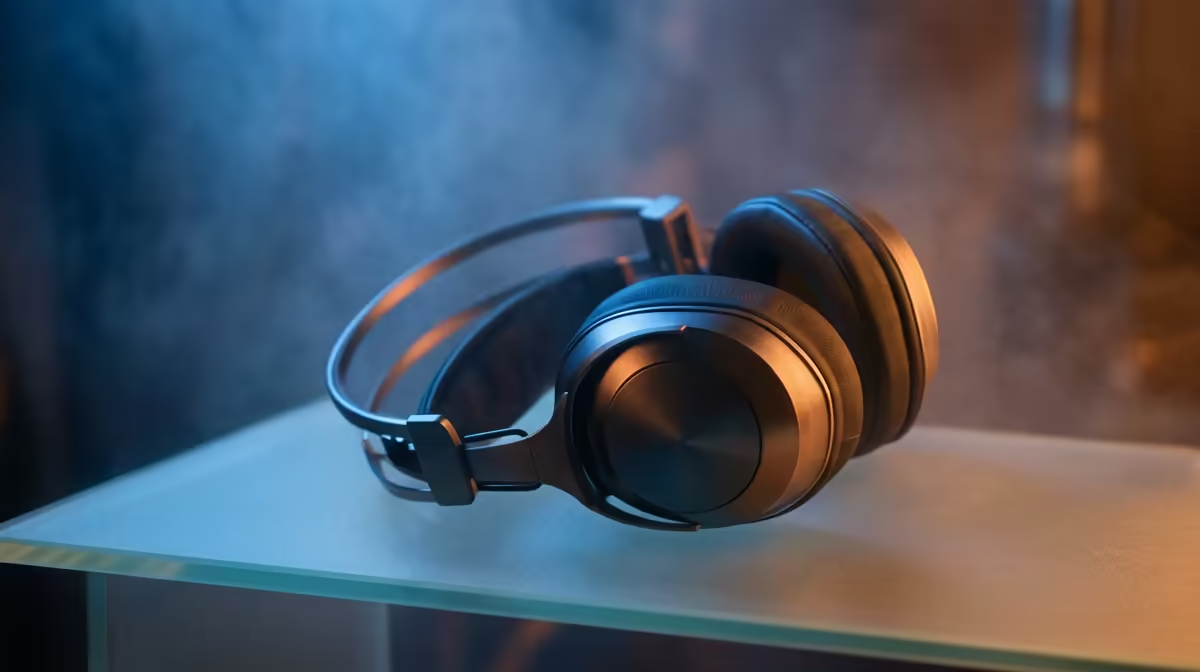
Your gaming headset sounds different across devices because each platform uses a different digital-to-analogue converter (DAC), amplifier, and audio processing chain. The headset drivers are the same, but the signal they receive varies significantly between a gaming console, a PC motherboard, and a phone.
The Role of the DAC and Amp in Each Device 🔊
When you connect a headset via 3.5 mm to a PlayStation 5 controller, the audio is converted from digital to analogue by the PS5's controller DAC, which is optimised for voice chat and compressed game audio. The same headset plugged into a gaming PC motherboard uses the onboard Realtek or Cirrus Logic audio codec, which typically has a higher dynamic range but more susceptibility to electromagnetic interference from nearby components. On a phone, the DAC is usually built into the SoC (like Qualcomm Snapdragon 8 Gen 3 on flagship Android devices) and is tuned toward music playback rather than spatial game audio. Each source also provides different output impedance and voltage swing, and because headset drivers present a fixed load (usually 32 to 50 ohms), the mismatch between source impedance and headphone impedance alters frequency response. This is not a fault but a measurable electrical phenomenon.
Software Processing and EQ on Each Platform 🎮
Each platform also applies software audio processing. PlayStation uses the PS5 Tempest 3D audio engine. Xbox applies Windows Sonic or Dolby Atmos if enabled. PC drivers apply EQ presets through companion apps like Razer Synapse or SteelSeries GG. Mobile devices apply loudness processing for consistent call and media volume. All of this processing stacks on top of the hardware differences. A headset that sounds slightly bass-heavy on a PS5 controller jack may sound more neutral through a USB DAC on PC because the USB path bypasses the controller DAC and applies a flat response by default.
How to Standardise Sound Across Platforms 💡
If consistent audio is important to you, use a USB DAC dongle like the Razer USB Sound Card or a third-party portable DAC on every platform that accepts USB audio. This replaces each device's built-in DAC with your own consistent hardware chain. The dongle outputs the same impedance and voltage to your headset regardless of whether it is plugged into a PC, PS5, or a USB-C phone. Budget around R400 to R1,500 for a quality dongle. Alternatively, accept the variation and use platform-specific EQ profiles in each device's audio settings to compensate.
Test Flat EQ First on Each Platform ⚡
Before deciding a platform sounds wrong, disable all equaliser presets and spatial audio processing and listen on a flat EQ. This establishes the true baseline of each platform's hardware output. From there, add EQ corrections only as needed rather than layering multiple presets that interact unpredictably.
FAQ
Why does my headset sound muffled on the PS5 controller but clear on PC?
The PS5 controller's 3.5 mm output has a relatively high output impedance (around 16 ohms), which interacts with low-impedance headsets to roll off treble. Using the USB dongle path or increasing treble in the PS5 audio settings compensates for this.
Does wireless mode sound better than wired on the same platform?
A 2.4 GHz wireless headset bypasses the platform's built-in DAC since the dongle contains its own DAC. This often sounds cleaner than the 3.5 mm path on consoles and PCs, which is part of why premium wireless headsets justify their price.
Will my headset sound the same on all devices if I buy a premium model?
Premium wireless headsets with USB dongles deliver more consistent sound across PC and PlayStation because the dongle standardises the DAC. On mobile via Bluetooth, codec quality (SBC, AAC, or LDAC) still introduces variation between Android and iOS.
Chasing consistent, quality audio across every device? Explore the full gaming headset and USB audio adapter range at Evetech to find the right solution for your setup.