


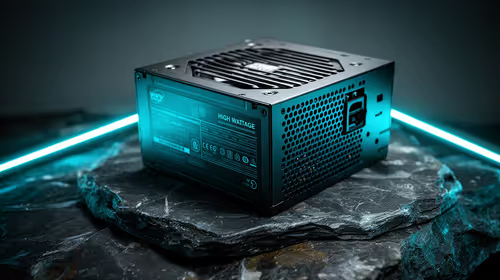
550W PSU Planning for RTX 5080 Super Builds in SA
550W for RTX 5080 Super needs a full-build check, not a simple yes. Review GPU guidance, CPU draw, transient load, connectors, PSU quality, and upgrade plans before deciding.
Read moreLong-session discomfort can come from chair fit, pressure, support position, desk alignment or sitting duration. Test one adjustment per sitting block, stand up regularly and consult a qualified professional when pain persists.
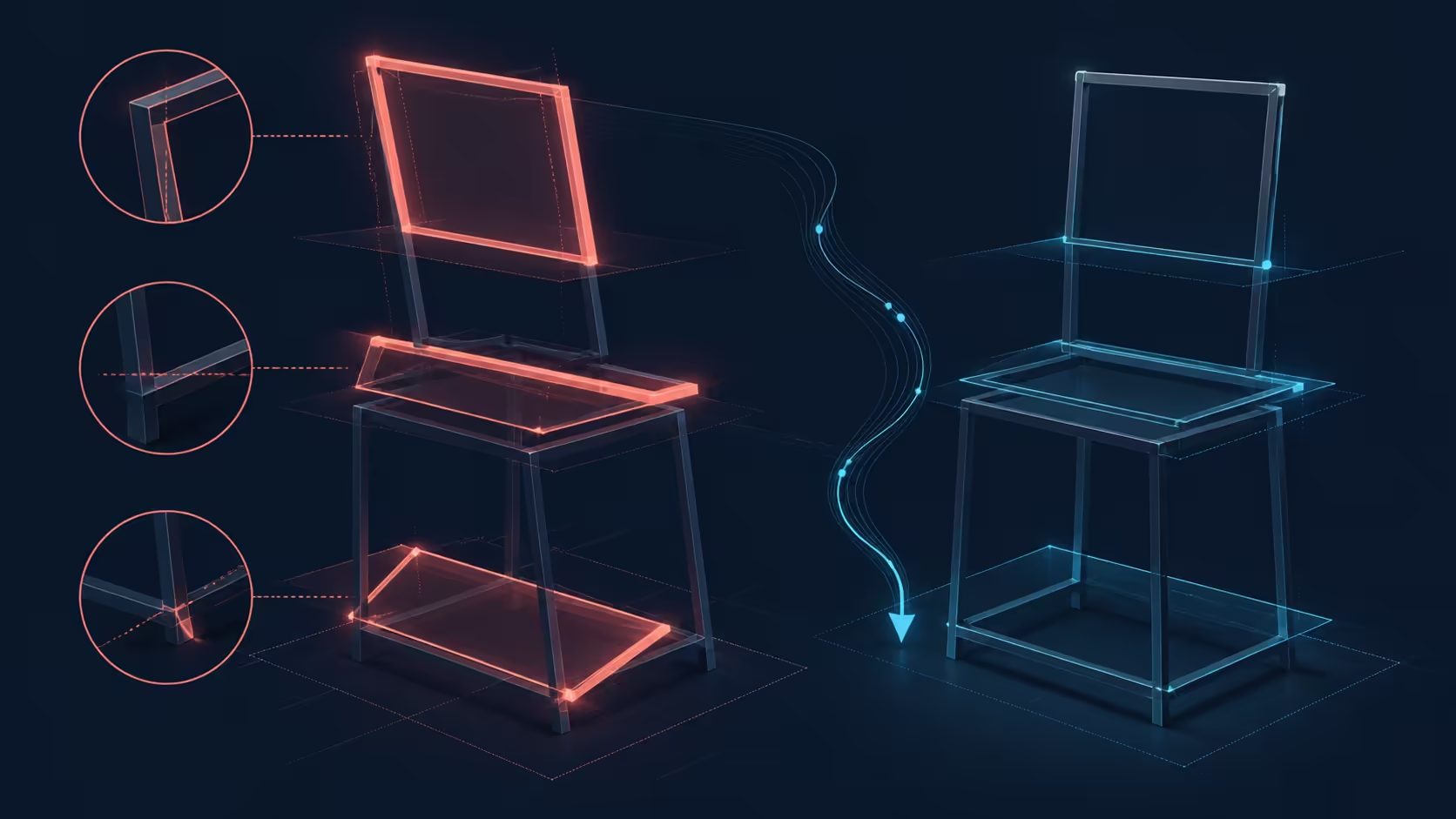
Long sessions often expose a chair setup causing discomfort, not one universally bad component. The useful response is to identify when the sensation begins, change a single variable and test the workstation as a connected system.
For long-session discomfort, the E3 Ultra offers one-inch lumbar depth, 1.6-inch height, adjustable wrapping wings, a sliding mesh seat and five-way arm support.
Note the body area, task and elapsed time associated with discomfort, then check feet, seat position, desk reach and screen height. Adjust one chair control and retest. Priced at R9,599, the HBADA E3 Ultra brings 8D lumbar support and broad armrest adjustment to this methodical process.
Avoid immediately turning every control. Write down whether discomfort appears during typing, reading, mouse work or recline, and whether it changes when you stand. A pattern makes the next adjustment purposeful.
Severe, persistent or worsening symptoms should not become a chair experiment. Seek suitable professional guidance, especially where pain, numbness or weakness raises concern.
Support the feet, sit back, and bring work within reach. The display should not pull the head forward. These steps remove obvious reasons for abandoning the backrest before fine-tuning lumbar contact.
Compare alternative proportions and controls in Evetech's HBADA chair collection. An advanced feature cannot correct a seat or desk relationship that prevents a neutral starting position.
For lower-back contact, use the E3 Ultra's 8D adjustable support in small steps. For shoulder or forearm tension, assess its 720-degree omni arm range without letting the supports lift the shoulders or block the desk.
Keep the other settings unchanged while testing. If several controls move together, you lose the ability to connect the result to one decision.
A position that suits email may not suit a long call or a deeper reading posture. The chair's backrest can recline to 140 degrees, so check whether your chosen support relationship remains sensible at the angles you actually use.
Use Evetech's office-chair department when fit still fails after careful setup. A different chair may suit better, but no product should be presented as treatment for an underlying medical problem.
After finding a less troublesome position, schedule a follow-up rather than continuing to tune. Use the chair through several normal work blocks and compare the notes with the original pattern. A stable improvement is more informative than a momentary change immediately after moving a control.
Add footwear and foot support to the notes when they vary. A change beneath the feet can alter how the pelvis meets the seat, which may otherwise be blamed on lumbar adjustment.
If the problem returns only during one activity, inspect the tools used for that activity. A second monitor, number pad, drawing tablet or phone can create reach and gaze demands hidden during general typing. Solve that task path instead of redesigning the entire chair setup.
Do not extend a troubleshooting sit simply to gather more evidence. Normal movement breaks belong in the test; remaining still longer than the real routine can create a different problem and confuse the result. Return after the break and repeat only the original task before deciding. Compare the same duration.
Change the control nearest the affected area first. Seat-depth adjustment can improve thigh clearance, arm height can reduce shoulder lift, and lumbar depth can soften or restore contact. Keep regular movement and seek appropriate advice if pain continues.
A shorter seat depth can reduce edge pressure for smaller users, while taller users may need more thigh support.
Record the location, intensity, task, posture and time elapsed. Also note whether a short movement break changes the feeling before altering the chair.
One variable creates a readable test. Moving lumbar, arm and head support together hides which change helped or made the setup worse.
Start its 8D adjustment near neutral, alter one control modestly, and perform the task that usually reveals the issue before judging the result.
Yes. Supports that are too high, wide or obstructive can change shoulder and desk position, so retest the forearms with relaxed shoulders.
No chair feature should be used as a treatment promise. Persistent or concerning symptoms need advice from an appropriately qualified professional.
Review desk height, screen placement, input-device reach, lighting, vision demands, task duration and opportunities to move throughout the day.
Ready to troubleshoot the workstation one variable at a time? Compare Evetech chairs after documenting the task, timing and setup relationship that reliably produces the problem.
Record the location, intensity, task, posture and time elapsed. Also note whether a short movement break changes the feeling before altering the chair.
One variable creates a readable test. Moving lumbar, arm and head support together hides which change helped or made the setup worse.
Start its 8D adjustment near neutral, alter one control modestly, and perform the task that usually reveals the issue before judging the result.
Yes. Supports that are too high, wide or obstructive can change shoulder and desk position, so retest the forearms with relaxed shoulders.
No chair feature should be used as a treatment promise. Persistent or concerning symptoms need advice from an appropriately qualified professional.
Review desk height, screen placement, input-device reach, lighting, vision demands, task duration and opportunities to move throughout the day.
550W for RTX 5080 Super needs a full-build check, not a simple yes. Review GPU guidance, CPU draw, transient load, connectors, PSU quality, and upgrade plans before deciding.
Read more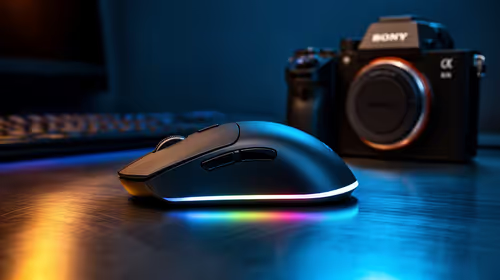
8000Hz polling is overrated for most SA gamers because gains can be tiny next to battery drain and monitor limits. Mbombela players should weigh mouse feel, game support, and system stability before chasing the number.
Read more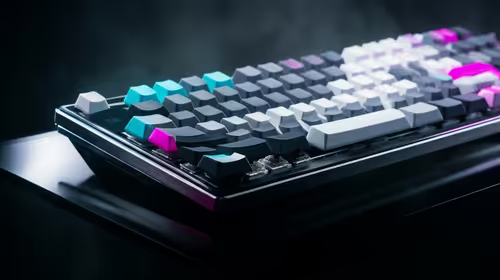
Magnetic switches are taking over SA gaming keyboards because actuation can be tuned. For Sandton gamers, rapid trigger, reset control, and profile depth can help, but layout, key feel, and software quality still matter.
Read more
Polokwane oled monitor value questions need cautious SA context because pricing can move with availability, exchange rates, specs, and warranty support. Treat the trend as a planning signal, not a fixed price promise.
Read more
Arc B580 budget builds for Midrand gamers can shift with exchange rates, supply, specs, and model tier. Treat the title as a buying prompt, then compare SA warranty, timing, and build priorities.
Read more
ROG Ally X may beat the LCD Steam Deck for SA gamers who value stronger handheld performance, more memory, and Windows flexibility. Compare battery life, controls, game libraries, and Polokwane support needs before deciding.
Read more
Minisforum's M2 Pro pairs Core Ultra X7, Arc B390 graphics and 32GB onboard memory in 1.8 litres. SA buyers should weigh its fixed memory and $1,439 launch offer against local mini PCs.

Lenovo says Legion Go failures linked to BIOS N3CN42WW are not user error. Affected SA owners should stop retrying the update, preserve proof and open a support case.

Smart monitors can add apps and convenience, but they also add privacy settings and unwanted-software risk. SA buyers should audit the operating system before paying for extras.

A fake 113GB GTA VI ISO reportedly used empty padding around a small malware payload. SA gamers should delete unofficial builds, keep Windows security active and wait for official channels.
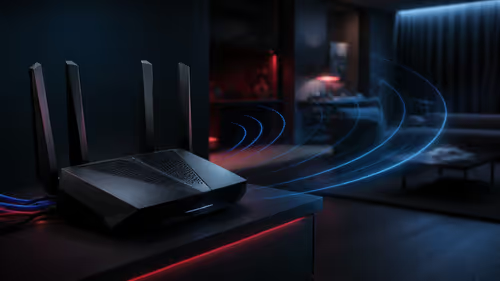
ASUS calls the ROG GT-BN98 the first Wi-Fi 8 gaming router. SA buyers should fix coverage and client limits before paying for a future wireless standard.
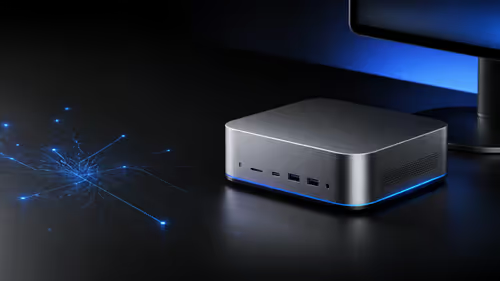
Apple's M6 Mac mini adds faster AI, graphics and networking in the same compact format. SA buyers should wait for a rand listing before comparing value.
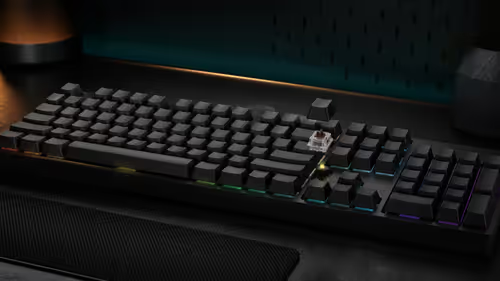
The Vulcan II XP adds hot-swappable switches, sound damping and gaming controls to a full-size wired board. SA buyers should compare feel before features.

Microsoft says Windows on Arm now has over 7,000 verified apps and games. SA buyers should still check each driver, game and work tool before switching.

Xbox Insiders can test disc-to-digital from 31 August 2026. Supported Xbox One and Series X discs gain a digital entitlement, but older discs, regions and title coverage still need exact checks.
ViewSonic's XG2738 pairs QHD QD-OLED with 240Hz and automatic panel care. SA buyers should compare warranty, brightness, ports and burn-in protection against today's R9,999-plus OLED shelf.

NVIDIA's final Windows 10 Game Ready driver is due in October 2026. SA gamers can keep using their GPU, but new game optimisations move on while critical security fixes continue quarterly.

JBL's new Quantum 520, 520X and 120 headsets cover wireless, Xbox-certified and wired use. SA buyers should compare connection, comfort and microphone needs before paying for a new badge.