


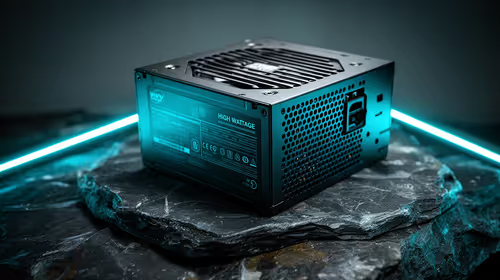
550W PSU Planning for RTX 5080 Super Builds in SA
550W for RTX 5080 Super needs a full-build check, not a simple yes. Review GPU guidance, CPU draw, transient load, connectors, PSU quality, and upgrade plans before deciding.
Read morePLA stringing leaves unwanted strands between separate printed sections. Check the profile, filament path and travel behaviour methodically, then test before the full model; ELEGOO Galaxy PLA costs R499 and has a glossy, shifting finish worth protecting.

Fine hairs stretched between separate towers are not part of the intended geometry. PLA filament stringing happens when material escapes during a travel move, leaving wisps that need a controlled diagnosis. The useful fix is to identify the pattern, isolate a likely cause and test it without disturbing unrelated parts of a working profile.
Print a compact two-point stringing test, inspect the filament path and tune travel-related behaviour one step at a time. The 1kg Galaxy spool is priced at R499, and its glossy colour-changing surface is easier to judge once stray strands are under control. Keep exact settings tied to the printer and its PLA instructions.
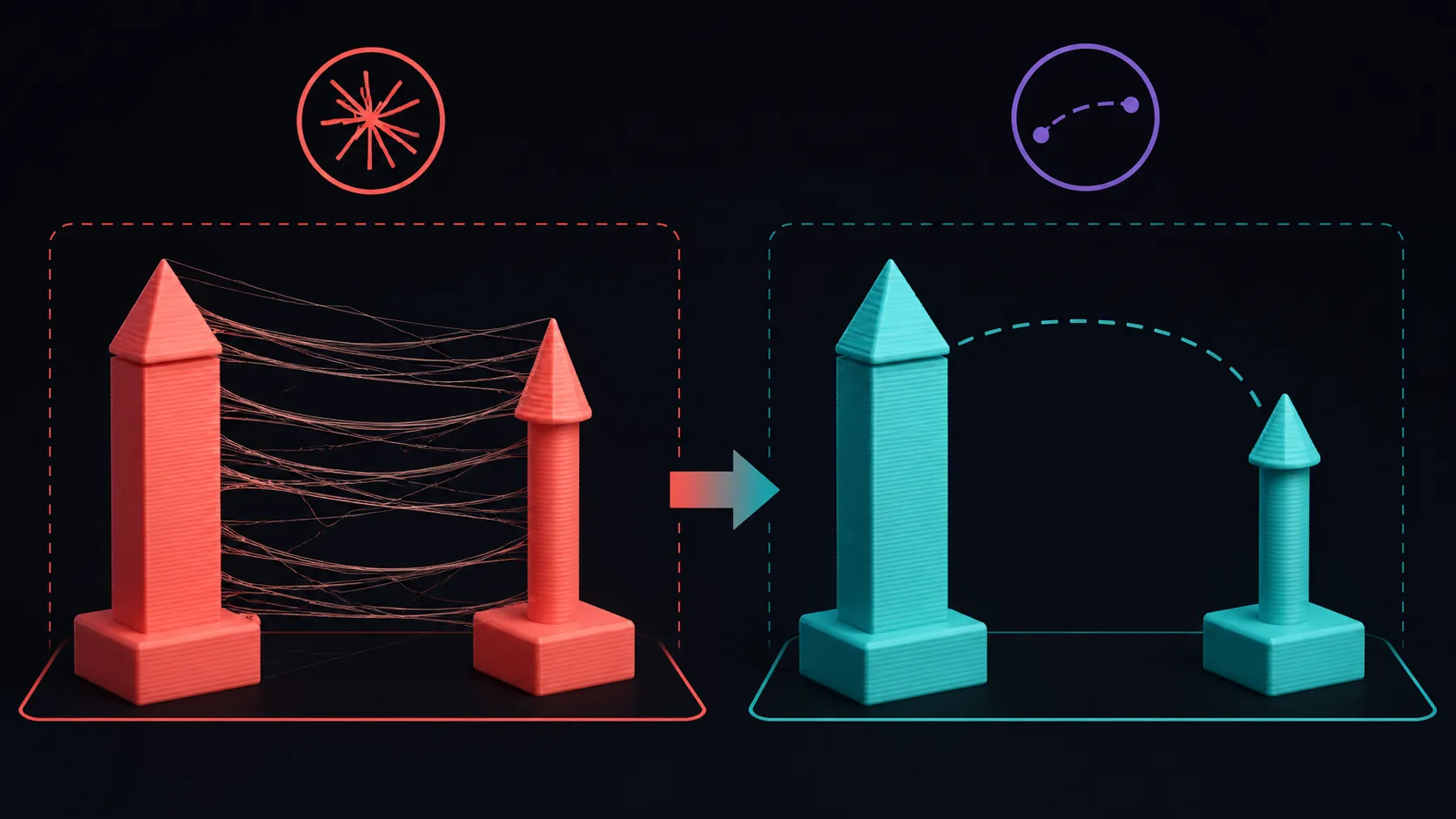
Stringing appears across empty space where the nozzle moved without intentionally printing. It may look like a few light hairs, a web between features or thicker branches attached to both sides. A rough seam, a blob on one wall or a scar on the top surface is a different symptom and should not be treated with the same adjustment.
Choose a tiny model with two separated posts. Its open gap makes travel strands obvious and reduces the time spent on each trial. Use the same filament path, model orientation and lighting for every pass so the comparison remains fair.
The 3D printing filament category provides context for comparing decorative PLA with other material choices once the fault is understood.
Before profile tuning, confirm that the spool can unwind without snagging and that the material reaches the feed system cleanly. An inconsistent pull can complicate a problem that appears to be purely digital. Next, return to the machine's normal PLA baseline and observe when the strands form.
Travel behaviour, material flow and heat all interact, but changing them together destroys the evidence. Pick the factor that best matches what you observed, move it conservatively and repeat the same short print. Stop when the remaining wisps are minor enough to remove without damaging the intended surface.
Galaxy PLA is glossy and produces vibrant shifts as the viewing angle changes. After tuning, turn the sample under a fixed light source and check that the surface remains even. Excessive adjustment can trade a few strings for weaker layers or rough walls, which is a poor exchange on a display piece.
If the fault persists across sound material handling and careful profile changes, inspect the relevant machine guidance before replacing parts. The 3D printer range is useful when comparing feed approaches and printer formats, but the diagnosis must stay attached to the hardware actually being used.
Not every isolated hair justifies another calibration round. If a test has only a few fine strands, remove them carefully and inspect whether the underlying walls remain clean. Repeatedly altering a stable profile can introduce a larger defect while chasing a cosmetic trace.
Set an acceptance level based on the model. A display piece with open arches may expose every strand, while a rough prototype may only need clear geometry. Photograph the accepted test beside the rejected one and keep the reason for stopping. This makes future troubleshooting faster because the maker can distinguish a familiar minor residue from a new pattern that deserves attention.
Also inspect where removed strands were attached. A clean hair may leave almost no mark, while a thicker branch can pull at the glossy wall during cleanup. If removal damages visible faces, return to diagnosis rather than relying on finishing. The goal is a result whose open spaces and surface both meet the project standard, not a web-free gap surrounded by torn layer texture.
Stringing interrupts more than the outline of a Galaxy print. Fine strands cross the glossy faces that should carry uninterrupted colour transitions, so they scatter highlights in places the design did not intend. Once the travel path is clean, the filament's dynamic reflection becomes easier to read from different sides, revealing why a small stringing correction can make a large visual difference on decorative geometry.
It crosses open gaps as unwanted hairs or web-like strands. Marks that stay on one wall may point to another surface or seam issue.
The repeated empty travel path exposes strands quickly while using little material. It also makes before-and-after comparisons straightforward.
No. One controlled adjustment preserves the link between cause and result, making it possible to return to the last reliable baseline.
Yes. ELEGOO Galaxy PLA retains its dynamic shimmer, provided the revised profile still forms clean and consistent surfaces.
Ready to remove the webs from your next PLA model? Use Evetech's 3D printing categories to compare suitable materials and machines, then test the suspected cause on a compact print.
It crosses open gaps as unwanted hairs or web-like strands. Marks that stay on one wall may point to another surface or seam issue.
The repeated empty travel path exposes strands quickly while using little material. It also makes before-and-after comparisons straightforward.
No. One controlled adjustment preserves the link between cause and result, making it possible to return to the last reliable baseline.
Yes. ELEGOO Galaxy PLA retains its dynamic shimmer, provided the revised profile still forms clean and consistent surfaces.
550W for RTX 5080 Super needs a full-build check, not a simple yes. Review GPU guidance, CPU draw, transient load, connectors, PSU quality, and upgrade plans before deciding.
Read more
8000Hz polling is overrated for most SA gamers because gains can be tiny next to battery drain and monitor limits. Mbombela players should weigh mouse feel, game support, and system stability before chasing the number.
Read more
Magnetic switches are taking over SA gaming keyboards because actuation can be tuned. For Sandton gamers, rapid trigger, reset control, and profile depth can help, but layout, key feel, and software quality still matter.
Read more
Polokwane oled monitor value questions need cautious SA context because pricing can move with availability, exchange rates, specs, and warranty support. Treat the trend as a planning signal, not a fixed price promise.
Read more
Arc B580 budget builds for Midrand gamers can shift with exchange rates, supply, specs, and model tier. Treat the title as a buying prompt, then compare SA warranty, timing, and build priorities.
Read more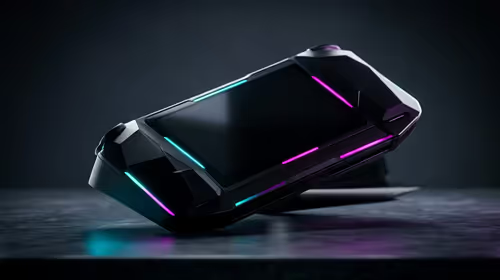
ROG Ally X may beat the LCD Steam Deck for SA gamers who value stronger handheld performance, more memory, and Windows flexibility. Compare battery life, controls, game libraries, and Polokwane support needs before deciding.
Read more
Minisforum's M2 Pro pairs Core Ultra X7, Arc B390 graphics and 32GB onboard memory in 1.8 litres. SA buyers should weigh its fixed memory and $1,439 launch offer against local mini PCs.

Lenovo says Legion Go failures linked to BIOS N3CN42WW are not user error. Affected SA owners should stop retrying the update, preserve proof and open a support case.

Smart monitors can add apps and convenience, but they also add privacy settings and unwanted-software risk. SA buyers should audit the operating system before paying for extras.

A fake 113GB GTA VI ISO reportedly used empty padding around a small malware payload. SA gamers should delete unofficial builds, keep Windows security active and wait for official channels.

ASUS calls the ROG GT-BN98 the first Wi-Fi 8 gaming router. SA buyers should fix coverage and client limits before paying for a future wireless standard.
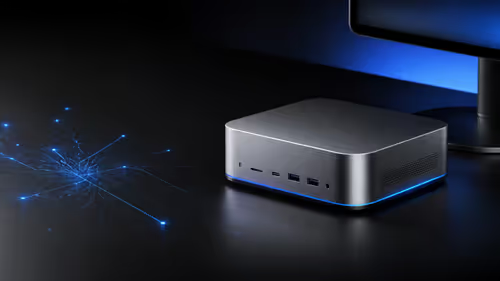
Apple's M6 Mac mini adds faster AI, graphics and networking in the same compact format. SA buyers should wait for a rand listing before comparing value.
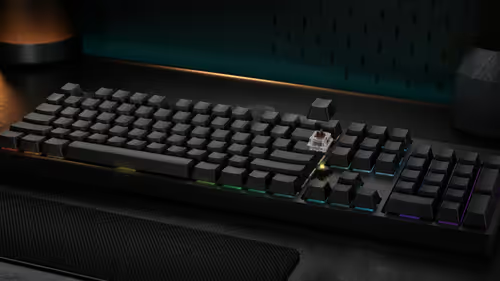
The Vulcan II XP adds hot-swappable switches, sound damping and gaming controls to a full-size wired board. SA buyers should compare feel before features.

Microsoft says Windows on Arm now has over 7,000 verified apps and games. SA buyers should still check each driver, game and work tool before switching.

Xbox Insiders can test disc-to-digital from 31 August 2026. Supported Xbox One and Series X discs gain a digital entitlement, but older discs, regions and title coverage still need exact checks.

ViewSonic's XG2738 pairs QHD QD-OLED with 240Hz and automatic panel care. SA buyers should compare warranty, brightness, ports and burn-in protection against today's R9,999-plus OLED shelf.

NVIDIA's final Windows 10 Game Ready driver is due in October 2026. SA gamers can keep using their GPU, but new game optimisations move on while critical security fixes continue quarterly.

JBL's new Quantum 520, 520X and 120 headsets cover wireless, Xbox-certified and wired use. SA buyers should compare connection, comfort and microphone needs before paying for a new badge.