


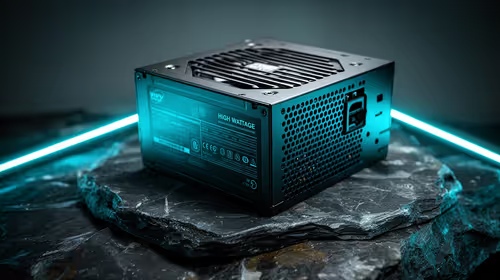
550W PSU Planning for RTX 5080 Super Builds in SA
550W for RTX 5080 Super needs a full-build check, not a simple yes. Review GPU guidance, CPU draw, transient load, connectors, PSU quality, and upgrade plans before deciding.
Read moreA large print can lift when the first-layer conditions fail to stay suitable across its broad contact area. Inspect surface preparation, initial gap, model placement and proven process settings one change at a time.

Corners lifting from a broad plate are a symptom, not a diagnosis. Troubleshooting a large 3D print lifting from the build plate works best when the surface, initial layer, model footprint and process conditions are examined independently.
The Neptune 4 Max's 121-point levelling can compensate bed variation, but lifting still points to surface cleanliness, first-layer setup, temperature, cooling or part geometry.
Stop the failed job, preserve the evidence and inspect where lifting began. Clean the identified plate face correctly, complete the printer's intended first-layer setup and repeat a smaller representative footprint after changing one factor. The R9,399 Neptune 4 Max provides an upgraded dual-sided plate across a 420 x 420mm bed, but neither its face materials nor its levelling method should be assumed.
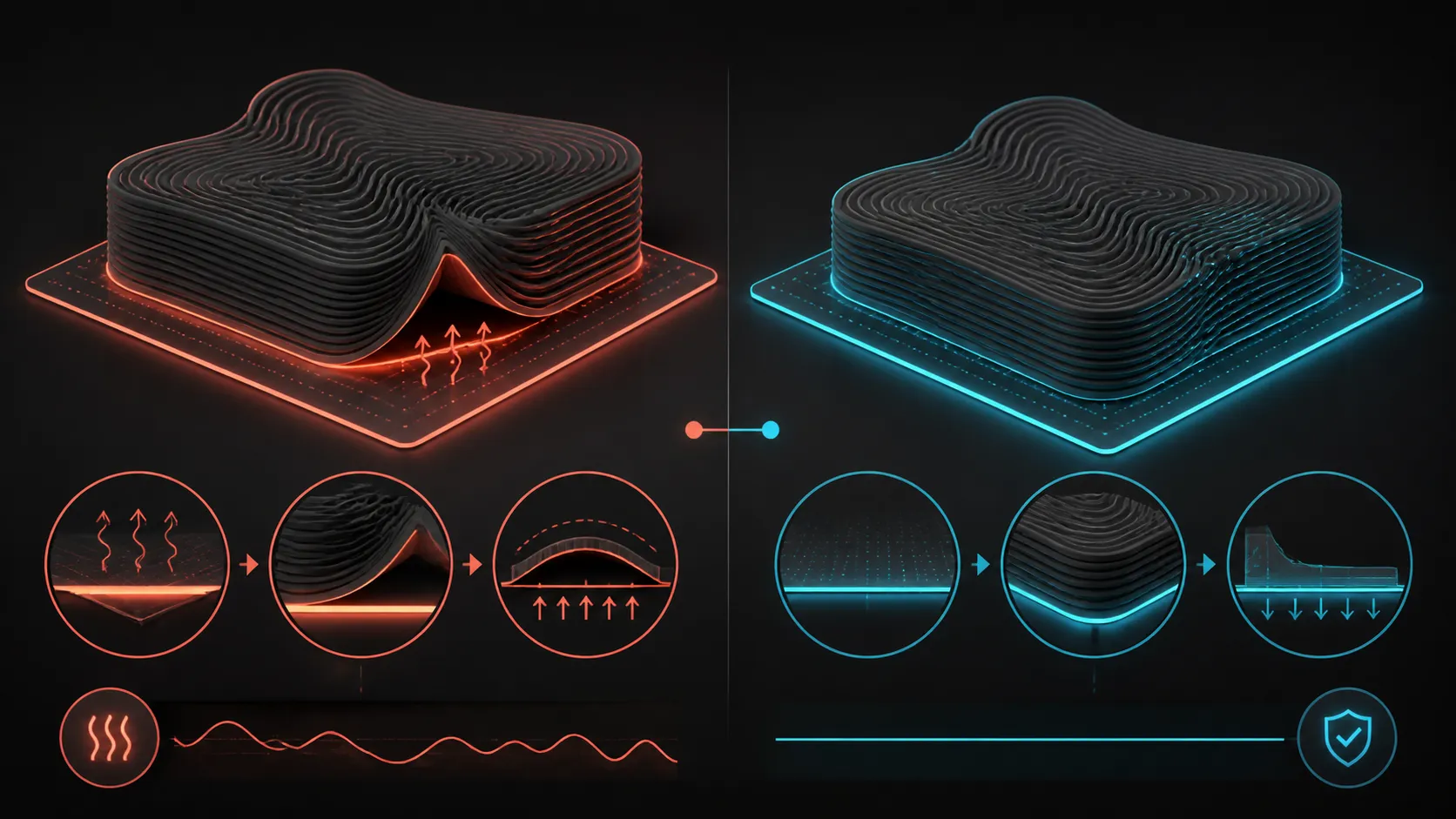
Mark the first lifted corner or edge and compare it with areas that remained attached. A failure repeated in the same bed zone suggests a local surface or initial-spacing condition deserves attention. Lifting that follows a particular model feature may point towards geometry or process choices instead.
Photograph the underside and bed location before removing everything. Evidence disappears once the plate is cleaned and the model is reoriented. The large printer range on Evetech can be compared later using this real failure shape rather than a generic adhesion concern.
Identify which side of the dual-faced plate was used. Follow its proper cleaning and care process, because an unsuitable solvent or treatment can create another variable. Do not infer material, texture or coating from the phrase upgraded dual-sided.
Run a low pattern in the affected area and another in a known good zone. Complete the exact Neptune setup procedure before interpreting nozzle-to-plate contact. Bed size gives no evidence for an automatic or manual levelling method.
A large continuous base can amplify small differences across the bed and can concentrate stress as deposited material changes temperature. General geometry responses include reorientation, separating the model into suitable sections or changing edge design, but each alteration must respect the object's purpose.
Use a representative corner or perimeter rather than reprinting the full 420mm job after every change. Keep material, plate side and profile fixed. Once the sample passes, prove the complete model under the same recorded conditions.
Review the Evetech 3D printer collection if the required object repeatedly exceeds a manageable surface route, but distinguish capacity from adhesion control.
The Neptune 4 Max has a 300C nozzle; that maximum does not identify the filament or its correct first-layer process. Use exact material guidance for nozzle temperature, surface, cooling and workspace needs. Do not raise heat merely because more range is available.
Choose the named spool through 3D printing filament options at Evetech, then document its condition and profile. Filament identity should remain constant while the lifting cause is isolated.
After the fix, record bed zone, face, test file and the single successful correction. A reproducible prevention note is more useful than a list of every change tried during the failure.
Use a three-step decision note for the next incident: where did lifting begin, did the same zone fail on a simple pattern, and did the symptom follow the model after repositioning? Those observations separate place, surface and geometry without naming a cause too early. If results conflict, return to the clean baseline instead of adding another adjustment.
Use a broad test to see whether the failure follows one zone or the model's exposed corners. Rerun the 11x11 mesh after disturbing the dual-sided plate, then inspect the first layer before committing to a long print. Large parts accumulate more shrinkage stress and leverage than small samples. Stabilise adhesion at a modest speed before using the machine's high-speed range.
Its footprint samples more bed zones and can expose local differences that a small central part never reaches.
Preserve the failed location and underside before cleaning. That pattern helps separate a bed-zone issue from a model-related one.
No. Hold the baseline stable and modify one factor, otherwise the useful correction and any new defect become difficult to identify.
It supplies two usable faces over the 420 x 420mm bed. Track the selected side and verify its exact care procedure.
It cannot. Identify material and coating before selecting a cleaner, treatment, tool or model-release technique.
Review orientation or splitting when lifting follows repeatable geometry and the revised design can still satisfy the part's purpose.
Ready to diagnose lifting from the first visible clue? Explore large-bed printers and filament at Evetech after mapping the failed zone, plate face and representative test footprint.
Its footprint samples more bed zones and can expose local differences that a small central part never reaches.
Preserve the failed location and underside before cleaning. That pattern helps separate a bed-zone issue from a model-related one.
No. Hold the baseline stable and modify one factor, otherwise the useful correction and any new defect become difficult to identify.
It supplies two usable faces over the 420 x 420mm bed. Track the selected side and verify its exact care procedure.
It cannot. Identify material and coating before selecting a cleaner, treatment, tool or model-release technique.
Review orientation or splitting when lifting follows repeatable geometry and the revised design can still satisfy the part's purpose.
550W for RTX 5080 Super needs a full-build check, not a simple yes. Review GPU guidance, CPU draw, transient load, connectors, PSU quality, and upgrade plans before deciding.
Read more
8000Hz polling is overrated for most SA gamers because gains can be tiny next to battery drain and monitor limits. Mbombela players should weigh mouse feel, game support, and system stability before chasing the number.
Read more
Magnetic switches are taking over SA gaming keyboards because actuation can be tuned. For Sandton gamers, rapid trigger, reset control, and profile depth can help, but layout, key feel, and software quality still matter.
Read more
Polokwane oled monitor value questions need cautious SA context because pricing can move with availability, exchange rates, specs, and warranty support. Treat the trend as a planning signal, not a fixed price promise.
Read more
Arc B580 budget builds for Midrand gamers can shift with exchange rates, supply, specs, and model tier. Treat the title as a buying prompt, then compare SA warranty, timing, and build priorities.
Read more
ROG Ally X may beat the LCD Steam Deck for SA gamers who value stronger handheld performance, more memory, and Windows flexibility. Compare battery life, controls, game libraries, and Polokwane support needs before deciding.
Read more
Minisforum's M2 Pro pairs Core Ultra X7, Arc B390 graphics and 32GB onboard memory in 1.8 litres. SA buyers should weigh its fixed memory and $1,439 launch offer against local mini PCs.

Lenovo says Legion Go failures linked to BIOS N3CN42WW are not user error. Affected SA owners should stop retrying the update, preserve proof and open a support case.

Smart monitors can add apps and convenience, but they also add privacy settings and unwanted-software risk. SA buyers should audit the operating system before paying for extras.

A fake 113GB GTA VI ISO reportedly used empty padding around a small malware payload. SA gamers should delete unofficial builds, keep Windows security active and wait for official channels.

ASUS calls the ROG GT-BN98 the first Wi-Fi 8 gaming router. SA buyers should fix coverage and client limits before paying for a future wireless standard.

Apple's M6 Mac mini adds faster AI, graphics and networking in the same compact format. SA buyers should wait for a rand listing before comparing value.

The Vulcan II XP adds hot-swappable switches, sound damping and gaming controls to a full-size wired board. SA buyers should compare feel before features.

Microsoft says Windows on Arm now has over 7,000 verified apps and games. SA buyers should still check each driver, game and work tool before switching.

Xbox Insiders can test disc-to-digital from 31 August 2026. Supported Xbox One and Series X discs gain a digital entitlement, but older discs, regions and title coverage still need exact checks.

ViewSonic's XG2738 pairs QHD QD-OLED with 240Hz and automatic panel care. SA buyers should compare warranty, brightness, ports and burn-in protection against today's R9,999-plus OLED shelf.

NVIDIA's final Windows 10 Game Ready driver is due in October 2026. SA gamers can keep using their GPU, but new game optimisations move on while critical security fixes continue quarterly.

JBL's new Quantum 520, 520X and 120 headsets cover wireless, Xbox-certified and wired use. SA buyers should compare connection, comfort and microphone needs before paying for a new badge.