Quick Answer
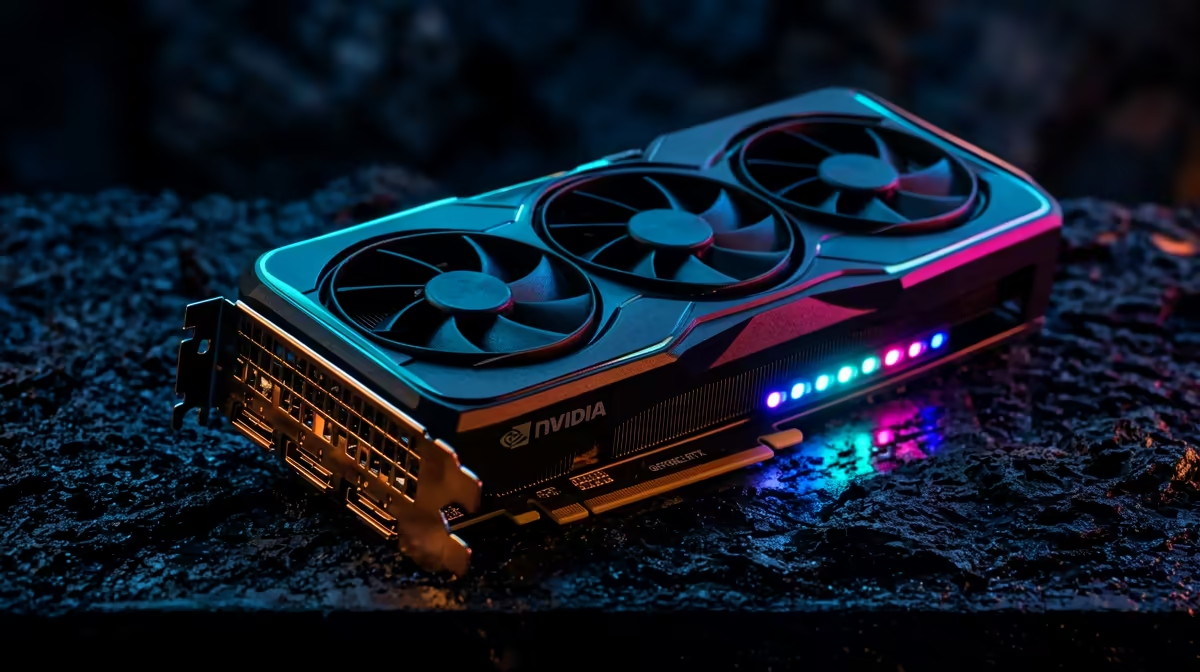
Yes, very comfortably. The RTX 5090 runs Indiana Jones and the Great Circle at 1440p with full path tracing at roughly 110-130 fps natively, and past 160 fps with DLSS Quality. This resolution is where the card's path-tracing strength starts to feel justified.
1440p path tracing is a sweet spot
At 1440p the Great Circle's full path tracing gives the 5090 a genuine workload, and it answers with 110-130 fps natively in the detailed Vatican and jungle environments. DLSS Quality lifts that past 160 fps for a 165Hz panel, with no meaningful loss of sharpness. The 32GB VRAM buffer matters because path-traced 1440p with high textures can push VRAM use into the low teens of gigabytes.
Build to keep the frames steady
Dense crowd scenes and combat lean on the CPU, so a Ryzen 7 9800X3D smooths the 1% lows. Pair the card with a 1440p 165Hz or 240Hz panel, which range from around R9,000 to R28,000 at Evetech. With this setup you get the game's reference-quality lighting at a high, stable frame rate, exactly the experience the 5090 is built for. For the most stable path-traced experience, keep an eye on the busiest crowd and combat scenes, since those are where a strong CPU keeps the 1% lows from dipping below your 165Hz target.
FAQ
What FPS does the 5090 get at 1440p with path tracing?
Around 110-130 fps natively, rising past 160 fps with DLSS Quality. This is a smooth, high-refresh experience even with the heaviest lighting enabled.
Do I need DLSS at 1440p in this game?
Not for a smooth experience, but DLSS Quality is worth enabling to reach a 165Hz panel's refresh while keeping the path-traced image crisp.
How much VRAM does the Great Circle use at 1440p?
With path tracing and high textures it can reach the low teens of gigabytes. The 5090's 32GB leaves a comfortable margin with no texture pop-in.
Run path tracing at 1440p
Pair the 5090 with a 1440p 165Hz panel and a 9800X3D for steady frames with full path tracing. Compare displays and CPUs stocked at Evetech.