


550W PSU Planning for RTX 5080 Super Builds in SA
550W for RTX 5080 Super needs a full-build check, not a simple yes. Review GPU guidance, CPU draw, transient load, connectors, PSU quality, and upgrade plans before deciding.
Read moreWindows Sonic is the free built-in spatial audio option and a solid default for most players, while Dolby Atmos and DTS Headphone X are paid add-ons needing a separate licence. None fundamentally outperforms the others for footsteps, so Evetech suggests starting free.
Windows Sonic, Dolby Atmos for Headphones and DTS Headphone:X can all render spatial or multichannel audio through stereo headphones. Windows Sonic is built into Windows. Dolby and DTS options can use separate apps, licences, trials or hardware entitlements. Their value depends on the game, headset and your hearing cues.
Start with the game's own Headphones or HRTF mode and spatial sound Off. If the title expects a Windows spatial endpoint, try Windows Sonic first. Then compare Dolby Atmos and DTS one at a time through their official apps. Match loudness and use the same replay before choosing.
Evetech's shopper-favourite peripheral mix supplies one audio shortlist, while the broader gaming setup department covers adjacent hardware. Spatial-software support is separate from driver quality, comfort and measured frequency response.
Right-click the Windows sound icon or open the output device properties and select one Spatial sound format. Do not enable Windows Sonic, a headset 7.1 mode and an in-game HRTF together unless the game documents the chain.
Windows Sonic works without a separate purchase on supported Windows versions. Dolby Access manages Dolby Atmos for Headphones, while DTS Sound Unbound manages DTS Headphone:X. Licence terms, bundled entitlements and device support can change, so check the current official app listing rather than relying on an old price.
A spatial renderer needs object audio or multichannel information to do useful placement. If a game has a Windows Spatial Audio option, use that. If it has its own binaural headphone renderer, external spatial processing can be redundant.
Set the Windows output to the headset endpoint, not a monitor or virtual cable. Disable duplicate enhancements and confirm the sample format recommended by the device.
Use a repeatable scene with front, rear and height movement. Compare distance, elevation and the point where a cue crosses behind you. Also judge voices, gunfire and music; a renderer can improve space while colouring the whole mix.
Match playback level. Some modes sound more impressive because they add bass or gain. Keep the option that helps you locate sources without fatigue, and leave spatial sound off when plain stereo is cleaner.
A headset or PC can include an entitlement for one app. Sign in through the approved store account and confirm whether the licence belongs to the device, account or trial. Do not buy a second copy until the app shows what is already active.
If the spatial option disappears after moving PCs, reinstall the official app and restore the licence through its current account route. Keep Windows and the audio driver stable during the comparison.
No. Fit depends on the game, listener and headset, so compare it with the same source and volume.
Their headphone renderers work through normal stereo headphones, subject to current software and licence support.
Use one renderer. Stacking them can process direction and tone twice.
Feed one spatial renderer the game's intended signal, loudness-match Sonic, Atmos and DTS and keep the option that improves real localisation.
No. Fit depends on the game, listener and headset, so compare it with the same source and volume.
Their headphone renderers work through normal stereo headphones, subject to current software and licence support.
Use one renderer. Stacking them can process direction and tone twice. {{PRODUCTS: { facets: { query: "stereo gaming headset for spatial audio" }, limit: 12, title: "Compare Spatial-Audio Headsets", style: "4" } }}
550W for RTX 5080 Super needs a full-build check, not a simple yes. Review GPU guidance, CPU draw, transient load, connectors, PSU quality, and upgrade plans before deciding.
Read more
8000Hz polling is overrated for most SA gamers because gains can be tiny next to battery drain and monitor limits. Mbombela players should weigh mouse feel, game support, and system stability before chasing the number.
Read more
Magnetic switches are taking over SA gaming keyboards because actuation can be tuned. For Sandton gamers, rapid trigger, reset control, and profile depth can help, but layout, key feel, and software quality still matter.
Read more
Polokwane oled monitor value questions need cautious SA context because pricing can move with availability, exchange rates, specs, and warranty support. Treat the trend as a planning signal, not a fixed price promise.
Read more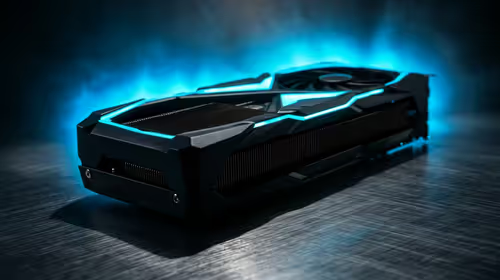
Arc B580 budget builds for Midrand gamers can shift with exchange rates, supply, specs, and model tier. Treat the title as a buying prompt, then compare SA warranty, timing, and build priorities.
Read more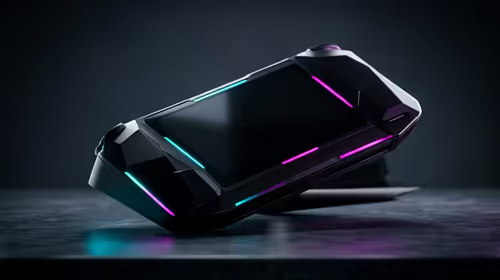
ROG Ally X may beat the LCD Steam Deck for SA gamers who value stronger handheld performance, more memory, and Windows flexibility. Compare battery life, controls, game libraries, and Polokwane support needs before deciding.
Read more
Minisforum's M2 Pro pairs Core Ultra X7, Arc B390 graphics and 32GB onboard memory in 1.8 litres. SA buyers should weigh its fixed memory and $1,439 launch offer against local mini PCs.

Lenovo says Legion Go failures linked to BIOS N3CN42WW are not user error. Affected SA owners should stop retrying the update, preserve proof and open a support case.

Smart monitors can add apps and convenience, but they also add privacy settings and unwanted-software risk. SA buyers should audit the operating system before paying for extras.

A fake 113GB GTA VI ISO reportedly used empty padding around a small malware payload. SA gamers should delete unofficial builds, keep Windows security active and wait for official channels.
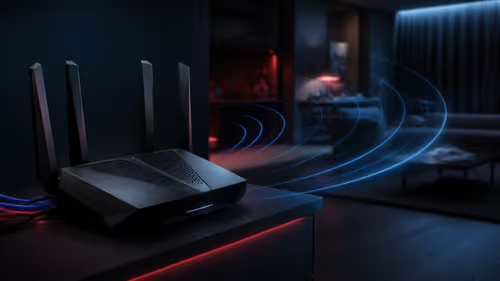
ASUS calls the ROG GT-BN98 the first Wi-Fi 8 gaming router. SA buyers should fix coverage and client limits before paying for a future wireless standard.
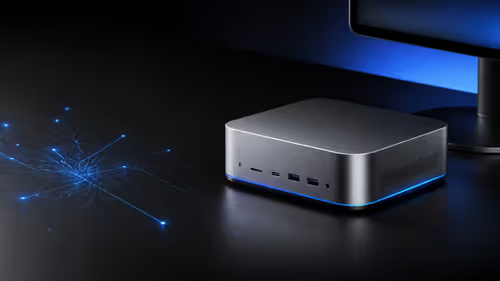
Apple's M6 Mac mini adds faster AI, graphics and networking in the same compact format. SA buyers should wait for a rand listing before comparing value.
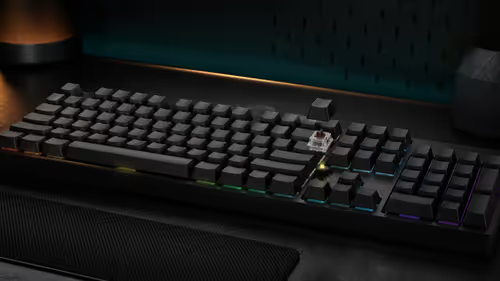
The Vulcan II XP adds hot-swappable switches, sound damping and gaming controls to a full-size wired board. SA buyers should compare feel before features.

Microsoft says Windows on Arm now has over 7,000 verified apps and games. SA buyers should still check each driver, game and work tool before switching.

Xbox Insiders can test disc-to-digital from 31 August 2026. Supported Xbox One and Series X discs gain a digital entitlement, but older discs, regions and title coverage still need exact checks.
ViewSonic's XG2738 pairs QHD QD-OLED with 240Hz and automatic panel care. SA buyers should compare warranty, brightness, ports and burn-in protection against today's R9,999-plus OLED shelf.

NVIDIA's final Windows 10 Game Ready driver is due in October 2026. SA gamers can keep using their GPU, but new game optimisations move on while critical security fixes continue quarterly.

JBL's new Quantum 520, 520X and 120 headsets cover wireless, Xbox-certified and wired use. SA buyers should compare connection, comfort and microphone needs before paying for a new badge.