The age of the AI PC is here, promising to revolutionise everything from gaming to creative work. It's an exciting time for tech in South Africa! But as we embrace this new power, a crucial question arises, especially when the lights flicker… what is the real AI PC environmental impact? It’s more than just a number on your electricity bill; it's a hidden cost we need to understand before we buy our next powerful machine.
The Core Issue: Power, Performance, and the Planet
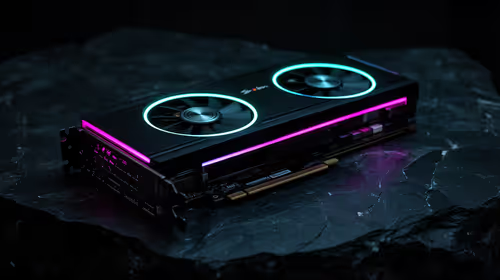
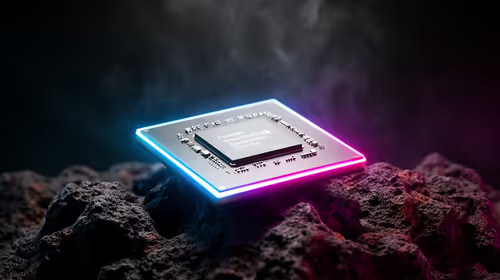
At its heart, the conversation around the AI PC environmental impact starts with energy consumption. AI tasks, like training a model or using generative fill in Photoshop, are incredibly demanding. They rely on specialised hardware—primarily Graphics Processing Units (GPUs) and new Neural Processing Units (NPUs)—to perform trillions of calculations per second.
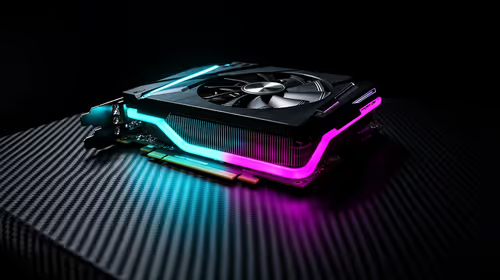
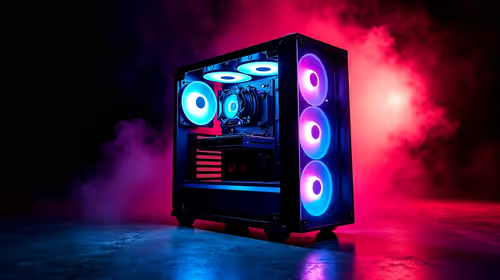
While NPUs are designed for efficiency in specific, sustained AI workloads, the overall system power draw can still be substantial. High-end components are essential for a smooth experience, and modern NVIDIA GeForce gaming PCs are packed with the tensor cores needed for AI, but this performance comes at an energy cost. In a country like South Africa where the grid is often under pressure, every watt counts. ⚡
Beyond Your Eskom Bill: The Lifecycle Impact
The environmental cost of AI PCs isn't just about the electricity they consume during operation. We need to look at the bigger picture, from manufacturing to disposal.
Manufacturing and Materials
Creating the complex silicon chips inside an AI PC is an resource-intensive process. It requires vast amounts of water, energy, and rare earth minerals. The global supply chain for these components has its own significant carbon footprint before the device even reaches your desk.
Energy Use and Upgrade Cycles
This is where we feel it most directly. Running complex AI applications can push a PC to its limits, causing power consumption to spike. Furthermore, the rapid pace of AI development might encourage faster upgrade cycles. As new, more capable models are released, older hardware can become obsolete quicker, contributing to electronic waste. Choosing powerful yet efficient AMD Radeon gaming PCs with the latest architecture can help balance performance with more mindful energy use. 🌍
Smarter Computing: Reducing Your AI PC's Environmental Footprint
Acknowledging the problem doesn't mean we should abandon this incredible technology. Instead, we can become smarter, more conscious users. Making informed choices can significantly mitigate the AI PC environmental impact.
The first step is choosing the right hardware for your needs. You don't always need the absolute top-tier component if your tasks won't use its full potential. For sustained, heavy workloads, sometimes purpose-built workstation PCs are optimised for better thermal and power efficiency over long periods compared to a pure gaming rig.
Power-Saving Pro Tip 💡
In Windows 11, head to Settings > System > Power & battery. Set your Power mode to 'Balanced' or 'Best power efficiency'. This allows your PC to automatically throttle performance for background tasks, reducing idle power consumption without affecting your primary application's performance. It’s a simple tweak that makes a real difference.
Ultimately, being mindful is key. Turn your PC off when not in use, optimise software settings, and resist the urge to upgrade components unless you genuinely need the extra performance. By thinking critically about our usage, we can enjoy the benefits of AI without placing an unnecessary burden on our planet… or our wallets.
Ready to Compute Smarter?
Understanding the AI PC environmental impact isn't about giving up performance. It's about making informed choices. For powerful, efficient, and future-proof systems built for South Africa, we've got you covered. Explore our wide range of custom-built PCs and find the perfect machine for your needs.