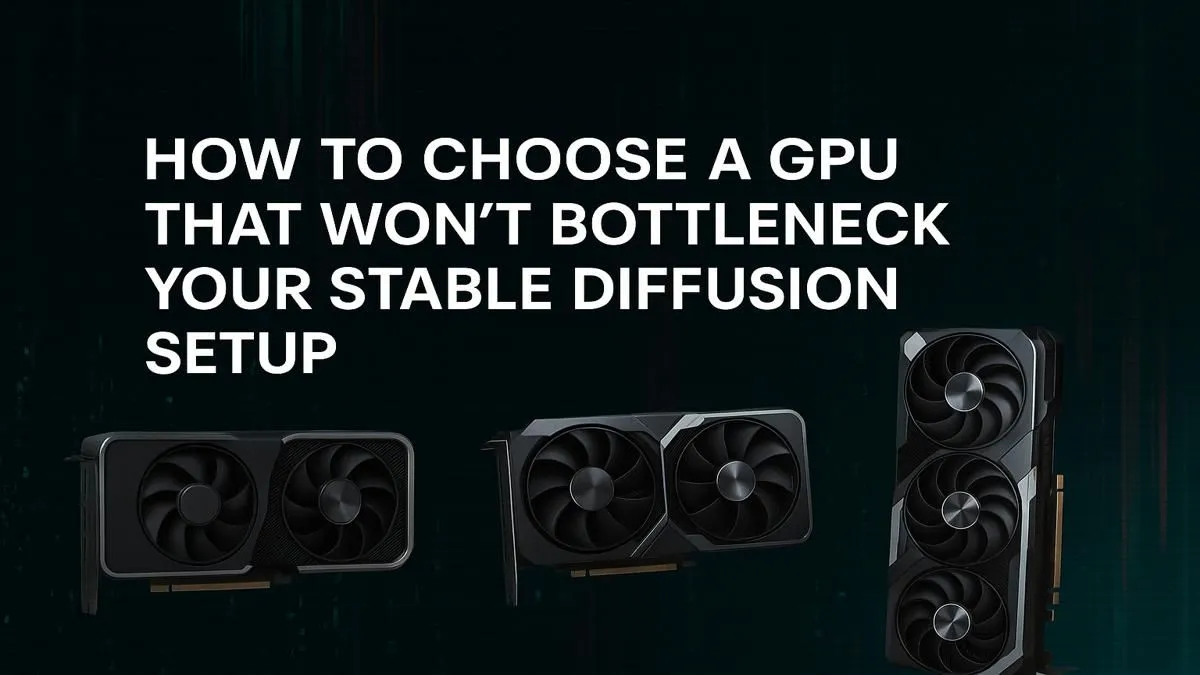
Ever typed the perfect prompt into Stable Diffusion, only to wait ages for a blurry mess? You're not alone. In South Africa, creating stunning AI art shouldn't feel like watching paint dry. The secret isn't just your creativity; it's your hardware. Your graphics card is the engine powering your imagination, and choosing the best GPU for Stable Diffusion is the key to unlocking instant, high-resolution masterpieces without frustrating AI art bottlenecks. 🚀
Why Your GPU is the Heart of Your AI Art Studio
When you generate an image with Stable Diffusion, your computer is performing millions of complex calculations. This process relies heavily on the parallel processing power that only a modern graphics card can provide. The CPU just can't keep up.
Three key factors determine a GPU's performance for AI art generation:
- VRAM (Video RAM): This is the single most important spec. VRAM is your GPU's dedicated memory. It holds the AI model, the image you're generating, and all the intermediate steps. Not enough VRAM, and you'll face slow performance or errors.
- Processing Cores (CUDA/Stream Processors): These are the workhorses. The more cores, the faster your GPU can crunch the numbers and render your image.
- Memory Bandwidth: This determines how quickly the GPU can access its VRAM. Higher bandwidth means less waiting.
A weak graphics card creates a bottleneck, turning a flash of inspiration into a long, tedious wait.
The VRAM Question: How Much is Enough?
For anyone serious about generating AI art, VRAM is king. It directly impacts the resolution, complexity, and speed of your image generation. Think of it as your digital canvas size... a bigger canvas allows for more ambitious projects.
- 8GB VRAM (The Entry Point): You can definitely get started with 8GB. It's enough for standard 512x512 pixel generations and some light model training. You might need to use memory optimisation settings, but it's a solid starting block.
- 12GB-16GB VRAM (The Sweet Spot): This is where things get exciting. With 12GB or more, you can comfortably generate high-resolution images, use more complex models, and experiment with training your own concepts (LoRAs) without constant memory errors.
- 24GB+ VRAM (The Professional's Choice): If you're running complex workflows, training large models, or need maximum speed and flexibility, 24GB is the goal. This tier eliminates VRAM as a bottleneck for almost any current Stable Diffusion task.
Optimisation Pro Tip ⚡
Running low on VRAM? In your AUTOMATIC1111 web UI, edit the webui-user.bat file. Add --xformers and --medvram to the COMMANDLINE_ARGS= section. This can significantly reduce memory usage, letting you create larger images on cards with less VRAM. It's a fantastic trick to squeeze more performance out of your hardware!
NVIDIA vs. AMD: The AI Art Showdown
For years, NVIDIA has been the undisputed champion in the AI space thanks to its CUDA technology, which is the software foundation most AI tools, including Stable Diffusion, are built on. This gives them a significant out-of-the-box advantage in compatibility and performance. A powerful NVIDIA GeForce graphics card is often the most straightforward path to a smooth AI art experience. ✨
However, the landscape is changing. AMD has been making huge strides with its ROCm software platform, and many AI tools now have better support for their hardware. For users who also want incredible gaming performance for their money, the price-to-performance ratio of the latest AMD Radeon GPUs can be very appealing, provided you're willing to do a little extra setup.
Ultimately, the best GPU for Stable Diffusion often comes down to balancing your budget with your desire for plug-and-play convenience.
Beyond Gaming: Are Workstation Cards Worth It?
You might have seen professional cards and wondered if they're a good fit. Cards like NVIDIA's RTX Ada series are built for heavy, sustained workloads and often come with massive amounts of VRAM (48GB is not uncommon!). These specialised workstation graphics cards are incredible for professionals running massive AI models or complex 3D rendering tasks 24/7.
For most hobbyists and even many professional artists, however, a high-end consumer gaming card offers far better value for money. The performance for Stable Diffusion is often comparable, and you get a fantastic gaming machine as a bonus. 🔧
Ready to Unleash Your AI Creativity? Stop letting hardware hold you back. Whether you're a hobbyist or a professional, the right GPU makes all the difference. We've got the best deals on graphics cards in South Africa, ready to power your next masterpiece. Browse our full range of graphics cards today and find the perfect engine for your imagination.