

RTX 5070 Ti 16GB for Video Editing and AI Workflows
RTX 5070 Ti 16GB for video editing powers faster renders and AI-assisted workflows, speed up Premiere and Resolve exports, and optimize inference. 🎬🤖
Read moreUnsure about DeepSeek hardware requirements? This guide breaks down the essential GPUs, CPUs, and RAM you need to run DeepSeek AI models locally in South Africa. 🇿🇦 Build your ultimate AI machine with expert advice and find the best components at Evetech today! 💻
So, you've heard about DeepSeek, the powerful open-source AI making waves, and you're keen to run it locally on your own machine here in South Africa. No more API fees, no more relying on someone else's server... just pure, unadulterated AI power at your fingertips. But before you dive in, there's one crucial question: does your PC have what it takes? This guide breaks down the essential DeepSeek hardware requirements for a smooth experience.
Running a large language model (LLM) like DeepSeek isn't like firing up your average game. It's a different kind of beast that relies heavily on specific components. Forget about just clock speeds; when it comes to AI, it's all about memory and parallel processing power.
The three pillars of your DeepSeek setup are:
Your Graphics Processing Unit (GPU) is the heart of your AI rig. The performance you get from DeepSeek models is directly tied to the power and, more importantly, the VRAM of your graphics card.
The specific DeepSeek hardware requirements depend on which version of the model you want to run (e.g., the smaller Coder models vs. the larger 67B general model).
Don't have 24GB of VRAM? No stress! Look for quantised versions of DeepSeek models (like GGUF or AWQ). These are cleverly compressed versions that use significantly less VRAM, allowing you to run powerful models on more modest hardware. It’s a fantastic way to get started without breaking the bank.
For years, NVIDIA's CUDA platform has been the undisputed king of AI development, offering mature software support that most tools are built for. However, the landscape is changing. AMD's ROCm platform is rapidly improving, and many AMD Radeon gaming PCs now offer incredible performance-per-rand, making them a compelling option for tech enthusiasts willing to tinker a bit. For plug-and-play ease, NVIDIA often has the edge, but for raw power on a budget, AMD is a serious contender.
While the GPU gets the spotlight, the rest of your system needs to keep up. A powerful GPU is useless if it's waiting on a slow CPU or storage drive. Optimising your full setup is key to meeting the hardware requirements for DeepSeek.
For a perfectly balanced system where every component is chosen to work in harmony, exploring a pre-configured Workstation PC can be a brilliant move. They are built for sustained, heavy workloads just like running local AI.
Ready to Build Your AI Powerhouse? Understanding the DeepSeek hardware requirements is the first step. The next is getting the right gear. Whether you're upgrading your gaming rig or building a dedicated AI workhorse, we've got the components and pre-built systems to bring your projects to life. Explore our range of high-performance PCs and start your AI journey today.
The best GPU for DeepSeek depends on the model size. For top performance, consider NVIDIA RTX series cards like the RTX 4080 or 4090, which offer ample VRAM and processing power.
The VRAM needed for DeepSeek varies. Smaller models might run on 12GB, but for larger models like DeepSeek-67B, 24GB or more is highly recommended for smooth operation.
It depends on your specs. If you have a modern gaming PC with a recent NVIDIA GPU (RTX 30-series or newer) and 32GB of RAM, you can likely run smaller DeepSeek models.
For running local AI models effectively, we recommend at least a modern 8-core CPU, 32GB of system RAM, and a GPU with a minimum of 12GB VRAM for a good starting point.
While the GPU does most of the heavy lifting, a strong multi-core CPU is crucial for data preparation, system responsiveness, and preventing bottlenecks when running DeepSeek locally.
Evetech offers a wide range of components ideal for building an AI PC in South Africa, including the latest NVIDIA GPUs, powerful CPUs, and high-speed RAM and storage.
RTX 5070 Ti 16GB for video editing powers faster renders and AI-assisted workflows, speed up Premiere and Resolve exports, and optimize inference. 🎬🤖
Read more
- Assess longevity - Embrace scalable AI - Plan upgrade paths AI upscaling for gaming boosts visuals and FPS while extending GPU life, helping you future-proof your rig with smart upgrades ⚡🎮
Read more
RTX 5060 Ti for AI workflows delivers cost-effective tensor performance to accelerate training, inference, and data prep. Learn tuning tips, memory/driver setup, and benchmark gains to boost daily AI productivity. ⚡️💡
Read more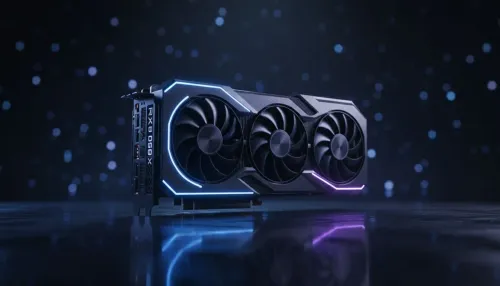
RX 9060 XT for machine learning: Explore whether the RX 9060 XT can handle local AI and ML tasks, plus practical tips, benchmarks, and configuration advice. ✅🔧
Read more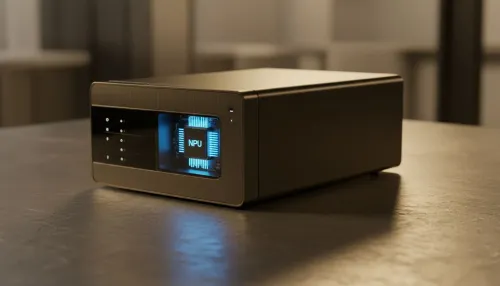
AI NAS combines storage and on-device AI by adding a neural processing unit (NPU). Learn how an AI NAS speeds inference, secures data, and boosts backups. 🤖💾
Read more
Edge computing smart home setups reduce latency, boost privacy, and enable on-device AI for future-proof automation and security. Learn hardware picks and upgrade tips. 🔒🤖
Read more
Discover webcams that automatically adjust light and color for crystal-clear video calls 🎥✨. Boost your streaming quality today!
Read more
Discover webcams that blend into your workflow 🎯 Capture moments while you work, stream, or create. Upgrade your setup with smart, multitasking tech!
Read more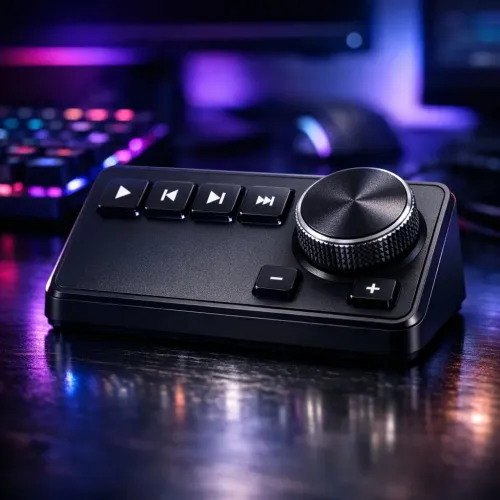
Dedicated media keys give streamers one-touch control to mute, switch scenes, clip highlights, and adjust audio — cutting task time and boosting consistency 🎛️⚡
Read more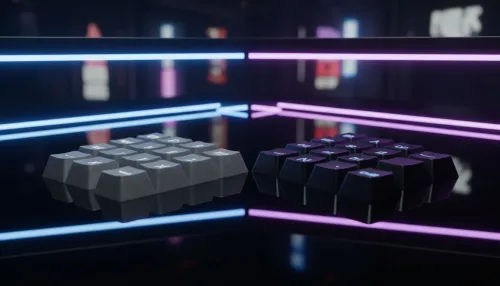
PBT vs ABS keycaps: Clear, local guide for South African gamers—compare feel, sound, durability and where to buy. Find the best material for your budget and playstyle 🎮🇿🇦
Read more
- Multi-Function Digital Dial: define benefits - Show gamer setups and macros - Offer buying and setup tips Multi-Function Digital Dial puts programmable control at your fingertips for faster actions and smoother streaming. 🎮⚙️
Read more
- Explain benefits; - Show the science; - Compare options; - Recommend picks. Magnetic wrist rest for gaming cuts wrist strain and boosts comfort during long sessions 🕹️✨
Read more