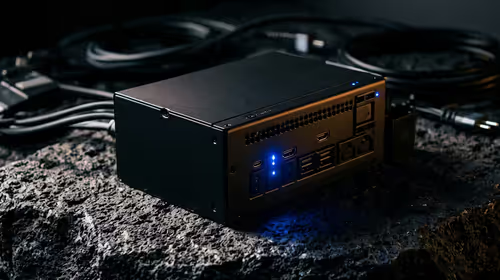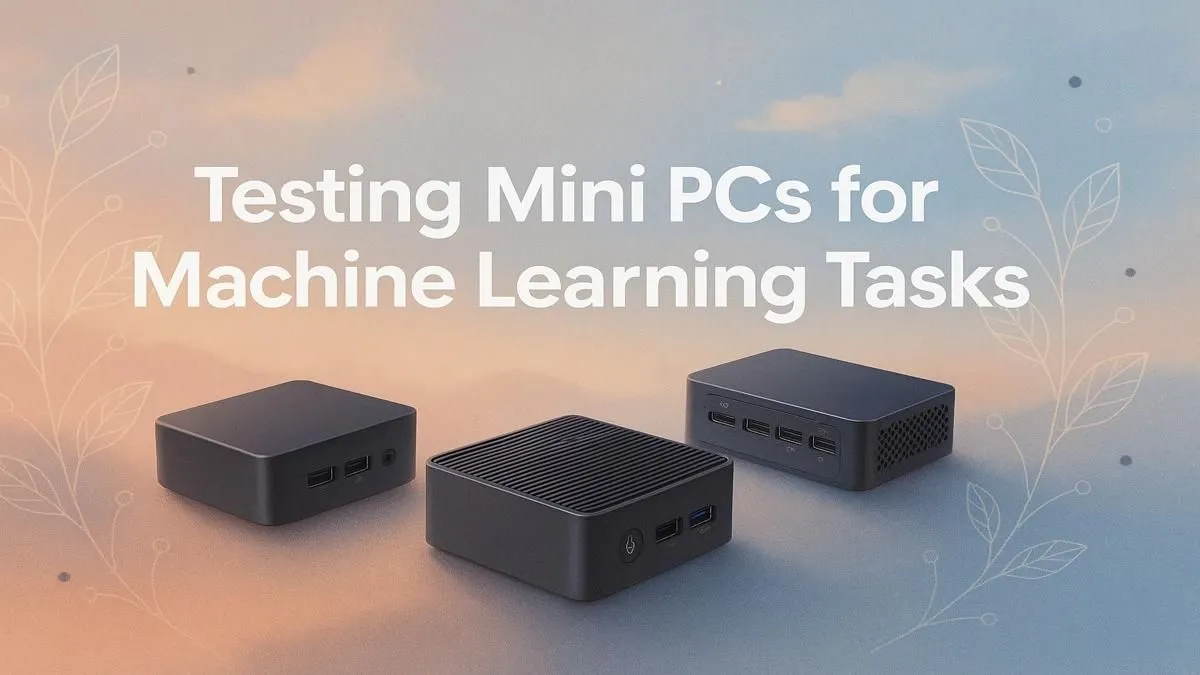
Think machine learning demands a beastly, power-guzzling tower PC that dims the lights when you run a script? Think again. In South Africa, where space and electricity are precious, a new contender has emerged. The modern mini PC for machine learning isn't just a novelty; it's a compact, efficient powerhouse perfect for developers, students, and AI hobbyists. Let's dive into the benchmarks and see if these little giants can handle your next big project. 🚀
Why a Mini PC for Machine Learning Makes Sense
The biggest advantage is obvious: size. A mini PC frees up your desk space, but the benefits go deeper. They are incredibly power-efficient, a massive plus during loadshedding or for anyone watching their electricity bill. But don't mistake their small size for weak performance. Thanks to huge leaps in mobile CPU technology, some of the latest mini PCs pack a serious punch, offering more than enough power for many AI development and inference tasks.
Forget the idea of a slow, compromised experience. We're talking about machines capable of compiling code, running local models, and processing datasets without breaking a sweat... or your budget.
The Hardware That Powers Your Compact AI Rig
When choosing a mini PC for machine learning, the specs are crucial. You're looking for a balanced system that can handle both data processing and model execution efficiently.
Key Components to Watch:
- CPU (Central Processing Unit): Look for a modern processor with a high core count (6 or more is a great start). This is vital for data pre-processing, a task that can be a major bottleneck in any ML workflow.
- RAM (Random Access Memory): 16GB is the absolute minimum. For handling larger datasets or more complex models, 32GB is highly recommended. Fast DDR5 RAM will give you a noticeable performance boost.
- NPU (Neural Processing Unit): This is the new star of the show. An NPU is a specialised processor designed to accelerate AI tasks. New chips from Intel (Core Ultra) and AMD (Ryzen AI) include NPUs that can dramatically speed up inference tasks, making your AI applications feel incredibly responsive.
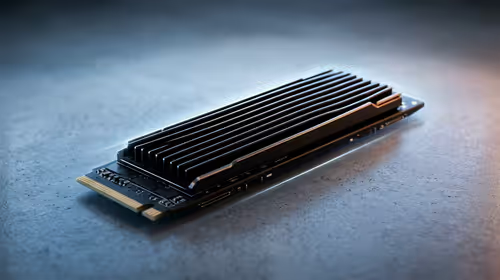
- Storage: A fast NVMe SSD is non-negotiable. Your PC will be reading and writing large files constantly, and a speedy drive ensures your datasets load in seconds, not minutes. To get a feel for the options, you can explore a wide range of mini PCs with different configurations.
ML Environment Pro Tip 🔧
Use Miniconda to create isolated Python environments for your ML projects. This prevents dependency conflicts between libraries like TensorFlow and PyTorch. A simple command like conda create -n tf python=3.10 gives you a clean slate, making your experiments repeatable and easier to manage.
Performance Benchmarks: What the Numbers Really Mean
Okay, let's get to the core of it. How does a mini computer for AI actually perform? While we can't run every model, we can look at common benchmarks to understand their capabilities.
- Inference Speed (Models like MobileNetV2): This tests how quickly the PC can perform tasks like image classification. A mini PC with a dedicated NPU can run these tasks in milliseconds, often outperforming older, larger desktops that rely solely on their CPU. This is perfect for real-time applications like object detection.
- Local LLMs (e.g., Llama 3 8B): Running a local Large Language Model is a great test of system performance. A well-equipped mini PC with 32GB of RAM can run smaller, quantised models smoothly for tasks like text generation, coding assistance, and summarisation. Performance here is measured in tokens per second—and modern mini PCs deliver a surprisingly usable experience.
- Data Processing (Python Libraries): For tasks involving Pandas or NumPy, a strong multi-core CPU is king. A mini PC with a recent 8-core processor can chew through data cleaning and transformation tasks with ease, making it a great local development box for data scientists.
Powerhouse brands like Minisforum are at the forefront, integrating these powerful components into impressively small designs. The performance they offer is more than enough for a huge range of machine learning projects. ✨
Is a Mini PC Your Perfect ML Partner?
So, is a mini PC the right tool for your specific AI ambitions?
It's an ideal choice if you are:
- A student or hobbyist learning machine learning.
- A developer who needs a local, power-efficient machine for testing models before deploying to the cloud.
- A data scientist who needs a secondary machine for data exploration and analysis.
- Anyone building "AI at the edge" applications that need to run on compact hardware.
However, if your primary goal is training massive, foundational AI models from scratch, you'll still need a full-sized desktop with one or more high-end discrete GPUs, or access to cloud computing resources. But for development, iteration, and inference... the mini PC is a formidable and cost-effective solution.
Ready to Build Your AI Edge Lab? 🚀 The world of AI is moving fast, and you don't need a massive rig to keep up. For local development, testing, and learning, a Mini PC offers incredible value and efficiency. Explore our curated range of Mini PCs and find the perfect compact powerhouse for your machine learning journey.