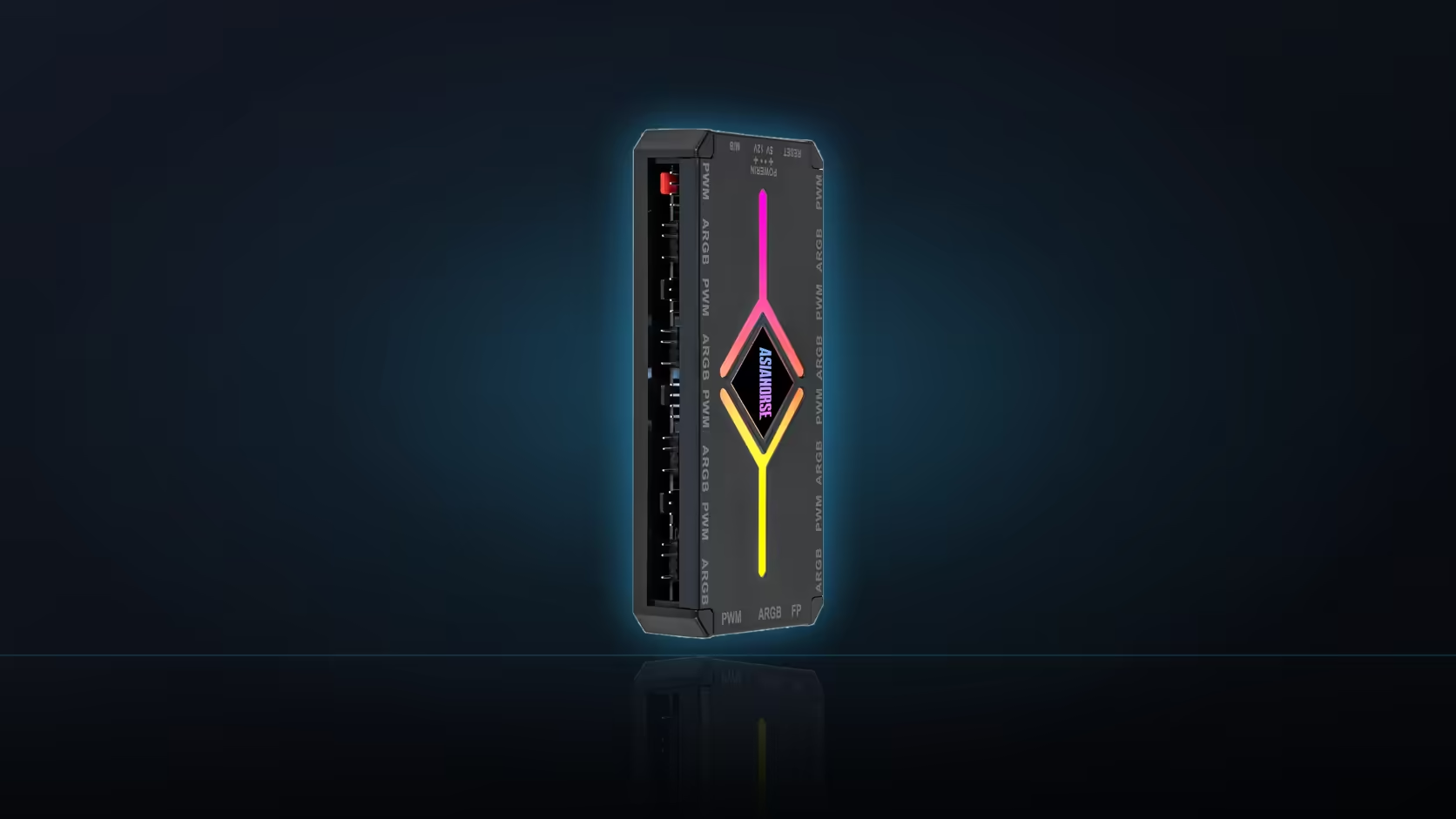
The 377-LED figure printed against the ASH-S1 is easy to misread as generous headroom, right up until you actually add every branch of a build's lighting together rather than glancing at the biggest single device and assuming the rest barely register. A build with nothing dramatic on any one port can still walk straight into that ceiling once all nine are populated with modest, ordinary devices.
Quick Answer
Work out the ASH-S1's LED total by adding the LED count of every branch connected to it together, not by checking only the largest device and assuming the rest are negligible. The 377 figure covers the whole hub as one shared budget, so a build with modest devices spread across all nine ports can reach the limit just as easily as one with a single long strip. Add before you plug anything in.
➕ Why the largest branch is the wrong thing to check
It is a natural instinct to look at a lighting plan and focus on whatever the single biggest item is - a long strip, say, or an elaborate cable cover - and treat everything smaller as rounding error. That instinct works fine for a lot of specs, but it fails here specifically because the 377-LED rating is not a per-branch limit at all. It is a total across the entire addressable bank, so nine modest devices add up exactly the same way nine large ones would, just via more, smaller contributions rather than fewer, bigger ones.
This matters in practice because case builds very often lean toward the modest-and-many pattern rather than the few-and-large one. Three or four fans with lit rings, a strip along one edge, maybe a cable cover - none of these individually looks like it is testing a 377 ceiling, and that is exactly the trap. Checked individually, every branch looks fine. Added together, the same set of ordinary devices can land closer to the limit than expected.
🧮 A worked example worth running through
Take three fans carrying sixteen LEDs each in their rings - that is forty-eight on its own, already a meaningful slice of the total from devices nobody would flag as heavy lighting. Add a modest strip at sixty LEDs and the total is a hundred and eight. Add a lit cable cover in the eighty-to-a-hundred range, which is common for cover products, and the running total is comfortably past two hundred before a single "big" item has entered the plan. Repeating that kind of addition across a full nine-port bank is how a build that looked conservative on paper turns out to be closer to the ceiling than assumed.
📋 Building the addition into the planning process
The fix here is procedural rather than clever: list every addressable device the build will connect, find its LED count in its own product description, and add the list up before deciding anything is settled. Most addressable products do state a count somewhere in their listing, though it is worth double-checking rather than assuming a round number. Where a device does not publish a count at all, leaving deliberate headroom against the 377 total is the safer move than guessing low.
This same discipline is worth repeating any time a device is added later, not just at the initial build stage - a single lit accessory bought during a case refresh months after the original build is exactly the kind of addition that pushes a previously-fine total over the line, because nobody re-adds the whole list before plugging one more thing in. Starting the addition against Evetech's case fan range, which lists LED counts on its lit fan options, is a sensible place to begin, and if the running total is already pushing close to the ceiling, trimming the plan back toward the NZXT fan controller rather than expanding it might be the better move.
Frequently Asked Questions
Why add every branch rather than just checking the largest one?
Because the rating is a total for the hub, so it is the sum across all nine ports that matters rather than any single branch.
What is a worked example of how this adds up?
Three fans at sixteen LEDs each is forty-eight, and repeating that across several branches adds up faster than it appears.
Do unlit fans or accessories count towards the total?
Only addressable LEDs count, so a fan with no lighting connection contributes nothing to the total.
What about several devices chained together on one port?
Everything downstream of that port counts, since the hub is driving the whole chain from its single connection.
Is it worth leaving headroom below the 377 figure?
It is sensible, both because some devices do not publish counts and because builds tend to gain lighting over time.
Where do I actually find a device's LED count?
In its product description, where models often state a specific ring or strip count worth noting down.
Does the fan bank have a similar total to watch?
No, the fan side is governed by its nine-port count and what the hub can drive, rather than by a comparable LED figure.
Adding up the lighting for a multi-branch build?
List every device against Evetech's case fan range specs before committing to a final wiring plan.