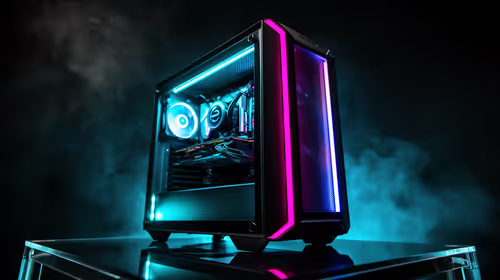
Master AIO liquid cooler maintenance for peak performance
South African summers are brutal on gaming rigs. Between the humidity in Durban and the dry heat in Jozi, your hardware works overtime. If you have invested in a high-end setup, understanding AIO liquid cooler maintenance is vital. It ensures your CPU stays frosty during intense sessions. A few simple steps will keep your system quiet and help to keep it running smoothly for years to come. 🔧
Clear the dust from your radiator fins
Dust is the silent killer of thermal efficiency. Over time, particles clog the thin fins of your radiator. This restricts airflow and forces your fans to spin faster. To fix this, use a can of compressed air every few months. Hold the fans in place so they do not over-spin while you blow the dust out. If you are building a high-performance rig, you might consider massive 360mm radiators for maximum surface area. Larger radiators generally handle dust buildup slightly better before performance drops.
Optimise your pump and fan curves
Noise is often the first sign that something is wrong. If your pump is whining, it might be working too hard. Use your motherboard software to set a custom curve. You want a balance between silence and cooling power. For those using Corsair liquid cooling solutions, the iCUE software provides excellent real-time data. Keeping your pump at a steady speed rather than constantly ramping up can extend its lifespan significantly.
Cooling Pro Tip ⚡
Always ensure your radiator is mounted higher than the pump block. This prevents air bubbles from getting trapped in the pump... which causes annoying clicking noises and reduces the lifespan of your cooler. If you hear a gurgling sound, try gently tilting your PC while it is running to move trapped air to the radiator.
Monitor for permeation and leaks
Even the best all-in-one liquid coolers lose a tiny amount of liquid over several years. This is called permeation. While you cannot refill most AIOs, you can monitor your temperatures. If your idle temps start creeping up after three years, it might be time for a replacement. Many gamers trust the Deepcool AIO range for their anti-leak technology... giving you extra peace of mind during those long sessions.
Check your thermal paste annually
Thermal paste can dry out and crack due to the heat cycles in South Africa. We recommend repasting your CPU every twelve to eighteen months. It is a cheap way to shave off a few degrees. While you have the block off, check the mounting pressure. If you are looking for a mid-sized upgrade, compact 240mm radiator setups offer a great balance of ease of installation and thermal overhead. 🚀
Know when it is time to upgrade
Sometimes, maintenance is not enough. If your pump has failed or your temps are hitting the red zone, browse our full selection of high-performance CPU coolers. Modern units are more efficient and quieter than ever. Keeping your hardware cool is the best way to protect your investment and ensure your frame rates stay high when the action gets hot. ✨
Ready to Chill Your Build?
Don't let your CPU throttle when the game is on the line. For the best thermal performance and the latest cooling tech in South Africa, we have you covered. Explore our massive range of AIO liquid coolers and find the perfect match to keep your rig running at its peak.