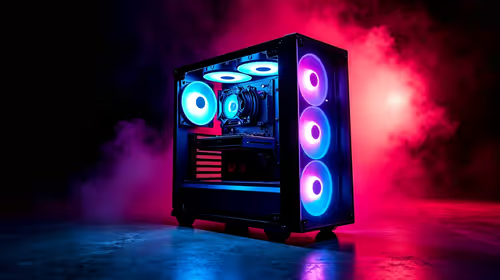
Is your gaming PC so loud it sounds like a Boeing taking off from OR Tambo during a tense Warzone match? You’re not alone. Many South African gamers accept high fan noise as the price for high performance. But what if you could have the power without the racket? Building a quiet gaming PC isn't a myth; it's an achievable upgrade that transforms your entire experience, letting you hear every footstep and fully immerse yourself in the game.
Why a Silent Rig is the Ultimate Upgrade
Let's be honest, a loud PC is more than just a minor annoyance. It's a distraction. A whisper-quiet machine offers tangible benefits that go beyond just peace and quiet.
- Total Immersion: Hear the subtle audio cues the game developers intended—the rustle of leaves, distant shots, or crucial dialogue—without a constant fan whirring in the background.
- Better for Streaming: If you're a content creator, a quiet PC means your microphone picks up your voice, not your hardware. Cleaner audio, happier viewers.
- Household Harmony: Game late at night without waking up the whole house. A silent rig is a considerate rig, especially when the rest of your home is quiet.
The goal is simple: to build a quiet gaming PC that stays cool under pressure without sounding like it’s about to achieve liftoff. 🚀
The Anatomy of a Quiet Gaming PC Build
Achieving near-silence is a holistic process. It's about choosing the right components that work together to minimise noise from the ground up. Each part plays a critical role in your quest for a tranquil setup.
The Case: Your First Line of Defence
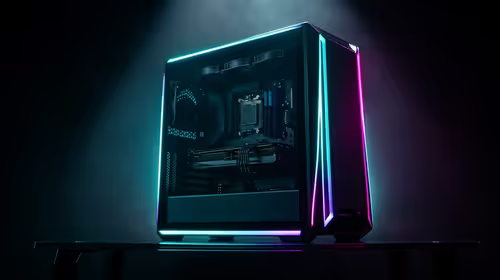
Your PC case is more than just a box; it's your primary tool for sound management. Look for cases with sound-dampening materials like high-density foam on the side panels. While mesh-front cases offer amazing airflow, solid-front cases with clever side ventilation often do a better job of containing noise. High-end chassis found in many premium builds over R20,000 often prioritise these noise-reducing features without compromising on thermal performance.
Cooling: Air vs. Liquid
The CPU cooler is a major noise contributor. Here’s the lowdown:
- High-Performance Air Coolers: Don't underestimate modern air coolers. Models with large heatsinks and big, low-RPM (revolutions per minute) fans can be virtually silent while providing excellent cooling.
- All-in-One (AIO) Liquid Coolers: AIOs move the CPU's heat to a radiator, which can lead to lower overall case temperatures. However, you introduce a new potential noise source: the pump. A quality AIO will have a quiet pump, but it's something to be aware of.
Regardless of your choice, mastering your fan curves is the key to silence.
Master Your Fan Curves 🔧
Most motherboards let you customise fan curves in the BIOS UEFI. Instead of letting fans roar to 100% at the slightest temperature increase, set a gradual curve. Aim to keep fans at a low, inaudible RPM during idle and light tasks, only ramping them up smoothly when your CPU or GPU is under heavy load during a gaming session. This single tweak makes a massive difference.
The Fans: Not All Wind is Created Equal
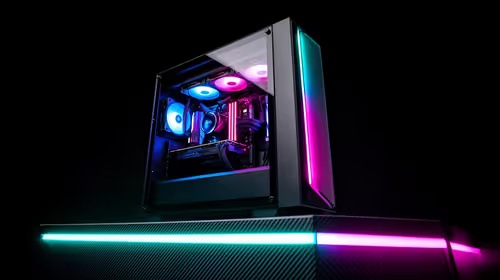
Case fans are essential for airflow, but cheap ones can produce an annoying drone. When you build a quiet gaming PC, invest in quality fans. Larger fans (140mm vs. 120mm) can spin slower while moving the same amount of air, resulting in less noise. Look for fans with Fluid Dynamic Bearings (FDB), as they are significantly quieter and longer-lasting than traditional sleeve bearings. Finding this balance of performance and acoustics is crucial, even when browsing for great PCs under the R20,000 mark.
The Power Supply Unit (PSU): The Unsung Hero
A high-quality PSU is fundamental for a quiet build. Opt for a unit with an 80 Plus Gold rating or higher. Why? Higher efficiency means less energy is wasted as heat, so the PSU's fan doesn't have to work as hard. Many modern PSUs even feature a "Zero RPM" or "Hybrid" mode, where the fan doesn't spin at all under low to medium loads. It's a simple choice that contributes to a dead-silent idle, a feature that's becoming more common even in well-specced budget gaming PCs.
The Graphics Card (GPU): The Loudest Culprit
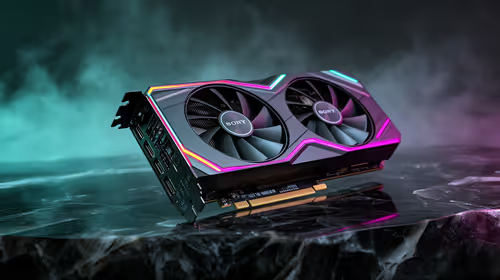
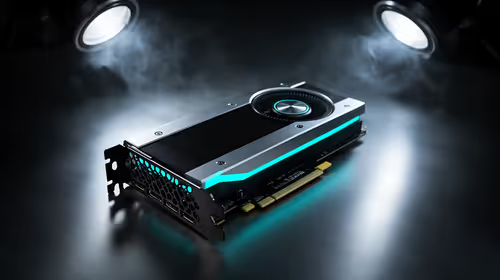
Your GPU is often the single loudest component in your rig. When choosing a graphics card, pay close attention to the cooler design. Cards with large, triple-fan coolers generally outperform smaller, dual-fan or (especially) blower-style cards in both temperature and noise levels. These superior cooling solutions allow the fans to spin much slower while keeping the GPU boost clocks high. You'll find these excellent custom coolers on many of the best gaming PC deals available, as they offer a premium experience. ✨
Assembling Your Whisper-Quiet Machine
Component selection is half the battle. The other half is assembly. Careful cable management isn't just for looks; it significantly improves airflow, allowing your fans to spin slower and quieter. Make sure all components are securely fastened, as vibrations can cause rattling and humming.
If the thought of meticulously routing cables and configuring BIOS settings sounds like a chore, don't worry. Opting for one of our expertly assembled pre-built PC deals ensures every component is optimised for cool, quiet operation right out of the box.
Building a quiet gaming PC is a rewarding journey that pays off every time you boot up a game and hear nothing but the world you're exploring.
Ready to Build Your Silent Sanctuary?
Crafting the perfect quiet gaming PC is a rewarding journey. Whether you're choosing individual components or prefer a professionally assembled rig, the goal is the same: pure, immersive performance. Explore our wide range of custom and pre-built gaming PCs and find the perfect machine to conquer your world... in peace.