Quick Answer
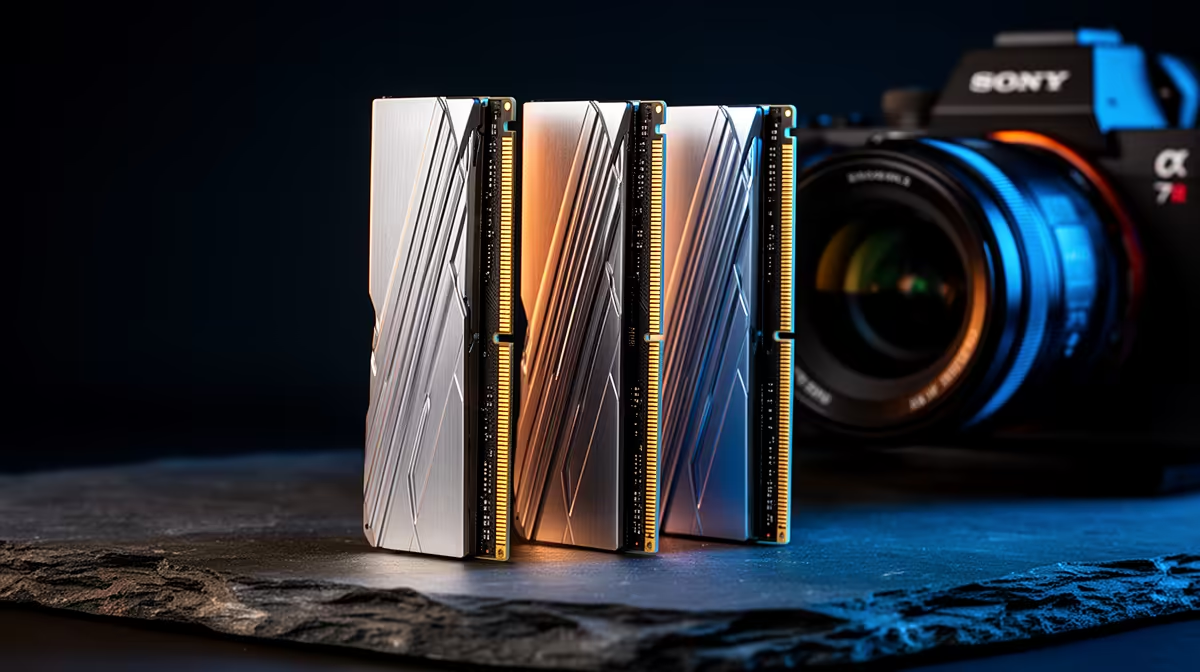
For engineering simulations, upgrade DDR5 RAM now if you run finite-element or CFD work: these solvers are memory-bound, so 32GB (a R1,200-R1,800 kit) is the entry point and 64GB near R2,800 is where serious meshes stop swapping to disk. RAM capacity matters more than clock speed for simulation, so prioritise 64GB over a fast 32GB kit.
Why simulations are memory-hungry
FEA in ANSYS or SolidWorks Simulation and CFD solvers load the entire mesh and solution matrix into RAM; when it overflows, the solver pages to disk and a job that took minutes takes hours. A 32GB DDR5-5600 or 6000 kit handles student-scale models, but real assemblies and fine meshes need 64GB to stay in memory. For engineering, capacity is the lever, so a 64GB DDR5-5600 kit beats a faster 32GB kit for the workloads that matter. Pair it with a multi-core Ryzen 7 or 9 for solve speed.
Buy-now versus wait, with specifics
Upgrade now if simulations already crawl or fail to fit; the productivity gain is immediate. If you only run small academic models, 32GB can wait while you invest in cores. Buy a matched dual-channel kit (2x32GB) for full bandwidth, and DDR5-5600 CL36 or 6000 CL30 depending on platform. ECC is worth considering on a workstation for long solves, though most student rigs run standard DDR5 fine. Keep a fast NVMe scratch disk so any overflow at least lands on quick storage.
FAQ
How much RAM do engineering simulations need?
32GB is the entry point for student-scale FEA and CFD; 64GB stops real meshes from swapping to disk. Capacity matters more than speed here, so prioritise 64GB over a faster 32GB kit for serious work.
Is RAM or CPU more important for simulation?
Both matter, but insufficient RAM stops a solve cold by forcing disk paging. Get enough capacity first (32-64GB), then add cores with a Ryzen 7 or 9 for faster solve times on large models.
Should I buy one big stick or a matched kit?
A matched dual-channel kit, such as 2x32GB, gives full memory bandwidth that solvers use. A single large stick runs in single channel and slows memory-bound simulation work, so always buy a pair.
work, buy 64GB as a matched 2x32GB DDR5 dual-channel kit so large meshes stay in memory, and pair it with a multi-core Ryzen 7 or 9 for solve speed.